Sunday morning

Bleary eyed and fuzzy headed I wake up with a start

And feel the dryness of my mouth and hear the thudding of my heart

Which drowns out unfinished thoughts and the memories of last night

Flashing through my weary brain, withdrawing from the light

That streams in through my windows taunting me with midday sun

So I know I’ve missed the morning, I was out late having fun

Or so that is what the fragments of the visions I remember

Have led me to believe, I think I need to send a

Message to my friends just to check that all’s okay

So hungover paranoia doesn’t haunt me through the day

Like my painful throbbing headache will, reminding me that next week

I must drink a lot more water before I go to sleep,

Oh what I wouldn’t give for a glass of water now

In reach from my pillow, I’m not quite sure how

I can get up from my bed without it, my body mimicking

A sack of slowly hardening cement that’s sticking

To my mattress, I’ll be doomed if I don’t get up soon

Not sure I have the willpower to get up before the moon

Appears tonight, but I must find that will from deep inside me somewhere

Or I’ll slowly turn nocturnal, but I almost do not care

So long as I stay wrapped up in the warm cosy embrace

Of my duvet in my bedroom, my cave, my safe place.

Writers Block

I’m a writer, I’m a poet,
It’s a gift, they say, I know it!
Helps me fine tune all the voices
All the questions all the choices
Running through my busy brain:
Sorting crazy from the sane.
Helping me to find a way
When I’ve had a rubbish day.


But today the words won’t come.
Through my fingertips and thumb.
Tapping out a steady rhythm
Forming words into a vision
Giving shape to my emotions
When they feel as vast as oceans,
But today I’ve got to say;
I don’t know what to write. 
Okay?!

How to survive in the Jungle

First of all, I hope that none of you reading this are intending on actually using this blog post as a guide to the jungle. I am not professing to have succeeded at life here, nor am I suggesting I have any great wisdom on the matter. This is more a collection of observations and lessons I have learnt so far in the 2 short months that I have been living in the Amazon rainforest.

Don’t complain about how much you sweat.

Complaining makes you frustrated, which causes your blood pressure to increase and your body to heat up, which causes more sweating. It’s a vicious, vicious cycle. There’s no escape or respite from it, there’s nothing you can do to prevent it, and it doesn’t get any easier. My advice is tranquillo, tranquillo. Being chill is synonymous with cold for a reason. Relax, be calm and slow, and the sweat is manageable.

Laugh a lot at how ridiculous life can be.

The best thing you can do when the jungle pushes you to the limit of your adaptability is to laugh. 3 new super itchy bites on your bum, an awkward and socially-unacceptable place to scratch? Have a giggle about it, then scratch it anyway. Droplets of sweat that have made it all the way from your under-boob down to your ankle? It’s okay, just wipe and laugh. A huge, scary looking scorpion thing sitting innocuously in the exact spot you were about to place your hand? It’s cool, you saw it just in time, scream a little bit, then laugh. When the local, wild, jungle dog has raided your kitchen, upturned all the bins and spilt gross, smelly liquid all over the floor, maybe don’t laugh right away, maybe clear it up asap and lock the doors. Yell ‘hijo de puta’ to the general surroundings… then laugh.

Make friends with the insect community.

Only the harmless ones though. Become one with nature and take on a Snow-Whitely demeanour as the butterflies and moths swirl around you, and weird and wonderful little creatures somehow end up on your body and you’re not quite sure how they got there. Smile at them warmly, sing a little song if you’re so inclined, then get them the hell off you just in case.

Be prepared for attack at all times

The silent, tiny enemies that cause an unbelievable amount of grief are the biting bugs. A sting, and a week-long, incessant itch are the least of your worries, some of these insects carry horrible diseases like Malaria and Leishmaniasis. The likelihood of us getting either of these is fairly slim, but I don’t want to take any chances. Along with deet and long clothing, Heather and I have developed a series of noises and phrases designed to scare off unwanted critters. They work with varying degrees of success. These usually explode out of us when we realise we’re being attacked and often come from the recesses of our subconscious. Heathers go-to insult is yelling “BIG HAIRY BEAST” at the offender. It seems to work. My expletives are usually a series of weird noises like ‘lblblblblbllb’ or ‘chchchchchhc’. Yesterday, a wasp was hanging round the spout of our lemon juice, and I politely turned to it and said ‘Go away! That is not your lemon juice!’ Needless to say the wasp didn’t listen.

Tiger balm, and lots of it.

The only successful minor relief from the stingy itchiness is our beloved tiger balm. We try to keep stocked up at all times and apply it so often that most of our clothes and bed sheets have a yellow-ish tinge. I feel like every time I kill a mosquito, I’m helping humankind, ridding the world of disease one bug at a time. You’re welcome.

Frequent showers – for clarity of mind

The water is pumped straight from the river and is dispensed into a concrete shower block from a medium-sized plastic tank, so it’s always cold and fresh and has to be topped up every couple of days. When I say shower block, I mean a very small concrete cubicle with only 3 walls and a shower curtain, and no ceiling. Sharing a shower with the outside world is not so bad although the unavoidable, clothe-less nature of a shower does increase skin surface area for flying insects to land on. An inevitability unfortunately. One time, when Heather was showering, glasses-less and vulnerable, a massive toad reduced to a blurry leaf due to lack of 20:20 vision leapt desperately on to her leg. Not the ideal shower companion. My favourite time to shower is just after the sun has set, there’s something quite magical about showering and staring up at the moon and the treetops, plus the water is usually not freezing as it’s been heating up all day!

A strong stomach

Because who knows how many ants have died a merciless death in your boiling soup after they’ve climbed into your saucepan, and how many bugs you’ve had to force down after they landed in your drink and you only realised when you felt them sliding down your throat.

You’ll need a good selection of offline films, series and books.

I have rediscovered my love of reading here. My absolute favourite, most perfect, peaceful time of day is the morning. We usually wake up as the sun rises and make the short journey from our mattresses and the protection of our mosquito nets to our hammocks on the porch between 7 and 8, then read for an hour or so as the day heats up. We take our kindles to breakfast with us and read whilst sipping coffee, eating and chatting. Our mornings are delicious. Then at night we usually watch something we have downloaded, swinging in our hammocks listening to the buzz of night life around the station. The other night we were watching Stranger Things during an intense thunder storm lighting up the sky with bolts of lightning striking the trees across the river, the atmosphere was incredible.

Take a breath and remember how lucky you are all the time.

Because it’s true. Heather and I often have beautiful moments where we become sort of meta-aware about our surroundings and it dawns on us how unlikely and wonderful it is that life has brought us to this magical place. Glorious sunshine and a swim in the river can quickly turn into a furious thunder and lightning storm, deafeningly loud and thrillingly close. The river can be serene and gentle one minute, then have turned into raging rapids and be transporting large trees the next.

Why We Are Here – The Research

For those of you who have got the impression that so far my time in Ecuador has mostly been exploring, lying in a hammock and swimming, you’re wrong. Well, half wrong. Okay, just a little bit wrong, we have been doing a lot of that. But there’s a much more serious side to our life here: the research.

To preface the bulk of this post, I’ll just explain why I’m here: I’m 2 and a bit years into a degree in Biomedical Sciences with Industrial Placement at Manchester, and this is my placement. Heather is also on placement with me, she studies Zoology at Manchester and is a passionate animal lover, even the grizzly, scary, creepy ones… especially the grizzly, scary, creepy ones. Our aim over the course of this year in the Jungle is to complete research in an area of our choosing and produce scientifically viable results. If we work hard, then getting published could be on the cards.

We’ve both spent a long time coming up with a plan for our research proposals which mainly involved a lot of emailing, scrolling through PubMed, reading papers and chatting to Javier, the Ecuadorian station manager, about what would be possible. Javier has a degree in Forestry Engineering and has been working at the station for 6 years now. He’s affectionately nicknamed Jungle Dad and is sociable, generous, and a real joker. Even though most of his jokes are in Spanish and fly straight over our heads, he still makes us laugh with his faux-stern expressions, dad dancing and inability to say slept. “Slepech. Slepecha. Slepch?”

Heather’s main project will be investigating the Arachnid biodiversity here at Payamino. She was given a fantastic opportunity to work closely with an Arachnid specialist during her time here; they’ll complete the field work and research when he arrives at the station in January next year. ‘Arachnid Biodiversity Study’ means capturing as many spiders as possible, bringing them back to the station and identifying what species they are. Heather’s hoping to gain a greater appreciation of an animal that’s normally shunned in society and has a huge fear stigma attached to them. In her opinion, they’re actually underappreciated, beautiful creatures that aren’t nearly as scary as they seem. Already we’ve seen lots of spiders, including a baby tarantula (that we caught in a soup bowl) and many jumping spiders. Heather uses the word adorable, not something synonymous with spiders in my personal opinion, but it’s her project not mine. It’s a good thing I’m not scared of spiders (which my mother proudly attributes all credit to herself as she always made me and my sister get rid of the spiders in the house so she didn’t have to, thanks mum). Also, Heather will be continuing with the research on Heliconias, a native flowering plant, which was started by a previous placement student. The project is looking at the effects of genetic variation in Heliconia species and the associated insect communities. It will involve cutting off roots from existing plants and growing her own little, genetically-identical garden, then measuring the species diversity found between the two plants. Interesting stuff, plus Heliconias are really pretty.

My projects, which I’m very excited about, will be Fungi Biodiversity and knowledge about ethno-medicine in indigenous communities. Fungi are a largely under-researched, under-appreciated group of organisms. They are neither a plant nor an animal, but a whole kingdom to themselves. My project will be on the different types of flowering fungi found in Payamino. It will be impossible to do an all-inclusive biodiversity survey as a lot of fungal species are microscopic and I just don’t have the equipment to find them, so the project will be limited to fungi I can see with my eyes. There has been absolutely zero research into fungi biodiversity here, so I’m in unchartered territory and hopefully my research will be valuable to the scientific community. Once I’ve collected data on each fungi I find, I will get in touch with a fungi specialist either in Quito or the UK who can help me identify each species. Hopefully I’ll develop a comprehensive list of species found in this area. My interest in fungi started to develop in first year of Uni when I came to appreciate how diverse, interesting and spectacular they can be. For example, did you know that some species of fungi create their own jets of air in order to spread their spores further; some species are carnivorous, capable of punching holes in the cell walls of passing nematode worms and insects for food; and some have even teamed up with plants they live on and kill the insects for them then feed them the corpses. I started to see them as the research underdog of the natural world, and love the idea of contributing to this hugely unfinished puzzle piece of nature.

My second research project is quite close to my heart. I’ve always been interested in alternative medicine and how they practice medicine in different parts of the world, inspired by my own battle with illness, and had the idea of looking into medicine used in the indigenous communities here before I even applied for the placement. When I arrived, I found a book on the book shelf entitled ‘Plantas de Medicinales en Payamino’. I’m sure you can crack that Spanish on your own. The book was a catalogue of all the different plants used medicinally by the Kichua community, what they’re used for and how they’re prepared. I got in touch with the author of the book, Dr Brian Doyle – a researcher in the States, asking if there was any further research he wanted to do here, and if not, whether his research bought up some interesting questions that I could research myself. He replied with 3 large bullet points, each detailing a possible research area I could pursue, and said he was planning on coming back to Payamino next year to continue his research. This was the best possible news I could have hoped for. Bullet point number 1 turned out to be not so relevant after chatting with Javier who knows the area and communities really well. Bullet point number 2 was simply monitoring all the plant species year round; collecting samples for the National Herbarium in Quito and collecting data and pictures about the life cycle of each plant. Bullet point number 3 was by far the most interesting and challenging suggestion. Brian had recently published a paper that analysed the distribution of knowledge about traditional medicine across the community near the station. His suggestion was that I do the same thing, with improvements and a few alterations, in a few other indigenous communities, and use the data to compare knowledge between communities. Imagine: travelling to various indigenous communities in the rainforest, staying for a week or so and in that time surveying a random sample of the population using images of plants and a basic questionnaire. Queue huge excitement and the stomach-dropping realisation that I’m going to have to be near fluent in Spanish to pull this off. So at the moment I am doing my best to learn Spanish, with a general plan to do this field work next Easter.

So my plan is to get a chunk of the Fungi project done by Christmas and send over the data to a specialist to see what results I get; and learn Spanish rapido. There’s only so far you can get with audio-tapes, books and Duolingo, so Heather and I spent an intense week in el Coca having Spanish lessons with an Ecuadorian-but-lived-in-Norway-for-18-years English teacher, Fernando, doing 4 hours of lessons a day. It was a pretty hard week but we learnt a lot. On the Friday, we went to a bar (Papa Dance, a salsa bar on the river) with Fernando and met some of his other students learning English and found we could actually have a simple conversation and swap basic information about our lives. It was a triumphant moment.

The pace of life is still quite slow here as we travel to and from various cities on a weekly basis to get all the relevant documentation needed for our contracts with UEA and our Ecuadorian work visa, and as we adjust to the living conditions in the Rainforest. We’ve only been here a month but it already feels like a lifetime. This little clearing on the bank of el Rio Payamino has become our home and we love it. We both have high hopes for our research here and can’t wait to see our ideas and plans come to fruition. Let’s hope that in a year’s time, Heather and I can look back at the blog post and have succeeded in meeting our aims. Buena suerte a nosotros. Good luck to us.

An interlude in Peru

Lima, Llama, Lame

After our 36 hour bus journey from Quito, we finally arrived in Peru. We stayed for a night in Lima, spent the morning having a wander, then swiftly moved on to our next stop. Heather, Lucas and I had been informed by other backpackers that it wasn’t really worth a visit. It’s densely populated and there’s nothing that really distinguishes the city as anything special, so onward and upwards. Well, Eastwards to be geographically accurate.

Paradise in Paracas

Mission number 1 in Paracas was to book our tour for the next day and then find transport to Huacachina. This was fairly easy as there are travel agencies everywhere, and everyone is so keen to get you to book onto their tour that we merely had to step out onto the street before we got accosted with offers. The other amazing thing about touristic places is that almost nothing has to be booked in advance. We then found some dinner in a little burger shack and drank Pisco Sours, the national Peruvian cocktail. A few sips in I realised it’s made with egg whites so I quickly switched to mojito’s!!

The next morning we woke bright and early for our boat tour. A man arrived at the hostel with a checklist with our names on, so we followed him to a pier. Being unable to speak any Spanish at this point, most things had to be undertaken with a bit of blind faith. There’s not the certainty that comes from handing over a ticket, or presenting an ID. Often, someone rocking up and saying your name is the only validation you’ll get that you’re going on what you paid for. So we arrived at the pier, queued for our tickets and got ushered onto a speedboat along with a hoard of other tourists. We were taken to a group of rock formations out to sea which were home to Peruvian Boobies, Humboldt Penguins, Pelicans, Dolphins and Sea Lions. Fortunately we caught a glimpse of the penguins, one of the highlights of this trip for me. Another highlight was the man sat in front of the three of us; a middle-aged South American man on the trip on his own. His pure excitement and need to share everything he saw with the strangers around him was infectious and soon had us laughing and sharing in his childish happiness. He anxiously kept his eyes darting around the horizon, steeling glimpses in every direction to make sure he wouldn’t miss a thing: pointing and shouting every time a fin peaked out of the water or a sea lion could be seen basking in the sun. This was made even more hilarious by the fact that most of what he pointed to from our speeding boat disappeared from view in the time it took for everyone to look to where he was pointing, so most of the time it looked like he was gesturing excitedly at nothing.

After this we took a bus out into the desert where we learnt about fossils hidden in the sand and saw flamingos drinking from the oasis. Having grown up in a desert, this wasn’t as exciting for me, but it was beautiful nevertheless. After lunch in the desert, we continued our journey onto Huacachina.

Huaca-fucking-china

Not really knowing what to expect, we arrived in a deserted, dusty desert town with nowhere to stay that night and no idea what it offered, so we walked into the nearest hostel and asked for 3 beds. Fortunately, it was a relatively cheap, nice hostel with comfortable beds and its own bar – always a good sign. To our great surprise, out the back of the hostel was a beautiful lagoon, nestled in the middle of a circular boulevard. Having not realised this would be there, we all felt like we’d stumbled unknowingly into a little paradise. We spent the night drinking Sangria, eating Pizza and Pasta and feeeling really suave for the first time since coming to Peru. The next day we ventured over to a different hostel with a pool and sat in hammocks, chatting, eating, writing and reading until 4 o clock when we had booked on to go sand boarding. We took our place at the back of this massive 15-seater doom buggy, and were thrown around as we drove to the spot where we were to start boarding. There were 4 dunes in total, the 4th one being absolutely massive and scary looking from the top, although  actually perfectly fine. Pumped full of adrenaline and endorphin’s, we returned to Huacachina sweaty, hungry and sun burnt.

The next stop on our journey through Peru was Nazca, although we also had the choice to just go straight to Arequipa. We had been umming and aahhing about doing the plane trip over the Nazca Lines. We’d heard from a few other travellers that it was quite scary and dangerous, and a lot of people threw up in the plane. But in the end decided we wanted to do it – when in Peru – so booked and sorted our transport, accommodation and tour in Nazca for the next day from a travel agents in Huacachina, then had the afternoon to chill out by the pool.

Nazca Lines, alien signs

The bus journey that evening was only a few hours, and we got to Nazca around 9:30pm. The hostel we had booked was in walking distance from the bus terminal, and when we got there it was locked and dark. We had walked past a couple of old drunk guys, and after peering in through the glass door to the hostel for a while, one of them came up to us with a key. He was stumbling around, jabbering in slurred, accented Spanish and half his teeth had rotted or fallen out. We didn’t know what to think about the situation, but let him let us inside and show us to a room. A bit later on, a much younger, cleaner Peruvian came and greeted us, apologising for the behaviour of his drunk uncle, but it worked out well because the drunk uncle had accidentally put us in a private room when we had booked into a a dorm. The next morning we were woken up at 7am by the hostel owner banging on the door, telling us our taxi was outside. At the travel agents the day before, she’d told me we were going to get picked up at 9am, albeit using my very basic Spanish and her even more basic English, so this was a bit of a surprise. We threw on some clothes and groggily made our way into the taxi. I was the first in, so sat in the front. I reached round to put my seat belt on, only to find there wasn’t one. The taxi driver saw me grappling at the empty space, and hastily assured me that there wasn’t one, and not to worry, “tranquillo tranquillo” (‘relax, relax’). If you say so?

At the airport we watched a hilarious Nazca documentary that was showing on screens around the building, depicting what life was thought to be like around the times the Nazca Lines were formed. There are a few theories as to how the Nazca Lines exist: aliens and religious reasons being the two most popular. They are quite amazing. We went up in a little 8-seater plane and flew over all the different shapes and lines on the desert. I could see why a lot of people throw up, there was a lot of dipping and weaving and turning the plane on its side so the people on each side could see clearly, although I never at any point felt unsafe. My favourite lines were the hummingbird and the spider. My other favourite was a little astronaut on the side of a rock. It absolutely paled in comparison to the rest of them, it was so poorly drawn, the lines haphazard and uneven and the shape barely distinguishable as a person, but that’s what made it funny. You can just imagine that each Nazca person was assigned a shape to draw in the desert, and one guy got an astronaut and completely fucked it, and the rest of his group turns to him, masterpieces finished, and see his terrible drawing, and just walk away sighing and shaking their heads. To me and Heather, this guy was Daniel. For fucks sake Daniel.

So after our little plane trip, we had the afternoon off. We found a hotel with a pool, had a swim and sat around reading for the afternoon. The next journey was a night bus to Arequipa.

Arequipa, you a keepa’

In Arequipa we stayed at party hostel, Wild Rover. Wild Rover had a bar and pool in a courtyard out the back, a ping pong table, a pool table, a cinema room and free shots at lunch time, what more could you want. We spent 2 nights in Arequipa and got on really well with the staff, most of them were really fun and up for a laugh, although there was this one douche who took a fancy to Heather and wouldn’t leave her alone. The food was fairly good, even the vegan stuff, and the drinks were cheap. The city itself is pretty beautiful; cobblestone streets, quaint little cafes and a big square. We could have been somewhere in Europe, easily. We spent our day mooching round the shops, chilling by the pool and playing ping pong. It was some well-deserved and needed down time from the hectic schedule we had been keeping so far. The night out was fun, we played games, got free shots and ended up at a club nearby that was sweaty and crowded.

Whilst in Arequipa we booked a 2 day trek into Colca Canyon. There were 3 options, the 1 day, 2 day and 3 day tours. The 1 day you don’t do any hiking, just drove there and had a look. The 2 day you hike down into the canyon on the first day, and back out again on the second day. The 3 day, you do exactly the same as in the 2 day trek, except you take 3 days to do it and drag it out a bit longer. Heather and I decided to do the 2 day. We were short on time and fairly confident in our fitness, so thought we would go for the hardest of the 3. Looking back we grossly underestimated the challenge and hadn’t been adequately warned about the difficulty of the hike: everyone else doing the 2 day hike with us seemed to be seasoned hikers with professional gear. There was a group of 4 beautiful, scantily-clad Americans obviously making one of those GoPro adventure videos you see on YouTube, and it was funny to see the filming process. Most of it was them hiking clumsily like us normal folk, then getting out the GoPro’s on the good bits, reapplying their make-up and filming each other strutting along looking perfect. Well, now we know the truth.

We were meant to be picked up between 3am and 3:30am, so being me, I aimed to be ready for 3:15am. Of course, the driver arrived at 3am on the dot, and so I made us late and they left and came back half an hour later to get us again. The route included the standard stop for breakfast in a random village, and an hour at a lookout point to see some condors, and then finally arriving at the set off point for our trek. The next two days were a blur of blisters, altitude sickness, pain, beautiful views, sweating, exhaustion, pain and pain. The hike on day one took us down into the bottom of the canyon and along a Peruvian flat (extremely hilly) to our base camp for the night. Fittingly called The Lagoon, our camp was a collection of chalets with a few icy cold pools and bars. After our 8 hour hike, the pool was a welcome relief to sore feet and achey muscles, and bed beckoned not long after. The wake-up call on day 2 was 4:30am, with the aim of reaching the top by 8am. It was a very, very steep, constant ascend along a sandy, rocky path that took Heather and I just under 3 hours. There’s a lovely picture of me reaching the summit, desperately trying to conjure up some happiness from my exhaustion at reaching the top. Digging deep, the best I could do was a half-hearted arm raise, and a grimace.

The journey back was nice, we spent a lot of time in a minivan, but also stopped by some thermal baths which were just beautiful and put Budapest to shame. All in all, Colca Canyon was absolutely gorgeous and there were some rare moments that took what little breath I had away. We spent another night in Arequipa for a bit of rest and recuperation, and prepared ourselves for the next 36 hours.

You know, Puno?

One overnight bus later and we arrived in Puno at 5am. This was not a nice journey, no one got ANY sleep at all. All 3 of us (Heather, Lucas and I) got window seats so as to have 2 seats by ourselves, and when we got on, the bus was fairly empty which was a relief, but then this man sat next to Heather. He had booked an aisle seat next to a window seat that was taken, when there were loads of empty seats on the bus! It was really strange, and meant that Heathers night was cramped, stressful and frustrating. Needless to say none of us were in particularly good moods when we arrived. Regardless of our shit night, the day was amazing. We went on a tour round Lake Titicaca. Lake Titicaca is the 18th largest lake in the world and the largest if you look at lakes over 2000m in altitude, it borders Peru and Bolivia and is home to the floating islands of the Uros and other amazing natural islands. We started off the day by visiting the floating islands. There’s a community of people that have built islands made out of reeds to live and thrive on. The main trade now is tourism, but in the past it was reeds and fish. We were given a ‘how to make your own island’ demonstration and learnt about the way of life there. Something that was quite funny, is that if a man and woman are dating they can’t really do anything in their homes because their houses are made out of reeds, and it’s so quiet and peaceful there that anything would be heard, so they take a boat out to the reeds in the night so as to get some privacy. So if you saw a suspect boat hidden in the reeds at night, you’d know exactly what was going on.

We went to Taquile Island for lunch, it looked exactly like a small little Greek island, except in the distance you could spot glaciers on Bolivia’s shore line. We had lunch there and learnt about how the men on this island were expected to knit hats, and their knitting ability was a show of masculinity and manhood, and they knit themselves a hat to signify when they get engaged. We got back to Puno and headed back to the bus station because that night we were on another overnight bus to Cusco. I honestly don’t know how we thought this was a good idea because it ruined us, but it saved us a day and meant that we could make the most of Cusco.

Cusco: a must go!

Completely beautiful, Cusco charmed us all with its bold character, charming residents and good food. We had been recommended a vegan restaurant and bakery which I was so over the moon about. The food had been average at best on the trip so far, and I was really looking forward to having a proper meal with a pudding. This restaurant exceeded my expectations. It was amazing. So much delicious food, chocolate cupcakes, nutritional shakes, a salad bar, humus!!!!!! I could have eaten there every day for a week. We all came away absolutely stuffed to bursting, having only spent £7 on a 4 course meal, a cupcake and a shake. I would go to Cusco again just to visit this restaurant.

Heather and I decided that we wanted to do Machu Pichhu ourselves rather than go with a tour in order to cut down on the price. Most tours charge upwards of £500, and doing it ourselves meant we only spent around £150. Without the help of a few good blogs, I’m not sure we’d have worked out how to actually get there and back! So after an afternoon of planning, an evening of partying and a morning of throwing up, we started the journey to the town of Aguas Calientes, the starting point of the Machu Pichhu hike.

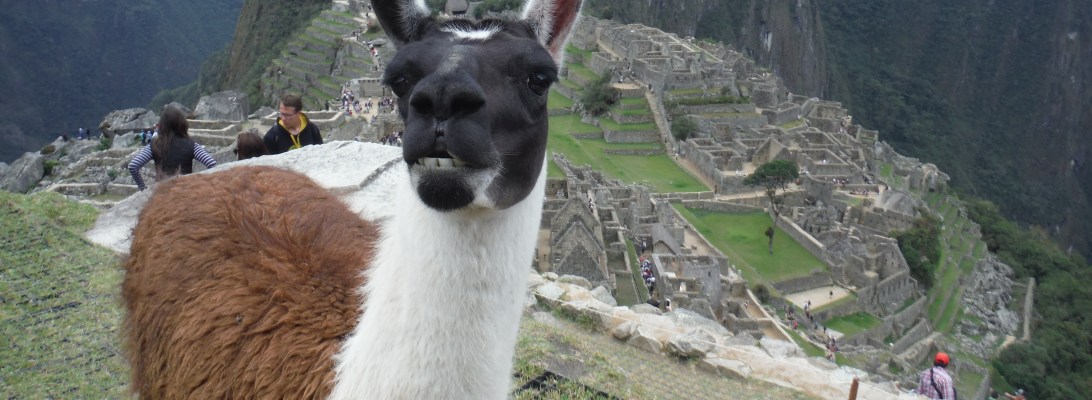
The journey started with a walk down into the city centre, a taxi to the bus terminal, and public bus to Ollantaytambo and finished with a train to Aquas Calientes. The train journey was an event in itself, the train travelled through base of the mountains and had windows in the roof so you could see all the way up. That night in Aquas Calientes we were kept up by (what we later found out was) the Miss Machu Picchu awards ceremony, the rats in the ceiling didn’t help either. We started our gruelling climb the next morning just before 5 and reached Machu Picchu around 7. We arrived a pair of sweaty messes, our clothes soaked with sweat and cloud water, with the ruins still completely immersed in clouds so we couldn’t actually see anything. After a few hours the clouds had cleared and we could truly appreciate how amazing the ruins of the Inca Empire were. We had also bought tickets to hike to the top of Machu Picchu Mountain and set off at 9:30am. This climb, labelled ‘moderate to difficult’, took us to the very top of the mountain so we could see the ruins in the distance far down below us. It was over 3000m in altitude and we saw a baby Andean bear up there!! It was very cute! We made an American friend, Tim, who accompanied us down to the bottom of the mountain and for lunch. He’s actually currently walking from China to Turkey for the next two years, sounds like an epic journey!

Then we made the long, faffy journey back to our hostel in Cusco and went straight to bed, because the next morning we were picked up from the hostel at 4am to go to Rainbow Mountain. I did not feel good that day. Even before we set off, I felt groggy and ill and exhausted. Our guide was really fun, he seemed very switched on, impressively good at English and really experienced. I got chatting to him later and it turned out that he had travelled the world and lived in lots of different countries teaching salsa! Cool guy!

The journey to Rainbow Mountain was pretty amazing. For a long time we were driving along roads built into the side of mountains. At some points the roads were only as wide as the van, and looking out your window all you could see was a half mile drop into a deep ravine. The closer we got to the bottom of the trail, the more colourful the surrounding mountains got. Reds, blues, yellows and greens snaked their way across the rocky faces of the mountains, and glaciers started to appear on their tips. We were high up.

At the start of the trek I felt okay, but really tired, and by the time I got to the top I was broken. There was a point where the end was in sight, but I sat down on a rock and just burst into tears. I felt so ill. There was no energy left in my body, I was out of breath, headachey, and slightly nauseous, but I couldn’t not go on. Towards the end, I would sit for 30 seconds, then walk as fast as I could for 10 seconds, then sit for 30, and repeat, until I got to the top. Finally, I reached the top, tears streaming down my face with the effort (getting strange, curious looks), and just soaked in the view. 5000m above sea level and insanely beautiful, the mountain looked so raw and untouched. It’s only been a tourist attraction for 2 years because up until then it was covered in snow, and the locals won’t allow scientists to discover what minerals are causing the colouration because they don’t want to destroy its beauty. The guide caught sight of me in a lot of distress and gave me something to smell which helped a little bit. The only cure for altitude sickness is to descend (well and chewing coca leaves for the nausea but I was past that point), so I started the long 2 hour journey back to the van. At the bottom, I felt less tired but for some reason developed a migraine. So did Heather actually, we both had colds which was probably why. We sat in the van on the way to the lunch with invisible axes lodged in our foreheads, me just openly weeping, and Heather stonily silent grimacing in pain. We both agreed that we had pushed our bodies past their limits over the last few weeks and were suffering the consequences.

We couldn’t relax quite yet when we got back to the hostel, because we were leaving at 4:30am the next day in order to fly from Cusco to Quito, so we had to pack. The contents of our backpacks had been steadily growing since we had arrived in Peru, how my bag didn’t start splitting at the seams after I’d shoved everything in there, I don’t know. We were both sad that our holiday was over, but so glad to be going to Quito and having a few days to ourselves with no plans and nothing to do. For the last 7 days of our holiday we had been awake before 5am, it wasn’t natural. So we said sad goodbyes to Peru, and made the journey back to Ecuador, excited for our next big adventure into The Amazon.
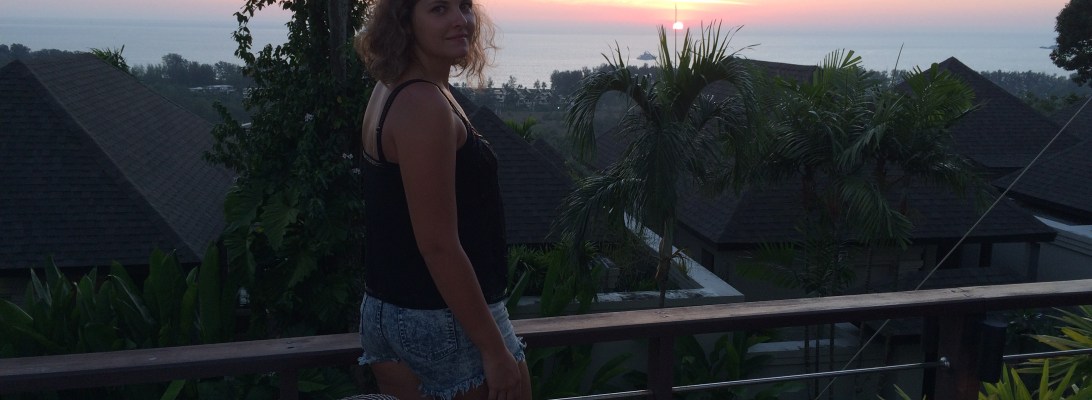
Rainforest frustrations and jungle revelations

So it turns out that the rain forest is actually a fairly harsh environment to live in. Who would have thought?

Gone are our misguided delusions of tanning in the sun, swimming laps across the river, being fluent in Spanish within the month and keeping up our physical fitness.

These activities have been replaced with 1) doing everything we possibly can to not sweat buckets constantly and 2) limiting insect bites to just a handful a day. Sometimes we’re successful, sometimes we’re not.

My biggest complaint of life here are the bites. They are everywhere. The soles of my feet, behind my knee, the base of my neck, those too hard to reach parts of my back. There is no relief from the constant itching. No object is above being used as a scratching implement, sometimes I’m completely unaware that I’m even itching. Once, I only realised when I needed to put the lid back on my bottle and saw that I had been using it to itch the bottom of my feet. It’s become an unconscious reflex. Bite spray, tiger balm and long clothing only get you so far. Those bastards are canny. They get you when you’re distracted, unsuspecting and vulnerable.

Heather and I have insects fly straight into our faces on the regular. Sometimes they hit an eye or fly up a nostril, and they come out of nowhere. The main culprits are moths, crickets and giant flies. The sound of buzzing or a slight skin tickle is enough to set us both on edge and start flapping about at an invisible enemy, deranged and panicked.

Insects are also annoyingly good at crawling into food and drinks. It’s a rare occasion when you can get through a meal without the appearance of a boiled ant. Heather once found 3 moths in her stew, she was pretty shaken.

The weather here is almost always hot and humid. The temperature is mostly mid 30’s and the humidity above 60%. This causes a lot of sweating. Constant, all-consuming, itch-inducing, salt-producing sweating. Sometimes the only thing you can do to not go crazy is just sit still, calm down and distract yourself. Waking up in the middle of the night sticky with sweat and tangled in sheets is not very pleasant. So tanning isn’t much of an option, sitting in the sun exposing your skin to insects is the last thing you want to do. Relief from the heat only really comes with a storm; it’s the only time the dense air lifts and a cool breeze travels across the river.

Other minor complaints are that the water tastes like chlorine: we put chlorine tablets in the water to purify it. And it’s actually pretty difficult to do anything without a conversational level of Spanish. The station manager, Javier, is great and looks after us really well here, but his English is basic and so we are constantly uninformed about stuff that’s happening and have to blindly follow him around sometimes, not knowing where we’re going or what we’re doing. We are getting Spanish lessons and have downloaded DuoLingo, at least on this matter we have some control.

We are both hoping that we manage to acclimatise somewhat to the heat, and become less appealing to hungry insects, although we’re not sure when this will happen, if ever. This post will serve as a reminder of how we felt during the first couple of weeks, and be interesting to compare to how we feel in a few months time.

I think I need to mention, just at the very end, that we both love life in the jungle. We’re in awe every single day at the life that exists here and both feel so amazingly lucky to be living here; but that’s for a different blog post.


Arrival in Ecuador – impressions

The language barrier is strong here. I feel completely ashamed at my appalling lack of Spanish. I learnt French at school and not a single word of Spanish. First thing I did this morning was organise a Spanish lesson with the hostel who employs this lovely Ecuadorian woman where we went over some basic phrases and useful verbs, then I went for a wander round the town. I visited about 10 different electronic shops trying to find an England to America plug adaptor (plug sockets in SA are the American 2 prongs), and my communication got steadily better at each shop: foreshadowing my year here I hope! In the first shop I was inelegantly miming, using my fingers, a plug with 3 prongs entering a plug with 2 prongs, not the most efficient method at getting my point across but eventually she understood, told me she didn’t have one and pointed in a very general direction saying something in Spanish that for all I know could have been “head that way, turn left, right, left again, travel South then it’s 16 steps at 23 degrees West and learn Spanish” because I was walking for ages in the direction she’d pointed and came across no more shops. Anyway, found one in the end and again same story. A couple of shops later I’d searched my entire brain for any Spanish I could possibly use, and when I got to the next shop, managed to ask the guy if he could tell me what this adaptor is called en Español. He kindly told me (adaptador de tres a dos, annoyingly simple, but if you don’t know, how would you work that out), and on my walk to the next shop I was repeating this phrase out loud constantly so I wouldn’t forget it, and in the next shop I walked in, asked in Spanish for this adaptor (a full sentence I might add) and the woman said ‘si’ – fortunately – so I paid for it and that was it. Mission completed I just headed back to the hostel and got out my Spanish notes to revise, feeling ashamed it had taken me so long to complete such a simple task.

Whenever I have to admit I don’t speak Spanish, I feel like people look at me in disgust. Being one of the most widely spoken languages in the world, I expect most locals are used to foreigners being able to speak at least a bit of Spanish. I wonder if English people do that to people who travel to England and don’t speak English.

So I landed in Quito last night at midnight after leaving San Francisco at 10:40am, went through customs easily and picked up my bag. You can get a 90 day visa for Ecuador free on arrival. I’ll be getting a work visa via the Universidad Central del Ecuador eventually so I can stay for the year. Then as I was leaving baggage claim a Spanish/Italian couple came up and asked me if I was heading to the city centre and should we share a taxi, which thirded my taxi bill and I was happy for the company and conversation. Plus, they could speak Spanish making it very easy on my part, all I did was stand around staring politely at people as they conversed and organised everything and I just got into the taxi when I was told to. Easy.

I am currently planning my next couple of days.. There’s been a minor cock up with regards to Heather’s and my arrival at the station (Heather is the other student on the same placement year as me, and she studies Zoology at Manchester Uni), and we may have an extra couple of weeks to play with before we go. If that’s the case we’re going to do something fun like go to Peru. We shall see what happens. If not, I leave Quito on Friday to Coca.

It’s quite strange being back in a hostel environment. I’m staying at The Secret Garden hostel in Quito (WOULD 110% RECOMMEND) in an 8 bed dorm ($10 a night), and when I was shown to my room last night at 1:30am, the night manager brazenly walked into the dorm in front of me and turned on all the lights in order to show me my bed. There were a few annoyed blinky eyes peering at me from under various covers and I looked back sheepishly then literally crawled (I say crawled, I was top bunk and there was no ladder, so actually a more accurate description of me getting into bed could be spider-crawling, or rock climbing) into bed in my aeroplane clothes and played soduku until I drifted off to sleep. Then today one of the first things I did was buy a padlock and key so I could lock away my valuables. I feel too clean to be staying in a hostel. I’m surrounded by lots of hardened backpackers who have scraggly, yellowed clothes, dreadlocks, blotchy tans and hiking gear. Give me a month in the rainforest and I’ll fit right in, I’m sure. Right, signing off. Buenas Noches.

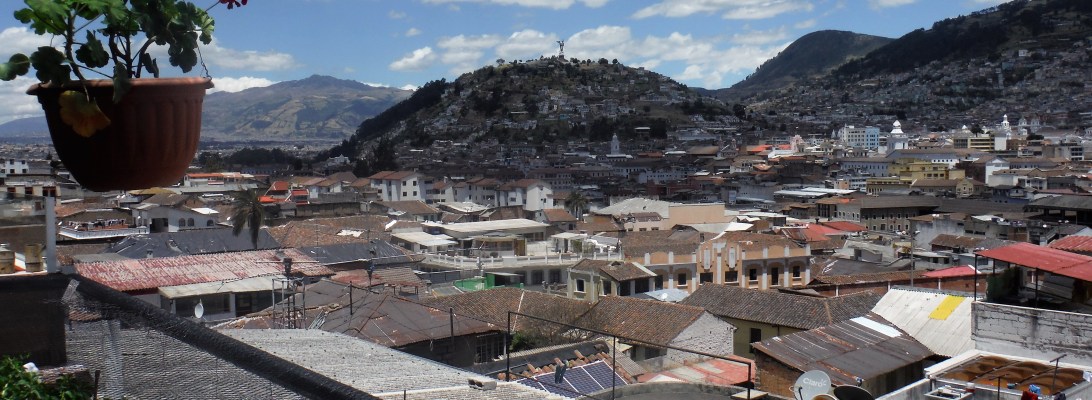
**Featured picture is my view as I was writing this article.

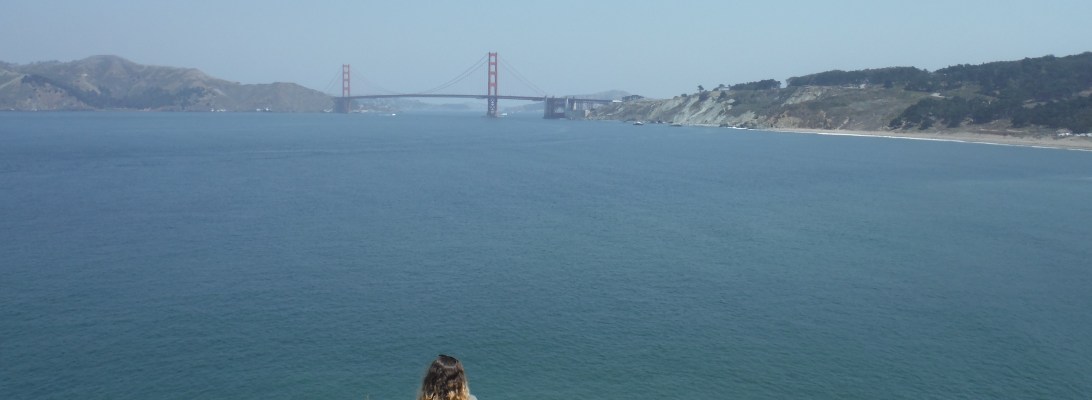
San Jose, Silicon Valley, Santa Cruz and San Francisco

So it’s been an amazing 11 days in NorCal staying with my aunt, uncle, Charchie and cousins in Los Gatos in Silicon Valley. I’ve explored a lot in the time I’ve been here, but of course there’s always more to see and more to do!

I’m not quite sure what I expected from my first trip to the states, but it wasn’t really that. I arrived on a sunny day and immediately felt like the flora, weather and architecture was reminiscent of Southern Spain. Los Gatos is a colourful, clean and beautiful town with a healthy, rich vibe. Certainly a lovely place to live complete with good schools and easy access to the beach, Santa Cruz, San Francisco and massive outlet stores.

I was given the tour of Silicon Valley and saw the HeadQuarters of Facebook, Google, Apple, Roku/Netflix, and shown where the owners of Snapchat and Whatsapp live, as they’re in the same neighbourhood as my family. Tech capital of the world indeed. The money in Los Gatos is evident in absolutely everything. The streets are pristine, each house is a work of art with architectural styles from all over the world, the flowers are colourful and healthy, the cars were all top of the range, and it’s a safe place to live. My aunt and uncle had neighbours popping round exchanging figs and limes that grew in their gardens, there was someone jogging past the window every time you glanced out onto the streets, wild rabbits played easily in the gardens and the sun shined every day.

Gentrification is a big problem around San Francisco and San Jose. Because it is the Tech capital of the world, big earners are flooding into the neighbourhoods outbidding all the poorer communities which had given SF and SJ its soulful personality back when the city was building up. The house prices are extortionate which reflect the local economy.

Never the less it was fascinating seeing the HQ’s of these world-dominating tech companies. Also, we visited Stanford University which was incredible. No.2 university in the whole world, and one of the most beautiful. Palm trees line the roads approaching the uni; each building has its own character however the whole complex fits together so well, and is very well maintained.

San Francisco is super edgy, artsy, liberal, run down, chic, open-minded, multicultural, beautiful, interesting, and above all, just cool. The architecture is stunning. Each house screams out the personality of its owner and you’ll often see liberal political opinions written on the walls, signposted in windows and represented by colourful graffiti. You get houses in every different colour and style, from Victorian, to European, to Indian, to classic american, to Arabic… name a prominent culture and you can find houses that look like they belong there in San Francisco. It certainly is not a bike friendly place, the hills are absolutely insane and sometimes even a bit scary to drive down. Shout out to my amazing tour guides Sierra and Grace who gave me an insight into the culture I never would have got on my own. And shout out to Sierra for being such a patient photographer. I managed to time my visit concurrently with the hottest day in San Francisco on record, ever. 40 degree heat is just not fun to walk around in.

Me and Sierra also explored surfer town Santa Cruz with its edgy undercurrent full of thrift shops and run-down book stores. The boardwalk is like a mini theme park contained on a small beach, and there’s a long pier with restaurants and fish markets. The sea is littered with surfers in long wetsuits due to the icy cold pacific sea, and there’s a fog that hangs in the air most days.

All in all it was a great 2 weeks and I thoroughly enjoyed staying with my aunt and uncle. They made me feel so so welcome and I will definitely go back there on my way home. California has been added to my ‘could live there’ list.

Onwards to South America!


ChiroEurope 2017

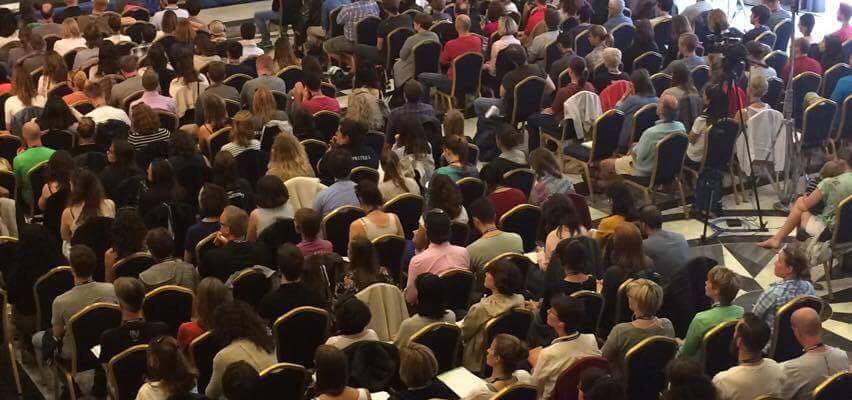
ChiroEurope is a conference that occurs twice a year, spring and autumn, inclusively catering for Chiro’s, Chiropractic assistants, students, friends and family and anyone who’s interested in Chiropractic care. The long weekend consists of a series of speakers who aim to challenge, support, inspire, share their miracles, give advice and ultimately bring out the best in every single person in the room. Each speaker brings a touch of magic and positive energy which irrevocably infects each avid listener over the course of the weekend, leaving this feeling of elation and practical determination to start making positive changes in your own life, be it personally or professionally, or most probably both.

I had the fortune of attending ChiroEurope in April 2017 with my mum and her Chiropractic colleagues from the Cowes Chiropractic Clinic (CCC on the Isle of Wight). It was a four day event, held at the Hotel IPV Palace and Spa, situated in beautiful Malaga in southern Spain. The conference attracts students and professionals from all over the globe and was an amalgamation of some of the brightest and best minds of the chiropractic world, and I was honoured to be there as a guest. I was gifted this opportunity because, conveniently, my mum knows me pretty well and after having gone the year before, thought that I would really enjoy it and get a lot out of it so I was invited along by Rebecca and will be eternally grateful for the kindness they showed me.

Let me introduce myself. I’m a current student of Manchester Uni studying Biomedical Sciences, purely because I love learning about how the human body works and have a passion for health and making people better. I live by a holistic health philosophy and anything that promotes wellbeing and happiness. Before ChiroEurope, I had had a few chiropractic treatments and decided that I liked Chiropractic and that it matched my beliefs and outlook on life. I didn’t know too much about the science or the methods, but I let my curiosity guide me, and found something that I now truly love, and will be a consistent part of my health routine (just as important as eating right and exercising) for the rest of my life.

Those four days took me on a journey of self-reflection and reconnection, culminating in a love for the profession that I never thought I would have. ChiroEurope has taken me from a position of curious observation, to literally wanting to marry a Chiropractor so I can be a part of that world forever. My list of criteria for the love of my life has been drastically shortened and now contains just that one item. And for good reason. I think to become a Chiropractor, your main aim in life has to be to do good and to help people. For those of you reading who don’t know much about Chiropractic, don’t worry, neither did I, and I want to share with you everything that I learnt. I imagine that even a lot of Chiropractors and students have no idea what their own potential is until they experience ChiroEurope. It will open doors inside your mind you didn’t even know were there; introduce you to choices you didn’t know you had; and enable you to adjust in an inspired way in order to do the most good.

For you non-Chiro’s, an adjustment is just a manipulation of the spine in order to remove nerve interference. Let me explain that. Every second, thousands of messages are being sent around your body in order to communicate and work efficiently. Your body is a powerful, dynamic, miracle that is capable of self-regulation, self-renewal and self-repair. Your body can heal itself. Do your wounds gape open forever when you get cut, or do they close? You have a power within your body, a life force, whatever you want to call it, that is able to heal itself and grow. The power that made your body, can also heal your body. It’s unequivocal. Your body has an immune system that works tirelessly to fend off harmful invaders, or anything that threatens the overall health of the whole. Our digestive system turns what you eat, into you. It really is true, you are what you eat. You are that coffee you drank this morning and that chocolate you ate last night. It gets broken down, and turned into lots of little molecules and chemicals which get incorporated into your eyes, heart, skin, blood, everything. Our brain is a beautifully designed processor and communicator which can simultaneously coordinate millions of actions, with the ultimate goal of survival, health and love. We have evolved lots of clever ways of transmitting these messages around the body so that it all functions in harmony and in health. These messages include electrical and chemical impulses through our neurons which travel out of the brain, down the brain stem and then exit out into the body. And what Chiropractic does, is it removes the interference between your brain and your body by adjusting and aligning the spinal cord so it can protect the most important part of you: the brain and brain stem. Unfortunately as humans, we tend to get injured a lot, and our lives are built around habit; habits put strain on the body. A repeated movement can cause your skeleton to become misaligned, and put pressure on certain neurons, causing them to over and under fire, messing with the natural balance of the body. Chiropractic treatment removes these pressures, allowing the body to function at its optimal. A misconception is that Chiropractors only deal with posture, back pain, neck pain and headaches. Vitalistic Chiropractors unlock the body’s innate potential, and allow it to do what it does best.

This was ChiroEurope. Even as a non-Chiropractor, I still felt the awe and admiration for all that our bodies do, and the absolute dedication to healing that all of these chiropractors had; a complete faith in the brilliance of the human body, and a calling to help as many people as possible.

All the guests and speakers shared this passion for health, happiness and humanity. Some were more practical, and gave direct advice in successfully building your own practice, gaining new clients, managing, marketing, communicating etc. And some were there to plug you in, turn you on, and charge you up; sharing their enthusiasm, passion and love of life. There were lots of miracles shared on the ChiroEurope stage which left you tingling and breathless, but a lot of miracles in Chiropractic often happen beneath the surface, where you can’t always see what’s going on. The nature of our Western society is to need a quick fix for everything, and where sometimes Chiropractic is a quick fix, more often than not restoring the natural balance of the body holistically and sustainably actually takes a little while and requires a bit of perseverance.

So I can whole-heartedly say that the Chiropractic profession has a new advocate with a fairly loud voice (metaphorically of course, I won’t be wandering the streets shouting at everyone to go and see a Chiropractor, not often anyway), and I promise to pass on this knowledge to anyone who is open-minded enough to listen. So, on a final note, my last piece of advice, GO AND SEE YOUR CHIROPRACTOR.