A snapshot moment

I’ll set the scene:

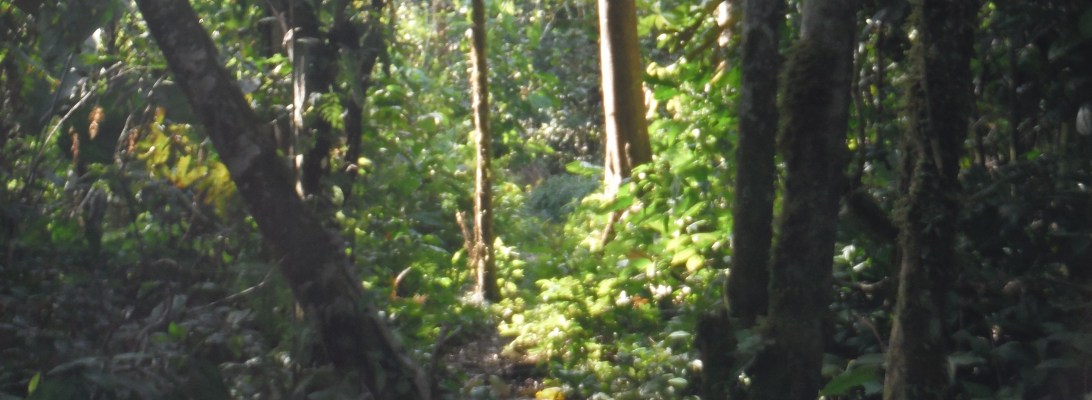
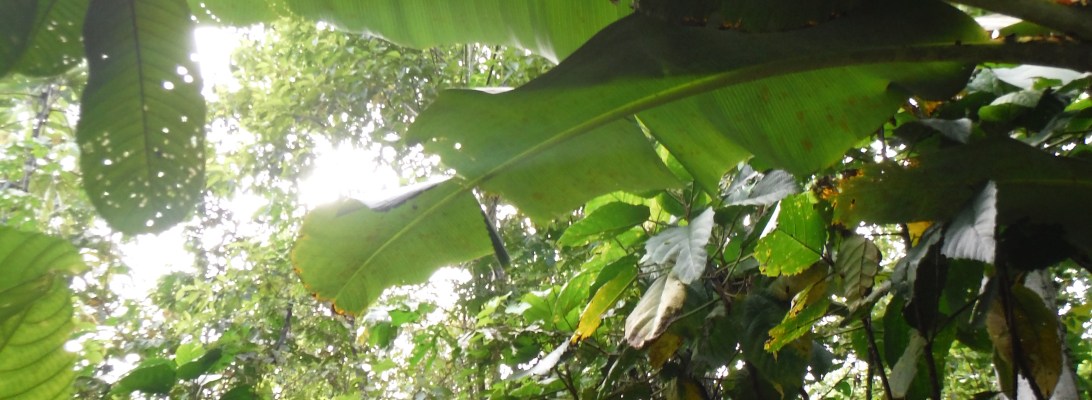
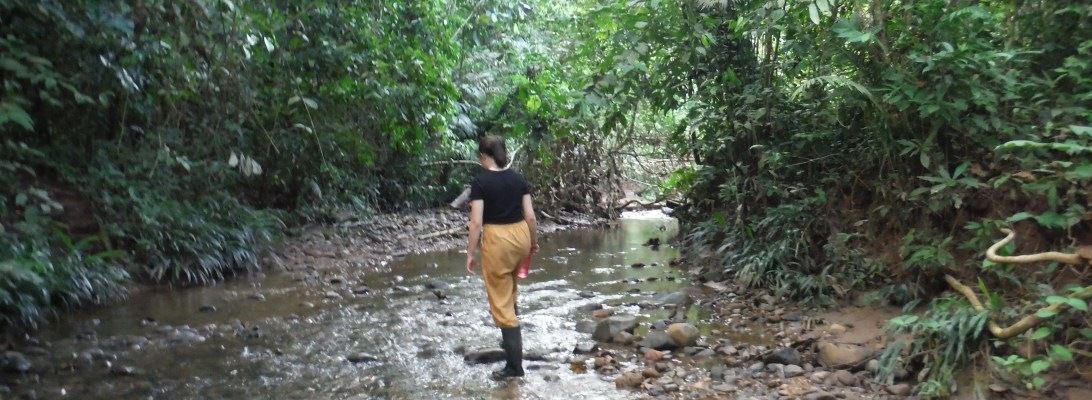
Me (purple, floaty trousers, black and green Hawaiian shirt, slightly tanned, curly hair tied back), lying in my hammock in the “porch” of our “mansion”. It is HOT today, so hot in fact that I got in the “shower” earlier fully clothed just to cool down a bit. The sun is shining and the river flows idly, the grass is quite overgrown and bright, little seeds cling to my socks and trousers whenever I walk anywhere. Insects are constantly buzzing about, jumping up from the grass and circling through the air which hangs heavy and still with humidity. Frogs and mice occasionally peep out from their homes and the geckos in our “mansion” crawl silently across the walls and the ceiling. The crickets are buzzing and the birds chirping and every so often the rumbling of a motor crawls past as members of the community travel up and down the river. The giant leaves on the banana trees rustle slightly in a gentle breeze, and the sound of the shallow water dancing over the rocks in the river floats up from the bank. I can smell the rich scent of tropical nature, almost cloying and almost sweet. And I feel calm. The heat has soaked into my bones and it is bliss to lie here, embraced in the warmth of the air and the peace and serenity of the trees.

I have spent the morning working on my project. Hours and hours and hours of data collection and analysis, with hours and hours and hours to go. My ears are ringing from listening to my music too loudly, my mind is buzzing with thoughts of work, and my fingers are sore from clicking and dragging and typing. I’m taking a break. Whether it’s well-deserved I’m not so sure, but the heat and limitless time we have make it hard to concentrate.

Heather and I have been at the station for 9 days now. Just us. Here. Alone. In our paradise-like prison, or prison-like paradise; depending which mood we’re in. We’ve been on rations for a few days now because our food supply is dwindling so meals have been delightfully creative or completely boring. The flies are out in full force so we’re both covered in bites, but I think we’re more used to them now so they don’t bother us as much. Evening is settling in, the air is cooling slightly and the sun getting lower.


I’ll get back to work now. The tab of my spreadsheet is staring at me disparagingly from the bottom of my laptop screen and, as much as I wish they would, the photos won’t start sorting themselves.


*”quotation marks” used to indicate the metaphorical nature of these descriptive nouns. We don’t actually live in a mansion, but a 4 roomed, open, wooden building built on stilts. The porch refers to the area at the front of said building. We have a structure which does a very good imitation of a shower, but in reality is 3 small concrete walls and a shower curtain with a barrel that we pump full of river water when it gets low, and a tap coming out of it.


22-02-2018 Menstruation Magic

This morning, a guide, Javier and myself set out into the forest to set up my project. I need 12 transects (straight lines that I use to mark where I will collect my data) in both primary and secondary forest. We found suitable areas with plenty of space and started to set these up, however, we happened upon an unusual obstacle. The community believe that when a woman is on her period, she has witchcraft that destroys their land and crops. So as we were walking through the forest with our string and measuring tape, we kept accidentally finding ourselves in bits of farmland that were completely off limits to me, a woman with magic crop-destroying periods. Not a problem I thought I’d have to deal with, frankly.

20-02-2018 Monotony

I want to preface this post with a reality check: We live in the rainforest, in Ecuador, near an Indigenous Community, at a research station, on a river bank, in wooden huts, without a car, without a boat (more importantly), with just each other, in the jungle. Like if you saw our location on a map it would just be a dot in the green bit that covers some of the East of Ecuador. This place is isolated. To get to the nearest town which is a very basic, very small, very local little place takes 3 hours. To get to the nearest town with a bar takes 4 and a half hours. To get to the nearest town with English speakers takes 9 hours. To get to a city takes 14 hours.

In my opinion, that is fucking cool. We are separated from civilisation (apart from through the internet of course – thank god for the internet), out in nature, surrounded by beautiful wildlife, cooking from scratch, doing ‘science’, living a life (almost) free of social pressures and expectations and best of all living and working closely with a community of people who are from a completely different (metaphorical) world to us. It’s fascinating…

But wow! Does it get boring. It is effectively our job to run and maintain the station, that requires being here 24/7 funnily enough: in this small little patch of land, with a finite amount of things to do and people to talk to; for days, and sometimes weeks on end. Also, now we’ve started our projects we are tied to the station for at least 2 or 3 days a week to collect our data from the forest, there is 0 flexibility here so that our projects are valid and our results usable. And like I explained in paragraph 1, it takes a hell of a long time to get anywhere from here. There’s no ‘popping out’ from the station. No, no. There’s ‘right we have an appointment in Tena at 9:30am on Thursday for 20 minutes so we’ll need to leave 2 days in advance and we’ll be away from the station for 4 days okay let’s pack up every single item in the whole station so the community can’t steal anything, umm order a canoe a few days in advance, pack a weeks worth of laundry and clothes, book accommodation, write a shopping list and then yeah, good to go’. So, as you can (hopefully) see, unless we have a visa office to visit or a document to retrieve, we are stuck here.

Most of the time I think I have more freedom here than anywhere else in the world. I can get up when I like, I have enough time to read books, watch movies, eat leisurely and work at my own pace. I don’t have a myriad of lectures, meetings, shifts, matches, events that lead my life for me; I lead my life here, not the timetable on my outlook calendar. But sometimes I feel caged in and bored. Bored bored bored. And when I get bored I get tired, which just perpetuates this boredom cycle and I loose motivation and sometimes when it gets really bad, I loose touch with reality a little.

I don’t mean to undermine the life we have here (I actually think sadness and challenge augment our reality as we learn and grow through these hard experiences) but understandably we get a bit stir crazy every so often! This manifests in many different ways, some weirder than others, I won’t go into details. We haven’t yet had the time to take a holiday in Ecuador and go and have some fun. Every time we’ve left the station previously it was on visa or food related errands which are crazy-frustrating and boring, in that order. I think Heather and I deserve some real credit here, for all intents and purposes we are managing extremely well under the circumstances. We chose this placement in the first place (separately) knowing it would be challenging and isolated, so we also knew ourselves well enough to know we would probably be fine with it. Which we are *insert earnest smile*. However… we really ought to get out more.

Which we will: back-at-the-station-after-christmas resolution number 1 was to take some time off ‘work’ (go on holiday) every month; and Heathers 21st birthday is fast approaching so we are taking our first fun trip in Ecuador and going to Banos (Ban-yos – Baths in Spanish because the town is built on the side of the tallest volcano in Ecuador and there are lots of thermal baths there) for 6 days which will be mega fun. Lots of canyoning, hiking, rafting, zip-lining and thermal-bath bathing in Banos. We leave this Friday and will shun all responsibility until we get back the following Thursday, and it’ll be great. We will come back renewed and full of life, I’m sure.

Anyway, the day is running out and I’m actually procrastinating a little right now – I should be reading Fungi Biodiversity papers.

So, signing off – from the hammock near the wifi router, wooden hut, river bank, Payamino, Ecuador.

17-02-2018 The ups and the downs

It’s a quiet day at the station today. Only Heather and I are here so we have complete freedom to do what we like when we like. This freedom only really extends to when we eat, usually with more people at the station mealtimes are regular and we take it in turns to cook each meal, but with only the two of us here, I ate breakfast at midday and Heather ate lunch at 3: we’ve descended into madness. Apart from that, we are still at the mercy of the weather and can’t leave the station as we have work to do here. It’s been raining the last couple of days so wifi and power have been a little dodgy, and until recently the station has been relatively full! So it’s back to our quiet little life.

Life has taken a few turns recently, ebbing and flowing like the tides of El Rio Payamino. It’s easy to see a surface view of someone’s life and assume that all’s fine and dandy, but actually there’s usually something going on there which doesn’t breach social media or light conversation.

My life has been a bit up and down recently. I think being ill always gets you down and it takes a little while to regain the swing of things; I’m still not better after my ear infection which is making me a little lethargic and foggy. Another thing – this one took me a while to figure out on all my travels – but it turns out you’re not immune to insecurities / down days / mad panics about life just because you live somewhere cool: had a few of them recently. Also, the direction of my project has changed once again. It’s been a real challenge figuring out what kind of research is available in the field, balancing my highly-optimistic research aims, and evaluating my own limitations in order to find the middle ground of what’s actually doable here.

It was quite disheartening at first, but I am a fan of silver linings and have started to appreciate the benefits of my new plan. It will be a lot simpler and easier, I will have more control over every aspect, and the write-up will be more straight forward. All boring things, I’ve lost interest over ease, but at least I can actually make a start.

Field work is surprisingly slow. There are a lot of social, political, meteorological and ecological hoops to jump through that you just don’t expect to meet when you set out on your journey, hoping to uncover some valuable resource or hidden knowledge. And field work is clumsy. Of course we adhere to ‘the scientific method’, and keep all our data as valid and reliable as possible, but at the end of the day, research is limited by the people doing it and the amount of money and time they have. We’ve recently been collecting data for an arachnid biodiversity study which sounds to me awfully professional and serious, but the actual field work/data collection side of things juxtaposes this scientific vision of serious, intelligent people doing serious, intelligent things, and replaces it with a group of people, some scientists, some undergrads, and some indigenous community members, literally catching spiders in the jungle. There’s more to it than that, years and years of research that has cultivated the perfect method and most accurate data analysis, however the literal translation from the methods section in a scientific paper to people working in the field is not what you expect. It’s been fascinating to learn this and experience some real life science in the field.

All in all life at the station has been great. The company has been wonderful, and it’s nice to be back home in our idyllic, little corner of the world. But I’d be lying if I said life has been perfect: life has been normal, I guess, but still full of discovery, new experiences, learning and getting shit done, which are the main things, I think.

How to survive in the Jungle

First of all, I hope that none of you reading this are intending on actually using this blog post as a guide to the jungle. I am not professing to have succeeded at life here, nor am I suggesting I have any great wisdom on the matter. This is more a collection of observations and lessons I have learnt so far in the 2 short months that I have been living in the Amazon rainforest.

Don’t complain about how much you sweat.

Complaining makes you frustrated, which causes your blood pressure to increase and your body to heat up, which causes more sweating. It’s a vicious, vicious cycle. There’s no escape or respite from it, there’s nothing you can do to prevent it, and it doesn’t get any easier. My advice is tranquillo, tranquillo. Being chill is synonymous with cold for a reason. Relax, be calm and slow, and the sweat is manageable.

Laugh a lot at how ridiculous life can be.

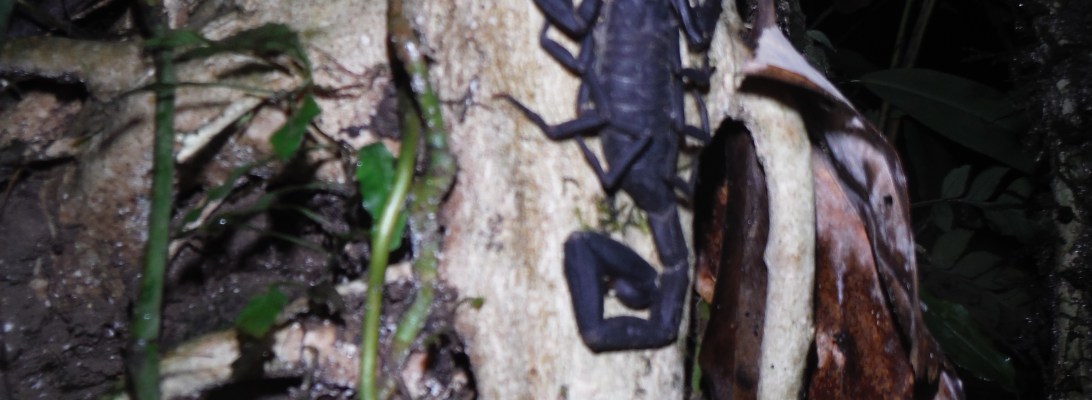
The best thing you can do when the jungle pushes you to the limit of your adaptability is to laugh. 3 new super itchy bites on your bum, an awkward and socially-unacceptable place to scratch? Have a giggle about it, then scratch it anyway. Droplets of sweat that have made it all the way from your under-boob down to your ankle? It’s okay, just wipe and laugh. A huge, scary looking scorpion thing sitting innocuously in the exact spot you were about to place your hand? It’s cool, you saw it just in time, scream a little bit, then laugh. When the local, wild, jungle dog has raided your kitchen, upturned all the bins and spilt gross, smelly liquid all over the floor, maybe don’t laugh right away, maybe clear it up asap and lock the doors. Yell ‘hijo de puta’ to the general surroundings… then laugh.

Make friends with the insect community.

Only the harmless ones though. Become one with nature and take on a Snow-Whitely demeanour as the butterflies and moths swirl around you, and weird and wonderful little creatures somehow end up on your body and you’re not quite sure how they got there. Smile at them warmly, sing a little song if you’re so inclined, then get them the hell off you just in case.

Be prepared for attack at all times

The silent, tiny enemies that cause an unbelievable amount of grief are the biting bugs. A sting, and a week-long, incessant itch are the least of your worries, some of these insects carry horrible diseases like Malaria and Leishmaniasis. The likelihood of us getting either of these is fairly slim, but I don’t want to take any chances. Along with deet and long clothing, Heather and I have developed a series of noises and phrases designed to scare off unwanted critters. They work with varying degrees of success. These usually explode out of us when we realise we’re being attacked and often come from the recesses of our subconscious. Heathers go-to insult is yelling “BIG HAIRY BEAST” at the offender. It seems to work. My expletives are usually a series of weird noises like ‘lblblblblbllb’ or ‘chchchchchhc’. Yesterday, a wasp was hanging round the spout of our lemon juice, and I politely turned to it and said ‘Go away! That is not your lemon juice!’ Needless to say the wasp didn’t listen.

Tiger balm, and lots of it.

The only successful minor relief from the stingy itchiness is our beloved tiger balm. We try to keep stocked up at all times and apply it so often that most of our clothes and bed sheets have a yellow-ish tinge. I feel like every time I kill a mosquito, I’m helping humankind, ridding the world of disease one bug at a time. You’re welcome.

Frequent showers – for clarity of mind

The water is pumped straight from the river and is dispensed into a concrete shower block from a medium-sized plastic tank, so it’s always cold and fresh and has to be topped up every couple of days. When I say shower block, I mean a very small concrete cubicle with only 3 walls and a shower curtain, and no ceiling. Sharing a shower with the outside world is not so bad although the unavoidable, clothe-less nature of a shower does increase skin surface area for flying insects to land on. An inevitability unfortunately. One time, when Heather was showering, glasses-less and vulnerable, a massive toad reduced to a blurry leaf due to lack of 20:20 vision leapt desperately on to her leg. Not the ideal shower companion. My favourite time to shower is just after the sun has set, there’s something quite magical about showering and staring up at the moon and the treetops, plus the water is usually not freezing as it’s been heating up all day!

A strong stomach

Because who knows how many ants have died a merciless death in your boiling soup after they’ve climbed into your saucepan, and how many bugs you’ve had to force down after they landed in your drink and you only realised when you felt them sliding down your throat.

You’ll need a good selection of offline films, series and books.

I have rediscovered my love of reading here. My absolute favourite, most perfect, peaceful time of day is the morning. We usually wake up as the sun rises and make the short journey from our mattresses and the protection of our mosquito nets to our hammocks on the porch between 7 and 8, then read for an hour or so as the day heats up. We take our kindles to breakfast with us and read whilst sipping coffee, eating and chatting. Our mornings are delicious. Then at night we usually watch something we have downloaded, swinging in our hammocks listening to the buzz of night life around the station. The other night we were watching Stranger Things during an intense thunder storm lighting up the sky with bolts of lightning striking the trees across the river, the atmosphere was incredible.

Take a breath and remember how lucky you are all the time.

Because it’s true. Heather and I often have beautiful moments where we become sort of meta-aware about our surroundings and it dawns on us how unlikely and wonderful it is that life has brought us to this magical place. Glorious sunshine and a swim in the river can quickly turn into a furious thunder and lightning storm, deafeningly loud and thrillingly close. The river can be serene and gentle one minute, then have turned into raging rapids and be transporting large trees the next.

Why We’re Here – The Research

For those of you who have got the impression that so far my time in Ecuador has mostly been exploring, lying in a hammock and swimming, you’re wrong. Well, half wrong. Okay, just a little bit wrong, we have been doing a lot of that. But there’s a much more serious side to our life here: the research.

To preface the bulk of this post, I’ll just explain why I’m here: I’m 2 and a bit years into a degree in Biomedical Sciences with Industrial Placement at Manchester, and this is my placement. Heather is also on placement with me, she studies Zoology at Manchester and is a passionate animal lover, even the grizzly, scary, creepy ones… especially the grizzly, scary, creepy ones. Our aim over the course of this year in the Jungle is to complete research in an area of our choosing and produce scientifically viable results. If we work hard, then getting published could be on the cards.

We’ve both spent a long time coming up with a plan for our research proposals which mainly involved a lot of emailing, scrolling through PubMed, reading papers and chatting to Javier, the Ecuadorian station manager, about what would be possible. Javier has a degree in Forestry Engineering and has been working at the station for 6 years now. He’s affectionately nicknamed Jungle Dad and is sociable, generous, and a real joker. Even though most of his jokes are in Spanish and fly straight over our heads, he still makes us laugh with his faux-stern expressions, dad dancing and inability to say slept. “Slepech. Slepecha. Slepch?”

Heather’s main project will be investigating the Arachnid biodiversity here at Payamino. She was given a fantastic opportunity to work closely with an Arachnid specialist during her time here; they’ll complete the field work and research when he arrives at the station in January next year. ‘Arachnid Biodiversity Study’ means capturing as many spiders as possible, bringing them back to the station and identifying what species they are. Heather’s hoping to gain a greater appreciation of an animal that’s normally shunned in society and has a huge fear stigma attached to them. In her opinion, they’re actually underappreciated, beautiful creatures that aren’t nearly as scary as they seem. Already we’ve seen lots of spiders, including a baby tarantula (that we caught in a soup bowl) and many jumping spiders. Heather uses the word adorable, not something synonymous with spiders in my personal opinion, but it’s her project not mine. It’s a good thing I’m not scared of spiders (which my mother proudly attributes all credit to herself as she always made me and my sister get rid of the spiders in the house so she didn’t have to, thanks mum). Also, Heather will be continuing with the research on Heliconias, a native flowering plant, which was started by a previous placement student. The project is looking at the effects of genetic variation in Heliconia species and the associated insect communities. It will involve cutting off roots from existing plants and growing her own little, genetically-identical garden, then measuring the species diversity found between the two plants. Interesting stuff, plus Heliconias are really pretty.

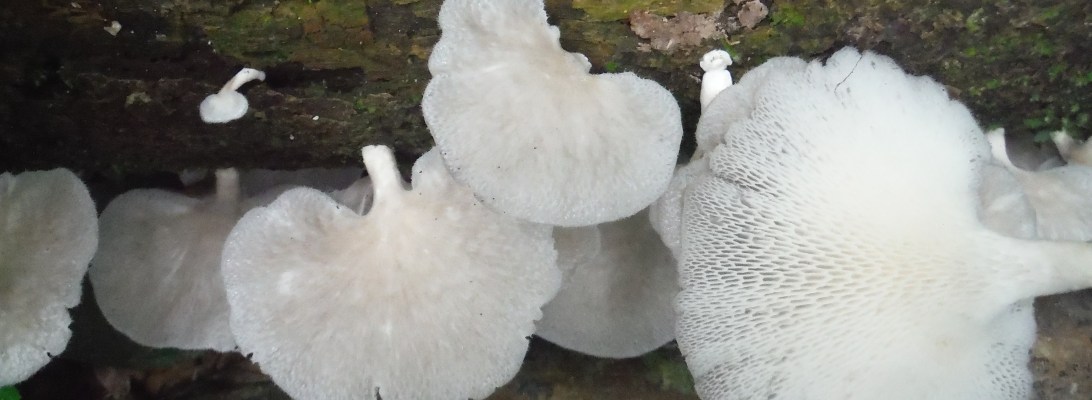
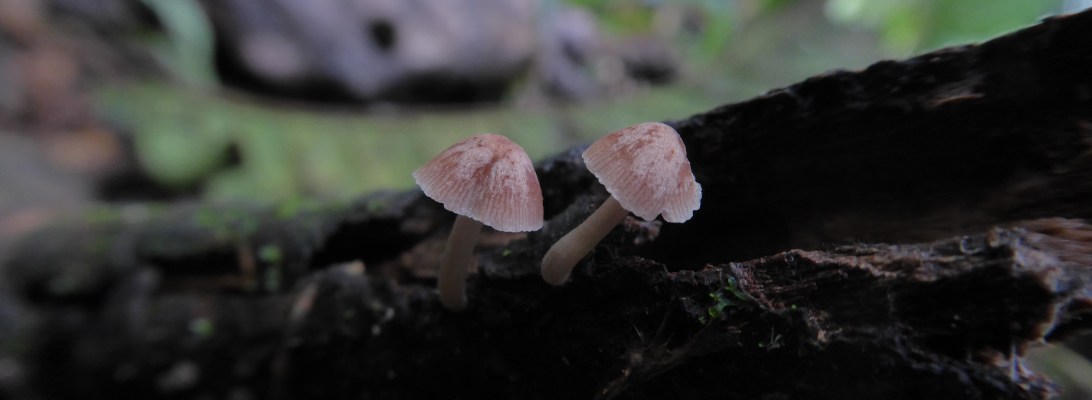
My projects, which I’m very excited about, will be Fungi Biodiversity and knowledge about ethno-medicine in indigenous communities. Fungi are a largely under-researched, under-appreciated group of organisms. They are neither a plant nor an animal, but a whole kingdom to themselves. My project will be on the different types of flowering fungi found in Payamino. It will be impossible to do an all-inclusive biodiversity survey as a lot of fungal species are microscopic and I just don’t have the equipment to find them, so the project will be limited to fungi I can see with my eyes. There has been absolutely zero research into fungi biodiversity here, so I’m in unchartered territory and hopefully my research will be valuable to the scientific community. Once I’ve collected data on each fungi I find, I will get in touch with a fungi specialist either in Quito or the UK who can help me identify each species. Hopefully I’ll develop a comprehensive list of species found in this area. My interest in fungi started to develop in first year of Uni when I came to appreciate how diverse, interesting and spectacular they can be. For example, did you know that some species of fungi create their own jets of air in order to spread their spores further; some species are carnivorous, capable of punching holes in the cell walls of passing nematode worms and insects for food; and some have even teamed up with plants they live on and kill the insects for them then feed them the corpses. I started to see them as the research underdog of the natural world, and love the idea of contributing to this hugely unfinished puzzle piece of nature.

My second research project is quite close to my heart. I’ve always been interested in alternative medicine and how they practice medicine in different parts of the world, inspired by my own battle with illness, and had the idea of looking into medicine used in the indigenous communities here before I even applied for the placement. When I arrived, I found a book on the book shelf entitled ‘Plantas de Medicinales en Payamino’. I’m sure you can crack that Spanish on your own. The book was a catalogue of all the different plants used medicinally by the Kichua community, what they’re used for and how they’re prepared. I got in touch with the author of the book, Dr Brian Doyle – a researcher in the States, asking if there was any further research he wanted to do here, and if not, whether his research bought up some interesting questions that I could research myself. He replied with 3 large bullet points, each detailing a possible research area I could pursue, and said he was planning on coming back to Payamino next year to continue his research. This was the best possible news I could have hoped for. Bullet point number 1 turned out to be not so relevant after chatting with Javier who knows the area and communities really well. Bullet point number 2 was simply monitoring all the plant species year round; collecting samples for the National Herbarium in Quito and collecting data and pictures about the life cycle of each plant. Bullet point number 3 was by far the most interesting and challenging suggestion. Brian had recently published a paper that analysed the distribution of knowledge about traditional medicine across the community near the station. His suggestion was that I do the same thing, with improvements and a few alterations, in a few other indigenous communities, and use the data to compare knowledge between communities. Imagine: travelling to various indigenous communities in the rainforest, staying for a week or so and in that time surveying a random sample of the population using images of plants and a basic questionnaire. Queue huge excitement and the stomach-dropping realisation that I’m going to have to be near fluent in Spanish to pull this off. So at the moment I am doing my best to learn Spanish, with a general plan to do this field work next Easter.

So my plan is to get a chunk of the Fungi project done by Christmas and send over the data to a specialist to see what results I get; and learn Spanish rapido. There’s only so far you can get with audio-tapes, books and Duolingo, so Heather and I spent an intense week in el Coca having Spanish lessons with an Ecuadorian-but-lived-in-Norway-for-18-years English teacher, Fernando, doing 4 hours of lessons a day. It was a pretty hard week but we learnt a lot. On the Friday, we went to a bar (Papa Dance, a salsa bar on the river) with Fernando and met some of his other students learning English and found we could actually have a simple conversation and swap basic information about our lives. It was a triumphant moment.

The pace of life is still quite slow here as we travel to and from various cities on a weekly basis to get all the relevant documentation needed for our contracts with UEA and our Ecuadorian work visa, and as we adjust to the living conditions in the Rainforest. We’ve only been here a month but it already feels like a lifetime. This little clearing on the bank of el Rio Payamino has become our home and we love it. We both have high hopes for our research here and can’t wait to see our ideas and plans come to fruition. Let’s hope that in a year’s time, Heather and I can look back at the blog post and have succeeded in meeting our aims. Buena suerte a nosotros. Good luck to us.

Rainforest frustrations and jungle revelations

So it turns out that the rain forest is actually a fairly harsh environment to live in. Who would have thought?

Gone are our misguided delusions of tanning in the sun, swimming laps across the river, being fluent in Spanish within the month and keeping up our physical fitness.

These activities have been replaced with 1) doing everything we possibly can to not sweat buckets constantly and 2) limiting insect bites to just a handful a day. Sometimes we’re successful, sometimes we’re not.

My biggest complaint of life here are the bites. They are everywhere. The soles of my feet, behind my knee, the base of my neck, those too hard to reach parts of my back. There is no relief from the constant itching. No object is above being used as a scratching implement, sometimes I’m completely unaware that I’m even itching. Once, I only realised when I needed to put the lid back on my bottle and saw that I had been using it to itch the bottom of my feet. It’s become an unconscious reflex. Bite spray, tiger balm and long clothing only get you so far. Those bastards are canny. They get you when you’re distracted, unsuspecting and vulnerable.

Heather and I have insects fly straight into our faces on the regular. Sometimes they hit an eye or fly up a nostril, and they come out of nowhere. The main culprits are moths, crickets and giant flies. The sound of buzzing or a slight skin tickle is enough to set us both on edge and start flapping about at an invisible enemy, deranged and panicked.

Insects are also annoyingly good at crawling into food and drinks. It’s a rare occasion when you can get through a meal without the appearance of a boiled ant. Heather once found 3 moths in her stew, she was pretty shaken.

The weather here is almost always hot and humid. The temperature is mostly mid 30’s and the humidity above 60%. This causes a lot of sweating. Constant, all-consuming, itch-inducing, salt-producing sweating. Sometimes the only thing you can do to not go crazy is just sit still, calm down and distract yourself. Waking up in the middle of the night sticky with sweat and tangled in sheets is not very pleasant. So tanning isn’t much of an option, sitting in the sun exposing your skin to insects is the last thing you want to do. Relief from the heat only really comes with a storm; it’s the only time the dense air lifts and a cool breeze travels across the river.

Other minor complaints are that the water tastes like chlorine: we put chlorine tablets in the water to purify it. And it’s actually pretty difficult to do anything without a conversational level of Spanish. The station manager, Javier, is great and looks after us really well here, but his English is basic and so we are constantly uninformed about stuff that’s happening and have to blindly follow him around sometimes, not knowing where we’re going or what we’re doing. We are getting Spanish lessons and have downloaded DuoLingo, at least on this matter we have some control.

We are both hoping that we manage to acclimatise somewhat to the heat, and become less appealing to hungry insects, although we’re not sure when this will happen, if ever. This post will serve as a reminder of how we felt during the first couple of weeks, and be interesting to compare to how we feel in a few months time.

I think I need to mention, just at the very end, that we both love life in the jungle. We’re in awe every single day at the life that exists here and both feel so amazingly lucky to be living here; but that’s for a different blog post.


My first week in Ecuador

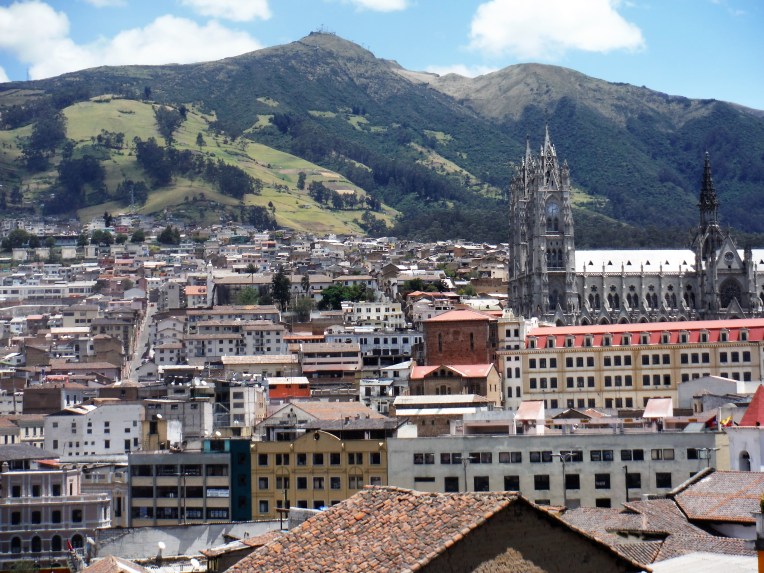
Did you know that the capital city of Ecuador, Quito, is the ‘highest’ capital city in the world? (but only when Sucre is considered capital of Bolivia, if it’s not then technically La Paz in Bolivia is higher) sitting at 9,350ft (2,850m) above sea level. Altitude sickness is a real danger in Quito, and unfortunately I found this out the hard way after drinking on my first night in Ecuador. I didn’t overdo it on the night out so when I woke up on deaths door, unable to keep anything in my stomach the whole day, I was totally confused and convinced I had contracted some awful stomach bug, but after talking to some of the volunteers at the hostel, it turned out that this was actually completely normal, and that it was the altitude at fault, and not some nasty Ecuadorian disease.
DSCF5187.JPG

Unfortunately, I never seemed to recover from altitude sickness and spent the whole week feeling nauseous and fatigued which was slightly inconvenient. Couple that with being vegan and finding it semi-difficult to get proper meals, I ended up feeling a bit weak and malnourished by the end of the week. Saying that, being vegan wasn’t too difficult and I did manage to eat out and not starve. So day number 2 was a complete write off: caught up on GoT and watched The Angry Birds Movie in bed feeling really sorry for myself. Even traversing the many stairs in the hostel proved too much for my fragile stomach so I was pretty much confined to my bed all day.

I had gone out with some people I met at the hostel as well as Amy who had just done 3 months at the research station as part of her masters’ project and was staying at The Secret Garden on her way home. It was my first night in Ecuador and Amy’s first night out of the rainforest so she had a touch of cabin fever and a night out was the perfect remedy. Then on Tuesday, while I was dying in bed, Lucas arrived in my dorm and we became fast friends. We ended up exploring Quito’s old town the next day together which was pretty but was also very run down. Ecuador is famous for the chocolate they make here which is really good quality, and we discovered this shop which at first appears like just a door with its paint coming off, surrounded by traffic and pollution and other run down stores, but you step inside and enter this haven of quality, money and a lot of chocolate. We had coffee and cake in there, feeling rich for half an hour.

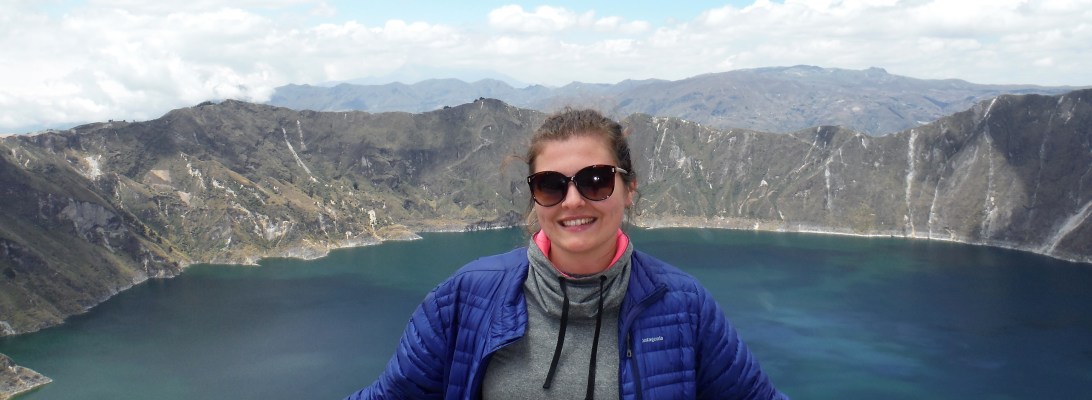
The next day (Thursday), Amy, Lucas and I went on a tour to the active, but dormant volcano, Quilatoa. We went via a Kichwa community which was amazing because they keep 100’s of Guinea pigs which are so, so cute and puppies which they were selling for $5. I so wanted a little Ecuadorian puppy during my stay here but knew, of course, that it would be stupidly irresponsible to get one. We learnt that the Guinea Pig is a speciality in Ecuador, and as live animals they are celebrated and well-cared for. Shamans claim that Guinea Pigs can be used to diagnose human illnesses better than Western Medical technology. It’s not a very nice method, but our tour guide swore by it, explaining that his dad was a Western Doctor and he had seen the Guinea Pig method live. The Shaman rubs the Guinea Pig all over the patients’ body, and then immediately cuts the Guinea Pig open, and the Guinea Pig will have become ill with the exact same thing that the human is. They use them to detect past and present illnesses. A Guinea Pigs anatomy is similar to that of a human, and this method has been tried and tested again and again by South American Shamans, maybe there’s something in it? The world of Western Medicine has recently started training dogs to sniff out cancer, and claim it may be a better diagnostic tool than current strategies. Who knows what’s possible.

Once we got to Quilatoa, we had lunch then started the hike to the bottom. This was the fun part as it was sandy and steep and quite easy to walk. There was a lady selling pictures with a cute little alpaca on the way down, and of course I had to get one. Then at the bottom we rented kayaks and had a paddle down in the crater. The way up was the hard part. The sandy road was a mile long, ascending by 1,650ft up to an altitude of 12,841ft. The average time back up was an hour, so Amy and I set ourselves the goal of doing it in 50 minutes which we did, but it was so hard! We were both so out of breath, her because of her asthma and me because I’d already been suffering with altitude sickness all week. Each step set my heart pounding, and my lungs craving more oxygen than was available. Needless to say we all were knackered after this and slept on the bus the whole way home.

There to greet us at the hostel was Heather, fellow student of Manchester and doing the same placement as me for the year, having arrived that afternoon from England. The three of us had a huge catch up and talked about the station for hours before crashing in bed.

Amy had told Heather and I that Javier the station manager wasn’t going to be at the station until the end of September, and our academic supervisor at Manchester, Richard, wasn’t replying to any of our emails regarding our arrival at the station, so we were faced with a bit of a dilemma. Both of us had flights booked that weekend to Coca from Quito, however it seemed as though we would get there and be greeted again with silence like in the previous weeks. So we took a risk (which has paid off, it’s been another week and we still haven’t heard anything) and decided to spend 3 weeks in Peru, so we rearranged our flights for September 28th which gave us a 3 week window to do whatever we liked. So on Friday (the day after we went to Quilatoa), Heather and I spent the whole day sat in the hostel bar coming up with a general itinerary and deciding what we wanted to do in Peru. I got a lot of my inspiration from a blog post by “twoscotsabroad” outlining a 3 week itinerary in Peru, starting in Lima. So task 1 was finding transport to Lima, which was actually way more difficult than expected. Websites, blog posts and reviews took me round in circles and it seemed that we wouldn’t be able to travel to Lima for at least a week. Flights were out of the question being $400/$500 each (it would cost as much to get to England!) so we were reaching a dead end, when I got a recommendation to try Cruz Del Sur, which turned out to be absolutely perfect. They had a bus leaving the next day at 11am, taking us straight to Lima. The downside was that it cost $110 and the journey was 33 hours (it actually turned out to be 36 hours). Lucas decided to join us, so we booked it at 9pm and started packing, gearing ourselves up to leave early the next day.

The bus journey went quicker than we expected. We set off at 11am, and arrived in Lima at 11pm the next day. The first day of the journey was travelling through rainforest in the mountains going South-West through Ecuador. This was honestly amazing, I hope my words can do it justice. We spent hours climbing in altitude until we reached the clouds at the tops of the mountains. Half of the time we were driving through the clouds, and occasionally we would descend a little bit and see where the clouds hung into the crevices of the mountains. When inside them, the clouds looked like fog and wet the windows of the coach, however when looking at them from below, you could see the bottom layer hanging down into the sky forming silvery-white wisps, like the water wanted to fall but still clung to the clouds above. The flora was all deep green, healthy and continued as far as the eye could see. Interspersed with the green, were trees with silvery leaves which grew where there has been disturbance in the rainforest. Occasionally there would be gushing rivers down the sides of the mountains lined with rocks and pebbles, and the occasional glimpse of wild-life. We saw a group of about 10 vultures surveying a particular area, a sure sign that a death recently occurred. We passed a dozen or so areas which were inhabited by people; some were big enough to be villages but others were just a few shacks selling food and drink. Eventually we left the rainforest and drove through areas of farmland that were more inhabited. Most of the farmland was cocoa and coffee, with the occasional banana farm and rose garden. The main exports of Ecuador are chocolate, coffee, cut flowers, shrimps and banana’s.

We reached the border of Peru at 11pm, by which time most of the coach had fallen fast asleep. So after we got our passport stamped everyone went straight back to sleep. I woke up in the morning feeling really ill. I had awful tummy ache and cramps and felt really weak. I spent the whole morning shivering and in pain, then took an ibuprofen and started to feel better and warm up. Amy got Typhoid in the rainforest despite having had the vaccination, and another placement student contracted a parasite, so a fairly serious illness seems to be on the cards for our year there. Just got to pray it doesn’t end up being too bad! But anyway after a few hours I started to feel better and I spent the rest of the day reading and staring out of the window. We had entered Peru and were driving down the West coast which is endless dessert. Occasionally we’d glimpse the coast, but most of the time we were driving across barren, rocky, mountainous dessert. In the space of 24 hours we’d crossed from the depths of the Amazon rainforest into the Peruvian dessert. Quite amazing. We reached Lima 3 hours later than expected, and got a taxi to the hostel I’d booked us in for the night at midnight, only to be told that they had no record of our booking. After digging a bit further, it turned out I had booked us in for the night after so at 12:30am after our 36 hour bus journey we had nowhere to stay. The night manager pointed us in the general direction of more hostels, and we ended up finding somewhere nice enough, and ended up in a dorm with 3 bunk beds all to ourselves with an ensuite which was so comforting after a week of zero privacy. And that marks the start of our journey through Peru!

To be continued…
Take Off

I’ve been waiting all summer for moments of inspiration, flashes of thought that creep down into my hands, urging me to write. But they have eluded me. I think writing is an art, for which you need creativity, passion and a purpose. It’s not like maths or science where you apply logic or reason to which there is only one true solution. As with all the arts, you can develop the instinct to write and with practice it becomes easier to skilfully tap into that, however for a beginner like me who’s immersed in science, it’s been quite hard to let my creative juices flow. So now is the time to put pen to paper (metaphorically; fingertips to keyboard doesn’t have quite the same ring) and start writing again. I want to document my imminent adventure, develop my skills as a writer and communicator, and share my discoveries: personal and professional. For I am going on a journey along a path less trodden. Out into the wilderness where my basic human instincts will be fine-tuned, and my need to impress and satisfy my self-worth upon Western standards will diminish.

This is my second long trip. My first was 18 months in Australia and Asia. I’m heading to a different part of the world this time: South America for 1 year. It’s quite exciting really, I go in the pursuit of knowledge and learning, rather than on a path of fun and self-discovery as was the case when I was 18.

I was lucky enough to be offered a research placement at the Timburi Cocha research station in the Amazon Rainforest in Ecuador, in order to complete a research project of my own during the placement year of my degree. Originally I was not enrolled on a degree with a placement year, however I made the decision to intersect my 3 year BSc with a year in industry while I was in my first year.

Before I tell you how excited I am, I want to preface that with a short summary of my first two years of uni. I study Biomedical Sciences at The University of Manchester: the biggest uni in the UK and situated in the heart of the northern capital. I chose Manchester because of its good reputation, the variety of modules and specialities available to me and the allure of a busy, metropolitan city. I can say, hand on heart, that Manchester has lived up to those expectations. I have loved most of my modules and I’m so grateful for the amount of choice I’ve been offered. I’ve studied some absolutely fascinating topics, from the more mainstream such as Biochemistry, Endocrinology, Genetics etc. to topics a little off the beaten track such as Parasitology and Gut and Renal Physiology. The city of Manchester is beautiful, offers a lot of culture and night life, and I don’t think I’ll ever run out of things to do there; and true to its name, Manchester boasts some of the best researchers and academics in the country, and is home to some major scientific discoveries.

Despite this glossy exterior, my experience at Manchester hasn’t been the easiest. For the two years I was there, I couldn’t escape this sense of isolation and loneliness. Even though Manchester has the highest student population in the UK, I never felt like I fitted in, or belonged, or truly ever found my niche. I had great friends, who are great people I would love to always keep in contact with and follow their journeys through life, I was also part of a sports team and had a job at uni. The issue wasn’t the quantity of my social interactions, more the quality. Everyone has a billion and one things to do and places to be, with their own agendas and priorities, and I just didn’t seem to make the cut. That’s what it felt like anyway. Perhaps I’m studying the wrong degree, hence I’m not surrounded by like-minded people; I’ve always fancied studying philosophy. In fact, I still might. Perhaps being an old soul and older in age created a distance between me and the people around me that was intangible but still unbearable. Perhaps, I didn’t prioritise my own social life as much as I needed to, because at the time I felt like there were more important things to do, like earn money, exercise and sleep. Too responsible for my own good.

So this summer I decided to take a bit of time to rest and recuperate. I prioritised my immediate friends and family, fitness classes that I enjoyed, and making decisions based on what I wanted to do rather than what I thought I should do or what was expected of me. I actually feel a lot better now, much more centred and fulfilled. But it wasn’t until I walked through Heathrow airport this morning that I realised what’s really been missing. Adventure. My soul yearns for it. If routine and conformity make me unwell, then travel and adventure are my antidote. So here I am, sitting on a plane heading to San Francisco, at the start of my next big adventure. It’s in moments like this where I truly feel like myself.

I’m visiting my aunt, uncle, grandmother and cousins in San Jose for two weeks before heading to the jungle. Over the last couple of years I’ve learnt a lot more about the USA and its culture, and I’m so excited to go there and experience a little bit of it myself and have a good catch up with my family. My life has turned in a direction I did not at all expect, not for a second, and I’m so excited.

Then in the beginning of September, I fly to Quito, the capital of Ecuador, where I’m staying for 6 days in order to explore the city and orientate myself, as well as complete a few missions like buying wellies / a hammock / a blanket and a few jumpers. I then fly to Coca with Heather, my placement buddy, where we’ll be picked up by the station manager, Javier, and escorted to the station. The station is situated in the amazon, and I will write all about what it’s like and put pictures up as soon as I get there and figure it out for myself.

Our purpose at the station is to complete a research project which will count 10% towards our final mark. We will spend the year deciding on a hypothesis (the big question, what do we actually want to find out), gathering data, (field work, getting the answers), analysing that data and compiling it into a report which we can then present and communicate our findings. The main area of research at the station is biodiversity in the rainforest, however after reading all about the station, its location, aims and involvement in the local community, I have set my heart on doing a public health project regarding diseases, healthcare and medicines in the local, indigenous communities. I would love to learn all about their common diseases and how they cure them, then perhaps compare them with a Western Medicine alternative. Or investigate why their own medicines are so effective, what is it in their remedies that are so effective at treating their diseases? I want to tap into their knowledge of how to survive in the rainforest and learn from them. The difficult part will be constructing a hypothesis where I can actually gather binary data in order to prove or disprove a fundamental question. I don’t need all the answers right away. I’ll have a few months to settle in and do a bit of research before I start my project.

So I’ll sign off now and end this post with a few goals and a few fears. Goal no. 1: come up with a research proposal so interesting I can’t not spend every day finding out the answer; goal no. 2: learn Spanish; goal no. 3: live in the moment, in the present, take each day as it comes, go to sleep when the sun sets and wake when it rises, live with the Earth not against it, and learn as much as I can. Fear no. 1: get bitten to death, quite literally, leishmaniasis and malaria are a real danger; Fear no.2: my project doesn’t go to plan or I don’t manage to prove my hypothesis; fear no. 3: not having access to a well-rounded vegan diet. I had to think hard about those fears as I don’t really get scared or anxious about things.

Let the adventure begin.