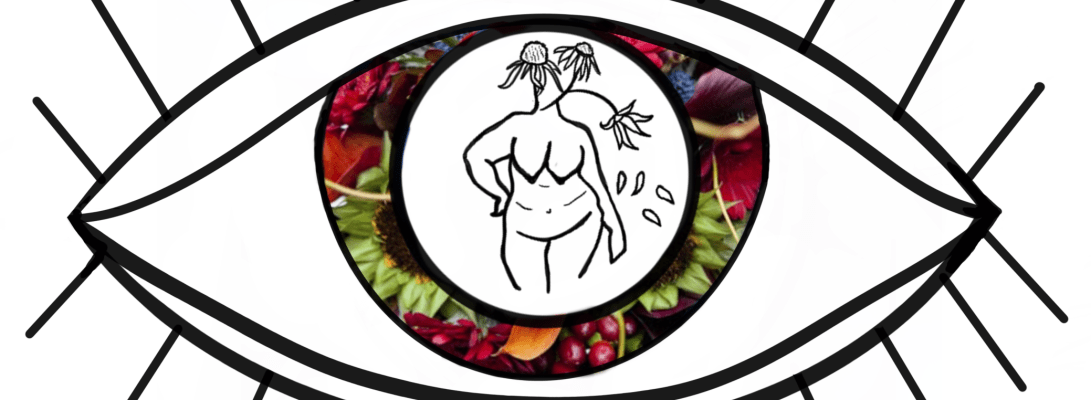
I am not broken

When I was young

I felt broken

I felt like a jigsaw with pieces

Missing

I felt like anxiety and desire

Kissing

In a tortured embrace

I felt like there were parts of me that would

Never

Not be broken

Parts of me that would never be

Spoken out loud

Secrets locked in boxes with

Shame

Written on them

I felt like a precious vase

Alone and abandoned

On the floor in a thousand pieces after a storm

Still warm

With no one to witness the utter

destruction

I was ceramic shattered so hard

That hope was gone to

Put me back together

I would have to discard

Not even gold could unite me

I would not become

Synergy

Life took my child

And ripped her open

Like the piñata at my 11th birthday party

Sweets spilling out across the

Spiky grass

On a cloying spring day

And it took years to repair the damage

So long I started to loose hope

But repaired the damage was

And hope lost regained

As life handed me

New materials

With which to build myself back up

Shame was rubbed off

The box of my secrets

Which spilled out into the world

As I embraced them as part of who I am

Secrets now sewed in bright colours

Into the fabric of the adult

Writing

These

Words

A patchwork person

I am an artists interpretation

A visual representation

Of the pieces of me

I have collected through the years

With deliberate determination

I am a sky full of scars

The proof that I won each

Internal and external battle

I am a library full of stories

The proof that I

Learnt the moral at the end

I am loved and love

For I am just as much the

People who I love

As I am me

And it is these people

Who truly connect me to this world

When I was young

I was incomplete

For I did not know

That the pieces of my jigsaw

Weren´t missing

They no longer belonged

To me

That the shattered shapes

On the floor opened the door for

Me to draw a new shape

When I was young

I was clothes in the washing machine

Being battered and drowned

Unaware of the start and finish

Unaware of the purpose

Unaware that I would emerge

Butterfly

Now emerged as I am

With love in my heart

And pen in my hand

I know that

I am

Not

Broken

Is Non-Binary a gender?

I´ve been mulling over what it means to be non-binary for a long time now. It all started while I binged Sofie Hagens´ and Jodie Michels´ Secret Dinosaur Cult podcast last year during Spanish quarantine which is a kind of weird but amazing podcast hosted by two non-binary queers. They talked a lot about what the term meant to them and how they both came to their separate conclusions that they were non-binary and it triggered in me about a week long serious introspection where I wondered if I was, in fact, non-binary.

I often feel quite masculine and have had two very strange (both drug induced) experiences when I felt like a man, and wondered if that meant I was non-binary.

I thought about the fact that I love dresses and the colour pink.

I thought about the fact that I have a very weird desire to constantly compete against and be better than men.

I worried that because I like to sit with my legs all splayed out like I have massive balls and one day want to be CEO of a company that I was, in fact, part man.

I agonised over my love of flowers, cooking and empathising and thought, I must be all woman.

Then I wondered if my complex personality with a mix of masculine and feminine traits would mean I had to tell my friends to refer to me as they / them.

And I realised I didn´t want that.

As clearly as I wished I was a lesbian while I was still deep in the closet of denial during university, I wished to be female. And that´s how I knew I was female. Because I wanted to be.

And I realised that it really IS that simple. If someone WANTS to be a boy or a girl or neither or both or somewhere in between, it means that they already are.

I did a whole lot of engaging with media non-binary people while I was in my week-long, introspective hole, and I realised that there are lots of ways to be non-binary. And that no two non-binary people will have the exact same experience with their gender.

For a while, I really rebelled against the idea of a binary at all. I got so deep that I started to wonder if gender even existed. Aren´t we all just humans with complex lives, bodies and personalities existing along a spectrum of emotions and preferences? Why do our preferences for certain types of clothes, colours, hobbies mark us out as belonging to one group or another. It made no sense to me.

But then I thought about trans people. People who know so strongly what their gender is that they risk their entire lives to be who they truly are. I thought about people who present aesthetically like a gender they weren´t assigned at birth, but still identify as the same gender as their sex. I thought about people born with chromosomal differences whose sex doesn´t fit male or female, who still have a gender.

Gender does exist. The binary doesn´t. And we really need to stop gendering non alive objects and interests. Books and clothes and colours and smells and sewing and football don´t have genders. They are things. They do not have identities and feelings and experiences.

They do not have a gender.

I do have a gender, I am a woman.

I am a woman who rebels against the binary.

I am a woman who rebels against the gendering of objects and things.

I am a woman who is open to learning about all the interesting genders and experiences that exist outside my extremely narrow and limited life experience.

And I am a woman who is open to being wrong and to being corrected.

So to conclude, rather than non-binary being a gender in itself, I think it is an umbrella term for all the genders and experiences that are felt in this life to which we don´t have the vocabulary. It´s for all the people who never felt at home in the gender assigned to them at birth and for all the people who want to rebel against the binary. It´s for all the people who like existing outside of societal expectations. But more than any of that stuff, it is for all the people who choose to call themselves non-binary.

Bio

Name: Sophie Victoria Manley

Age: 26

Currently living: Seville, Spain

Born in: Kuwait

Consider to be my home: Isle of Wight, England

A Levels: Maths, Chemistry, Biology

Degree: Biomedical Sciences with Industrial Placement, University of Manchester, First Class

Vocation: Writer

Current job: English Teacher

Been to: 31 countries

Would like to: visit more

Sexuality: Lesbian

Gender: Woman

Favourite colour: Pink

Should You Move Abroad?

I think you can count a ¨move¨ as something you do with the intention of staying for a while, setting up a base, working, making connections and building a home there.

You can move with the intention of coming back to the place you left, or perhaps moving on to something else. You can move with a job and a living lined up, or you can get there with no idea what you´re doing and live on scraps until someone will hire you. You can move for something, a loved one, an adventure, a job, a fantasy, which might work out and you´ll live happily ever after, or it might not.

I´ve moved countries 11 times in my life. And I´m 26. The first time I moved was Kuwait to Bahrain when I was 1 years old, and the last time I moved was Manchester to Seville almost 2 years ago when I was 24.

Advantages

Whatever happens, you´ll gain valuable experience that will help you and whatever kind of life you choose to pursue afterwards.

Depending on what you´re bringing and what you´re willing to sacrifice, you don´t have to spend much money doing it.

You don´t have to commit to anything. Being open to whatever life may throw at you and being kind to yourself, you could find that it doesn´t work out and you return home sooner than planned, and that´s okay.

It´ll challenge you, you´ll be scared and excited. Sometimes overwhelmed and sometimes underwhelmed. You´ll feel deeply worried and occasionally euphoric. You will feel. You will experience.

You will have to deal with problems you´ve never even heard of. It will open your mind and your heart. It will give you new perspectives and new ideas. It will change the way you see the world, for the better.

And it may just become the start of your happy ever after.

Disadvantages

There are a lot of sacrifices. You sacrifice stability and connection, above all. You have to make the decision that you´re new adventure is more important than the things you´ve been working for your whole life.

You lose touch with people you care about. Your friends are busy with new friends. You talk to your family less and less. Before you know it, a year has flown by and you haven´t been able to book a flight home.

You open yourself up to risks and dangers you have no idea how to prepare for or deal with when they happen. For it´s not IF they happen, it´s WHEN.

Paperwork. Man oh man moving country, unless it´s with a company that will sort all that out for you, is bureaucracy. Google mapping your way to embassies, queueing for hours to exchange your licence, bringing every document you´ve ever owned along to the appointment to register yourself because the website was rubbish and didn´t tell you anything you actually needed to know.

You won´t have home commodities. Most of the things you loved about your home won´t follow you to your destination. The foods you loved, the conveniences you´re used to, the way you can safely predict and understand the behaviour of people around you because you know the culture in which they belong.

You may loose more than you gain.

So, where does that leave you? Do you move abroad?

Well, when reading the second list, did the disadvantages section excite you or scare you? We have to know 2 things before making that decision. What do we truly value, and what are we capable of?

Do you value new or old? Do you value adventure or stability? Do you value safety or risk?

Are you capable of withstanding multiple visa appointments, a potential trip to a foreign hospital, being away from the people you love?

I read the disadvantages list and I thought, bring it on. It´s all part of the experience and I´m excited to overcome these hurdles.

If you read it and think, ooh no I´m not sure about that, I don´t think I´d like it very much.

Well then you have your answer.

Is anyone thinking about moving abroad soon? What are your plans?

Why I don´t drink

More and more these days I meet people who have made the conscious decision to stop drinking alcohol. Although not common, it´s not unusual to hear that someone is off the booze.

It would be easy to assume that people give up alcohol in order to lead healthier lives as we´ve all seen what a hangover looks like and it´s not exactly pretty.

Science is constantly changing its mind about the health effects of alcohol and it´s hard to know who to trust. It´s well-known that alcohol in large quantities can cause a plethora of diseases and long-term health conditions and have immediate effects in the form of a hangover, the colloquial word that makes alcohol poisoning seem less dangerous.

However, some studies argue that a glass of red wine a day is good for you and that whisky can help with a cold. That a little bit of alcohol can relieve stress and help you relax.

Nevertheless, most studies categorically state that the risks outweigh the benefits for all amounts of alcohol. Also, 70 years ago we were receiving scientific studies promoting cigarettes for their health benefits and who paid for those studies? Cigarette companies. So, I would be careful about believing anything that says alcohol can be good for you.

But let´s be real. Only very few of us are giving up alcohol for the physical health benefits.

Another potential reason that more and more people are choosing to ditch alcohol is the rise in knowledge and acceptance of mental health disorders which has given people the tools and awareness to be able to understand if their alcohol consumption has crossed the line into addiction. Additionally, there´s much more help available to those who seek it. Also, people are more aware that drinking can worsen other mental health disorders such as depression and anxiety.

Lastly, and I think this specifically applies to me, is that certain cultures promote a toxic drinking culture. I didn´t learn how to sip wine at dinner, I learnt to down vodka before seeing my friends. I didn´t experiment with alcohol to see what I liked and didn´t like, I bought the cheapest bottle that would get me the drunkest and swallowed big gulpfuls with my nose pinched. I never learnt how to drink in moderation.

I used alcohol as an anti-anxiety tablet. I used alcohol to cauterise my wounds. I used alcohol to change my personality. And although alcohol did all these things, they were the calm before the storm that would inevitably hit. I felt relaxed for a while before wave after wave of anxiety and depression hit. I temporarily forgot about what was bothering me until it was all I could think about. I was friendlier, funnier, until I started shouting.

I´ve ended up in hospital twice, I´ve blacked out more times than I can count, I´ve been taken advantage of, I´ve been lost, I´ve worried my family sick, I´ve made decisions I regret, I´ve been extremely ill, I´ve suffered for days and days, I´ve missed work and school, I´ve been robbed, I´ve been threatened, I´ve thrown my own shoes in a rage, I´ve walked through clubs with mascara smeared across my face, I´ve shouted at people that I love, I kicked someone once, I´ve slept on roads, I´ve cried and cried and cried.

And then I woke up the next day in such a state of physical and emotional agony that I had to pause my life. Sometimes for days.

I exchanged my nights for my days and I begun to realise that I wasn´t actually gaining anything.

The frequency I drank changed throughout my life. I started drinking heavily at 14 which increased until it reached its crescendo when I was around 19. My record was 13 days in a row, binge drinking litres and litres of wine a night. It started decreasing again and by the age of 22 I was drinking heavily maybe one night a week.

When I was 23 I decided that enough was enough. The reasons I had been using alcohol before were less relevant to me now. I was taking actual anti-depressants which genuinely made me feel better. I was a lot better with dealing with my emotional wounds in a mindful and nurturing way. And I was a lot more comfortable with my personality and had learnt how to surround myself with people that like me for who I am.

Yet I still hadn´t learnt how to drink in moderation. Every time I drank would be to black out and the hangovers were just getting worse. I reached a point where alcohol only had a couple of points left in its pro column, where the cons were getting ridiculously long.

So, I decided to stop. Just like that. The decision had been getting more defined in my mind for a few years and the day after my sisters birthday I woke up and thought, no more alcohol.

It´s been 18 months now and I don´t see myself starting to drink again anytime soon. I´m not an addict, I don´t think so anyway, so the option to go back to alcohol is always open for me if I want to. But my life is a lot better for not drinking. I don´t get hangovers, I wake up with a clear head every day, I don´t lose whole nights from my memory, make bad decisions or put myself in dangerous situations, I write more, I create more, I choose activities that I really enjoy and I have time for them, I have more money to spend on other things, I don´t throw up, I´m much more in tune with myself, my friends are 100% real, I get enough sleep, I deal with my emotions in a healthier way, I trust myself more, I feel less shame, I understand myself better, I feel better.

I don´t think it´s right for everyone. I know that for a lot of people, alcohol is a part of their healthy and balanced lives, and that´s great. I know it can bring real joy to people and even be an art form, a creative outlet, a hobby, and hold real value.

But stopping drinking was right for me and continues to be right for me and I´m happy with that.

What is your relationship with alcohol?

Has anyone stopped drinking recently or is thinking of stopping? What are your reasons??

Can anyone be an artist?

A few years ago, I would have said, absolutely not. You need skill, practice, training. You need to have been born an artist. You need to be tortured, abstract, a little weird. You need to have a fire inside that burns so bright for your art that material possessions mean nothing to you. You need to be able to see that weird squiggle on a canvas at your local art museum and peer at it for hours in wonder and admiration.

Then I met my Fine Arts graduate girlfriend, professional tattoo artist and genuine sells-her-art-for-money artist.

And it confirmed all my suspicions.

When trying to educate me about the world of art she showed me her books of Henry Matisse and Joan Miró. She gazed at the pages, talking about the impact these artists had had on her work at university and asked me which painting was my favourite.

I thought about lying, just choosing a random painting, smiling and saying, this one´s amazing! But I didn´t. I looked at her and shook my head. None. Sorry. I just don´t get it.

Fast forward a year and my mum sent me a book for my birthday. The boy, the mole, the fox and the horse. By Charlie Mackesy. I fell in love with this book, with his art. It tells the story of 4 little creatures who wonder through the wilderness and become friends. It´s a reflection on life and friendship and love. It´s a collection of art with a commentary and with a direction.

I decided that I wanted my book of poetry to be similar. I wanted to illustrate them, to have a book full of colours and art to accompany my lines and stanzas.

I visited my nearest bookstore and started pulling out other books of this genre. Not necessarily poetry, although some were, but illustrated, adult books.

Expensive books, books that I couldn´t download on my black and white kindle.

I spent months following all the artists on Instagram, choosing which book I would eventually splash out on and settled on a book that spoke to me very personally. Habitar Mi Cuerpo. Or in English something like… Inhabit my body. Although I think the word Habitar in spanish connotes warmth and life more than the English word, inhabit, does. It is a reflection on the path the author took in loving her body. Another illustrator that I love is Maria Hesse. Her book, Pleasure, will be my next purchase.

Inspired by these artists that, finally, I felt a connection with and truly enjoyed their work, I decided to try and make my own artwork to go with my poems.

I started sketching in a random notebook and realised that even though I have absolutely no ability to make my hand draw what my inner eye sees, I was actually quite creative and was thinking of some interesting ideas.

I borrowed my girlfriends graphic design tablet and started turning these awful sketches into actual colours and shapes and found that what I´d created was not actually half bad. In fact, I quite liked them and I felt they represented the messages and stories I tell in each poem.

So does that make me an artist? I suppose it does, in a way. The beauty of art is that it´s subjective so if only one person enjoys it, well then it´s valid. And if I can do it, anyone can do it.

So the answer is, yes, anyone can be an artist. All you need is the means and the desire.

But can anyone be a vocationally and materially successful artist? Well, that´s another question which doesn´t need an essay because the answer is unequivocally no.

If you´d like to recieve book, podcast, audiobook, and more recommendations and keep updated with my work, please sign up to my email newsletter which I´ll be sending out every Friday afternoon by clicking on the following link:

Home – SophieVictoriaManley (mailchimpsites.com)

OR

http://eepurl.com/hwwC5H

Newsletter Layout

Shower thoughts

So this section will be based on whatever subject I´ve spent a lot of time thinking about recently, generally inspired by whatever media I´m consuming.

The normal journey of these thoughts start as I run them by Raquel, expecting the gasp of wonder that confirms my suspicions that I am, in fact, revolutionary and original. The story crescendos as I wait, impatiently, for her to look up from her phone, my wisdom hanging in the air, waiting to be admired. I often have to prompt her again, explaining exactly why what I just said was so insightful and clever. 

She looks up, a smile playing at her lips and love in her eyes, and I´m waiting for her to passionately agree, lauching into an intense debate about how I came to this interesting conclusion.

She asks me to repeat the question and am I hungry because she´s hungry and should we just make pasta like always?

I think about telling my friends about it then remember playfully that I don´t actually have any friends. 

No, of course I have friends, and all three of them really love my wierd text messages. 

As you can imagine this journey doesn´t have a satisfying ending.

But it will now!

With this email newsletter I get to spam all your inboxes and thus liberate the words burning inside my head, whilst accomplishing my ultimate goal of promoting the stuff I´m currently working on.   

This brings me on to the next part of my email. I decided to include this part as it is something I personally find very useful for myself, and hopefully provides a service to the reciever of these emails  It serves to broaden our online communities, fill our social media feeds with beautiful people, our ears with interesting content and eyes with wonderful words. I will be recommending podcasts, books, and people to follow and invite you to reply to this email with your own recommendations which I can then stick in the next email!    

Media Recommendations

Nothing to report in this first email, but I am compiling a list of amazing stuff and will be sharing it soon!    

And the finale and the reason we´re all here…    

Stuff I´m working on  

So this will include updates on my memoir and my poetry primarily. And also on the Etsy shop I have, any designs I do for my poems, what I´m planning in the future… that sort of thing!     

And we have reached the end. Thanks for staying with me for so long! I will probably be using a lot of the content of this email in the next one after I´ve decided what I like and don´t like, and have promoted it a bit more and have a few more people signed up!

Sign up here —> http://eepurl.com/hwwC5H

Three outcomes of Coronavirus

Everyone’s talking about what they’re learning through Coronavirus, about themselves, about their families, about the world. How priorities and values are changing, the worth of people in societies are changing. Like postmen and shelf-stackers weren’t valuable before?

Like people didn’t know that downtime was necessary, sleep was glorious and that it’s okay to stop for a while, to not have to keep pushing, achieving, doing, progressing. That it’s okay to just be.

I have an unusual position in all this. I’m currently living in Spain but grew up mostly British, instilled with British values. These British values include ambition, diligence, passivity, and the need to constantly be progressing. I retain my ambition but it has morphed and changed in recent years from being career-focused to being happiness-focused. During university, I suffered with depression, exhaustion, burn-out, and I decided that I didn’t like that feeling. I decided that I didn’t want to set limits for myself, job straight out of university, married by 30, kids by 35, that I had my entire life to do whatever the hell I wanted and after university, I wanted a break, and to be somewhere sunny.

So I moved to Spain.

Spain, especially Andalusia, the hot South, is relaxed, passionate, hot and hot-headed, creative, artistic, unambitious, funny, care-free, shouty. I found it hard to adjust to the pace of life here. I came here because I wanted to slow-down, but it was slower than I’d anticipated.

I managed, I slowed, I breathed and went for walks and settled and found a normal, steady job. At first I had meltdowns, why wasn’t I signing up to the gym!? Joining a sports team!? Joining a meet and greet group for expats!? Going out clubbing more!? Joining a choir!? Doing a dance class!?

After a while I realised that the reason I wasn’t doing those things is because I didn’t want to. Away from England, the pressure, the social norms, the questions, the suggestions, I was free to choose exactly what I wanted to do and it turns out that I didn’t want to do any of those things in that moment, and hey, I was still happy. Happier. Less stressed.

Give me a book and carrot cake over Legs, Bums, and Tums every day of the week.

Then Coronavirus comes along and confines us all to our houses. The world enters quarantine and Spain and England are particularly badly hit. Job security vanishes, activities shut down, people work from home, socialising stops. And suddenly, people are realising that this break is actually good for them, they’re sleeping more, arguing less, laughing more, crying less.

As if stepping off the treadmill of pushy, goal-driven, Western culture might actually feel nice… who’d have thought?

That money and fancy jobs and five trips to the gym a week don’t actually make you happy?

That people are now free to experiment with what truly makes them happy, instead of what makes them money. Which brings me to my first outcome.

A massive boom in creativity

People are at home, reading, painting, creating music, puzzling, playing, writing, drawing, dancing, making, baking, cooking. We suddenly have the freedom to do things we enjoy that don’t directly contribute to our physical health or bank accounts, the two things western society prioritises.

Funnily enough, all these things improve mental health which is becoming more of a priority, but still not enough.

I think that over the next year, couple of years, there’s going to be a massive increase in artists of all varieties producing and releasing creations of all kinds. There will be new music, new books, new paintings, new clothes, new recipes, new games.

And perhaps we will now prioritise more time to read, cook and play, and our artists of the world might be able to make a living off their crafts.

Hairdressers will loose a lot of business

Is it just me, or are we all cutting our own hair now and realising that it’s not that hard to do a straightforward trim? Especially on short hair.

I’m sorry about this, but neither me or my girlfriend will be going to a hairdressers from now on unless we want something truly special.

Introverts and Extroverts are more obvious

I’ve always tilted between introvert and extrovert, not quite knowing where I fit, but this quarantine has taught me that I am most definitely an introvert.

I have LOVED being in my flat all the time. I’m actually kind of worried for the world to start up again, I’m not ready to re-enter life. I don’t need many friends (just the few I do have I who I love to pieces, more so because they’re my only ones), I don’t need much social interaction, I don’t need attention.

If you asked me if I’d rather spend ten days on my own or ten days with ten people, I wouldn’t even need to think before immediately replying, on my own, definitely, on my own.

The extroverts of the world are the ones organising family gatherings on zoom, group calls with friends, game nights over apps. They’re suddenly contacting all the people in their past they’ve lost touch with, sending pictures of what they baked, what they wore, their garden to all the group chats they’re a part of. They’re on the phone constantly. Cycling through their frequent calls list every day.

The extroverts are frustrated, the introverts are in heaven, but I think the one thing we can all agree on is that, despite all the shit going on, it’s nice to take a break.


Disclaimer: I, OF COURSE, don’t think Coronavirus is a good thing and I constantly cry when reading the news, my heart goes out to absolutely everyone affected, infected, grieving and worrying, but this article is not about that. It’s okay to talk about the silver linings.
Exam Season Advice

Exam seasons are horrific aren’t they? Everyone is moody and stressed, over-eating or under-eating, anxious, unfocused and panicking. Overlay this with a sudden desire to get really good grades, a feeling that has stayed dormant throughout term, and people find themselves in a real pickle. Exam season is a bipolar roller coaster of sheer, sleep-deprived determination; or that inexplicable feeling where failing actually seems okay and an inevitable result of your blood, sweat and tears; and you’ve come to terms with that.

Well I personally have gone through one soul-destroying exam season too many, and want the next one to be a moderate success. In other words; to emerge from exam season as more than just the hollow shell of my former, pre-exam self.

So I have devised a tool kit for handling exam season and revising in a way that nourishes my health (physical and mental) as well as being optimum for committing an inordinate amount of information to memory.

Here it is.

Take regular naps

Think I’m giving myself an excuse to doze off for a few hours and claim it’s for the greater good of my exams? Well yes, I am claiming that. Naps will help you revise better, honest. Many scientific studies have demonstrated time and time again that sleeping is vital for learning and memory. Countless participants have exhibited much better memory of skills and facts they learn if they nap after they have practised them. Also, sleeping allows the brain to detox from toxins by cleansing the brain tissue with Cerebrospinal Fluid (CSF) much more effectively. Not to mention that you’ll feel more energised and alert after a nap. Scientific studies have also shown that any length of time of nap is beneficial, so no pressure to make sure you only sleep for a certain amount of time. I personally would recommend either a short nap, between 10 and 20 minutes, so you wake up before you enter really deep sleep; or 90 minutes, which is a full sleep cycle. After 90 minutes you should be close to wakefulness anyway so the most refreshing time to wake up. Also, there’s an increase in melatonin (the sleep hormone) at around 3pm, so if you can plan a nap between 3pm and 4pm, then even better.

Exercise

Sounds obvious doesn’t it? But even the fittest among us can find many an excuse during exam season to ditch the gym in favour of spending long hours in the library hunched over a desk. It’s too tempting to convince yourself that any moment not spent pouring over your notes is wasted, but actually it’s vital to remain active throughout the revision period. Exercise will help you sleep better (which helps you learn better, remember!), improve circulation, increase oxygen to your muscles and brain, release endorphin’s into your blood, and mean that after the last exam you don’t feel like a saggy blob, struggling to find the strength to walk to the pub let alone get back to the gym.

Snack on blueberries

Blueberries enhance your memory! Blueberry juice also counts. It’s the anthocyanins in blueberries which increase neuronal signalling in brain centres and mediate memory function. Blueberry’s are being investigated as a treatment for memory related diseases in old age!

Know yourself

Are you an owl or a lark? This means are you a late riser (owl) or an early riser (lark)? If you are an owl, then the time of day you are most functional and alert at is in the evening around 6pm. If you are a lark, the morning at around 11am. Plan your revision schedule to suit your body clock. I personally am an owl, and am not an intelligent, present human being until about midday, after a coffee. Therefore I always find myself beginning revision around 1pm, peaking at around 7pm and finishing just after midnight. I always felt guilty for going to bed so late and getting up so late, but this suited me, and if that’s the way it is, so be it.

Get interested

The exams I’ve done really well in are the exams that I’ve taken an interest in outside of my lectures. For each module I’ve done this term, I have a found a non-fiction, easy-going book about the subject I’m studying, aimed at the laymen, and I read that. Usually the books are filled with interesting facts, and presented quite basically; so even though it may not be a direct study material, it provides a framework on which to stick the facts from lectures on to. These books try to be as stimulating as possible, and help you to realise that the dry, baffling and enormous content of your lectures can actually be really interesting and relevant.

Be pre-prepared

It’s possibly too late by now, but I’m going to say it anyway. It’s no good trying to learn your course from scratch in the 3 weeks before the exam. This was me in the summer of my 2nd year. I had been to the first 8 or so lectures of all my modules, and not a single one after that. I was meant to catch up over Easter but was still reeling after March (lab project and dissertation) and got distracted at home with work and friends. So I got back after Easter with a month before my first exam, having to learn 4 courses from the very beginning. Not smart. This time, I have consolidated my learning throughout the term and now have a base on which to build my revision on, taking a lot of pressure off the revision period.

Now you have my revision guide, go forth, poor desperate students, and remember that in the grand old scheme of life, exam results aren’t really that important.