A poetic foray into digestion

Her stomach gurgles, her belly quivers,

Her eyes dart round, her body shivers,

Her blood is pumping, pupils dilating,

Her brain firing signals, neurons pulsating.


“I’m hungry” she says, stomping her feet,

Her hands curled in fists, her cheeks pink with heat,

Her blood sugars low, her brain senses the threat,

Hypoglycaemic, she’s getting upset.


Let’s zoom inside to her stomach, we see

Not much actually, it’s pretty empty,

Let’s go closer still to epithelial cells,

With mechanoreceptors that detect stretch and swell.


The cells are secreting, in the absence of food,

Ghrelin, director of hunger and mood.

It travels far to the hypothalamus,

And crosses the barrier to the Arcuate Nucleus.


It exerts on the brain orexigenic effects,

Acting on all of the CNS,

As well as controlling energy homeostasis,

It activates signals in other places.


It is involved in rewards and incentives,

Activating memory to be more retentive,

In the prefrontal cortex it alters decisions

And signals that food is the brains next mission.


AGRP / NPY neurons firing,

She suddenly realises she’s desiring

Foods that will bring comfort and energy,

Turning the hunger to satiety.


She glances around, “Is there food in the kitchen?”

“Maybe there’s cake?” she finds herself wishing.

Her brain screaming out “I need sugar and fat!”

“How about this celery stick?”, “No! Not that!”.


She settles for leftovers from todays’ lunch,

She prepares the meal and begins to munch,

But before the food even enters her mouth

Her body’s preparing to break it down.


The optic nerve signals, olfactory tasting,

Oesophagus contracting, stomach bracing,

Signals firing and cells releasing,

Hormones pumping, saliva secreting.


She’s chewing her food, or masticating,

The mechanical movement of teeth activating

Brain pathways and peptides although which? We don’t know,

Undoubtedly appetite suppressing, though.


She swallows the food, it enters her gullet,

Peristaltic contractions push it, pull it?

Down to the stomach and through the sphincter,

Exciting the vagus nerve which leads to


Acetylcholine release which then acts on

M3 receptors which has an impact on

G cells and Gastrin release which exacts on

Enterochromaffin cells, in fact, on


The release of Histamine which causes secretion

Of a Hydrochloric Acid solution

From parietal cells. This breaks down proteins:

Bacterial, viral, it effectively cleans.


The stomach defensive to outside threats,

It protects the body from microbe pests,

And starts to get bigger when filling with stuff

Alerting cells that there’s food, sure enough.


This is the sign that cells into action,

Satiety hormones promote food satisfaction,

And called to arms they summon their messengers

To zoom round the body, passing on messages.


Listen real close and we’ll hear what they’re saying,

Small peptides which act on receptors relaying

Instructions for organs and tissues together,

Discreetly directing digestion, they’re clever!


Quick shout out to the second brain,

Enteric Nervous System reigns

Independent of our head,

Taking over when we’re fed.


Not consciously controlling food,

But still it can impact on mood.

Example; it can play a role in

Emotion via serotonin.


We can’t leave out our microbe friends,

They influence our gut no end,

They breakdown fibre, control immunity,

Live symbiotically with impunity.


But more than this they also create

Peptides that mimic our own, although fake

They still can cause the brain to favour

Certain foods and change behaviour.


But we’re on a tangent, I transgress,

Trying to unravel the mysteries, the mess,

Let’s turn our attention back to her digestion,

Please excuse this wild digression.


The food moves into the small intestine,

Which triggers release of the hormone secretin,

Raising pH, deacidifying the chyme,

Preparing the food for absorption time.


Now this is when hormonal magic starts,

They spring into action to play their parts,

All working towards a common goal,

With the finest precision and expert control.


Introducing our trio of polypeptides,

Meet P.P, P.P.Y and greet N.P.Y,

Their function is slowing intestinal transit,

Collecting info from gut contents to transmit.


There’s cholecystokinin released from the lining

Of epithelial cells, the intestine mining

All of the nutrients. Hormones supplying

Pancreatic enzymes emulsifying.


Let’s move to the pancreas, it’s interesting here,

There are many cell types, but you don’t need to fear,

Insulin’s important and so’s glucagon!

Blood glucose levels is what they act on.


“Cells, uptake glucose!” ordered insulin.

Encouraged by supporters called incretins,

G.I.P and G.L.P-1 unite

To make sure secretion of insulin’s right.


Back to the intestine the food flowing through,

Down to the large one it ends up as poo,

But still there’s absorption before this occurs,

Gradient crossings and nutrient transfers.


Her hormones are doing their job quite well,

Signalling enough’s enough for a spell,

We’ll find, if we’re looking, there’s one in particular,

Not quite a satiety hormone, but similar.


That is super important in stopping eating,

It acts on the brain to minimise feeding,

Signalling high nutrition, or paucity,

Signalling also body adiposity.


It’s Leptin, of course, what else could it be?

Released from adipocytes, completely key.

Directly proportional to adipose stores,

It communicates well, but not without flaws.


For when we’re obese, sometimes we’re resistant

To leptins effects, and Ghrelins persistent,

The balance is off and it’s hard to make right

But for now she is healthy, her hormones alright.


The food almost finished her plate almost empty,

She’s eaten as much as she can, it was plenty,

She’s starting to feel just a little bit full,

“Delicious! But really I can’t eat it all!”


And after a while, digestion is done,

Nutrients absorbed, the waste passed on,

Deposited fat, glucose stores filled,

The body has protein with which to rebuild.


She’s feeling much better now that she has eaten,

Happy and comfy, a bit sleepy even,

She washes her dishes and lies on the sofa,

Sinking, so sweetly, into a food coma.
22-02-2018 Menstruation Magic

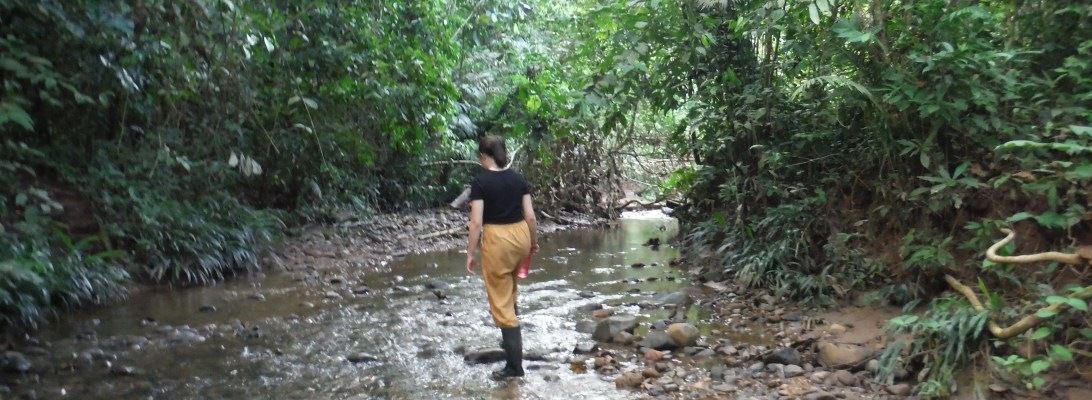
This morning, a guide, Javier and myself set out into the forest to set up my project. I need 12 transects (straight lines that I use to mark where I will collect my data) in both primary and secondary forest. We found suitable areas with plenty of space and started to set these up, however, we happened upon an unusual obstacle. The community believe that when a woman is on her period, she has witchcraft that destroys their land and crops. So as we were walking through the forest with our string and measuring tape, we kept accidentally finding ourselves in bits of farmland that were completely off limits to me, a woman with magic crop-destroying periods. Not a problem I thought I’d have to deal with, frankly.

20-02-2018 Monotony

I want to preface this post with a reality check: We live in the rainforest, in Ecuador, near an Indigenous Community, at a research station, on a river bank, in wooden huts, without a car, without a boat (more importantly), with just each other, in the jungle. Like if you saw our location on a map it would just be a dot in the green bit that covers some of the East of Ecuador. This place is isolated. To get to the nearest town which is a very basic, very small, very local little place takes 3 hours. To get to the nearest town with a bar takes 4 and a half hours. To get to the nearest town with English speakers takes 9 hours. To get to a city takes 14 hours.

In my opinion, that is fucking cool. We are separated from civilisation (apart from through the internet of course – thank god for the internet), out in nature, surrounded by beautiful wildlife, cooking from scratch, doing ‘science’, living a life (almost) free of social pressures and expectations and best of all living and working closely with a community of people who are from a completely different (metaphorical) world to us. It’s fascinating…

But wow! Does it get boring. It is effectively our job to run and maintain the station, that requires being here 24/7 funnily enough: in this small little patch of land, with a finite amount of things to do and people to talk to; for days, and sometimes weeks on end. Also, now we’ve started our projects we are tied to the station for at least 2 or 3 days a week to collect our data from the forest, there is 0 flexibility here so that our projects are valid and our results usable. And like I explained in paragraph 1, it takes a hell of a long time to get anywhere from here. There’s no ‘popping out’ from the station. No, no. There’s ‘right we have an appointment in Tena at 9:30am on Thursday for 20 minutes so we’ll need to leave 2 days in advance and we’ll be away from the station for 4 days okay let’s pack up every single item in the whole station so the community can’t steal anything, umm order a canoe a few days in advance, pack a weeks worth of laundry and clothes, book accommodation, write a shopping list and then yeah, good to go’. So, as you can (hopefully) see, unless we have a visa office to visit or a document to retrieve, we are stuck here.

Most of the time I think I have more freedom here than anywhere else in the world. I can get up when I like, I have enough time to read books, watch movies, eat leisurely and work at my own pace. I don’t have a myriad of lectures, meetings, shifts, matches, events that lead my life for me; I lead my life here, not the timetable on my outlook calendar. But sometimes I feel caged in and bored. Bored bored bored. And when I get bored I get tired, which just perpetuates this boredom cycle and I loose motivation and sometimes when it gets really bad, I loose touch with reality a little.

I don’t mean to undermine the life we have here (I actually think sadness and challenge augment our reality as we learn and grow through these hard experiences) but understandably we get a bit stir crazy every so often! This manifests in many different ways, some weirder than others, I won’t go into details. We haven’t yet had the time to take a holiday in Ecuador and go and have some fun. Every time we’ve left the station previously it was on visa or food related errands which are crazy-frustrating and boring, in that order. I think Heather and I deserve some real credit here, for all intents and purposes we are managing extremely well under the circumstances. We chose this placement in the first place (separately) knowing it would be challenging and isolated, so we also knew ourselves well enough to know we would probably be fine with it. Which we are *insert earnest smile*. However… we really ought to get out more.

Which we will: back-at-the-station-after-christmas resolution number 1 was to take some time off ‘work’ (go on holiday) every month; and Heathers 21st birthday is fast approaching so we are taking our first fun trip in Ecuador and going to Banos (Ban-yos – Baths in Spanish because the town is built on the side of the tallest volcano in Ecuador and there are lots of thermal baths there) for 6 days which will be mega fun. Lots of canyoning, hiking, rafting, zip-lining and thermal-bath bathing in Banos. We leave this Friday and will shun all responsibility until we get back the following Thursday, and it’ll be great. We will come back renewed and full of life, I’m sure.

Anyway, the day is running out and I’m actually procrastinating a little right now – I should be reading Fungi Biodiversity papers.

So, signing off – from the hammock near the wifi router, wooden hut, river bank, Payamino, Ecuador.

17-02-2018 The ups and the downs

It’s a quiet day at the station today. Only Heather and I are here so we have complete freedom to do what we like when we like. This freedom only really extends to when we eat, usually with more people at the station mealtimes are regular and we take it in turns to cook each meal, but with only the two of us here, I ate breakfast at midday and Heather ate lunch at 3: we’ve descended into madness. Apart from that, we are still at the mercy of the weather and can’t leave the station as we have work to do here. It’s been raining the last couple of days so wifi and power have been a little dodgy, and until recently the station has been relatively full! So it’s back to our quiet little life.

Life has taken a few turns recently, ebbing and flowing like the tides of El Rio Payamino. It’s easy to see a surface view of someone’s life and assume that all’s fine and dandy, but actually there’s usually something going on there which doesn’t breach social media or light conversation.

My life has been a bit up and down recently. I think being ill always gets you down and it takes a little while to regain the swing of things; I’m still not better after my ear infection which is making me a little lethargic and foggy. Another thing – this one took me a while to figure out on all my travels – but it turns out you’re not immune to insecurities / down days / mad panics about life just because you live somewhere cool: had a few of them recently. Also, the direction of my project has changed once again. It’s been a real challenge figuring out what kind of research is available in the field, balancing my highly-optimistic research aims, and evaluating my own limitations in order to find the middle ground of what’s actually doable here.

It was quite disheartening at first, but I am a fan of silver linings and have started to appreciate the benefits of my new plan. It will be a lot simpler and easier, I will have more control over every aspect, and the write-up will be more straight forward. All boring things, I’ve lost interest over ease, but at least I can actually make a start.

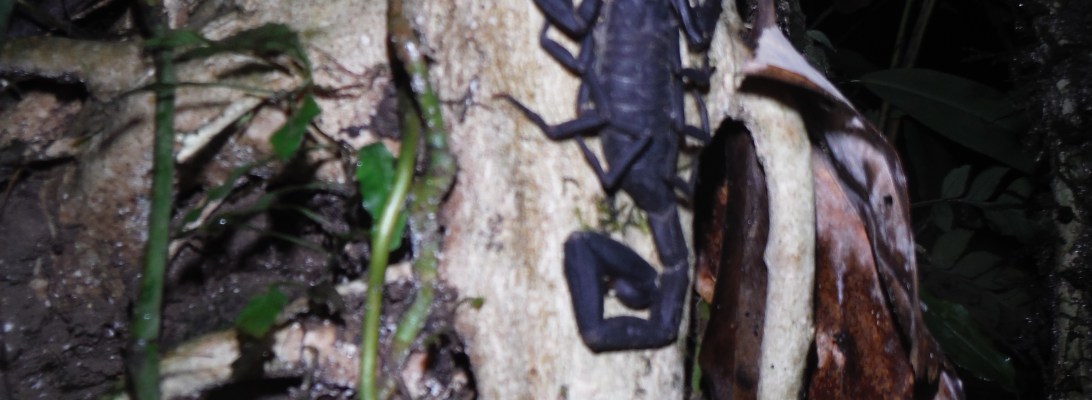
Field work is surprisingly slow. There are a lot of social, political, meteorological and ecological hoops to jump through that you just don’t expect to meet when you set out on your journey, hoping to uncover some valuable resource or hidden knowledge. And field work is clumsy. Of course we adhere to ‘the scientific method’, and keep all our data as valid and reliable as possible, but at the end of the day, research is limited by the people doing it and the amount of money and time they have. We’ve recently been collecting data for an arachnid biodiversity study which sounds to me awfully professional and serious, but the actual field work/data collection side of things juxtaposes this scientific vision of serious, intelligent people doing serious, intelligent things, and replaces it with a group of people, some scientists, some undergrads, and some indigenous community members, literally catching spiders in the jungle. There’s more to it than that, years and years of research that has cultivated the perfect method and most accurate data analysis, however the literal translation from the methods section in a scientific paper to people working in the field is not what you expect. It’s been fascinating to learn this and experience some real life science in the field.

All in all life at the station has been great. The company has been wonderful, and it’s nice to be back home in our idyllic, little corner of the world. But I’d be lying if I said life has been perfect: life has been normal, I guess, but still full of discovery, new experiences, learning and getting shit done, which are the main things, I think.

Why We’re Here – The Research

For those of you who have got the impression that so far my time in Ecuador has mostly been exploring, lying in a hammock and swimming, you’re wrong. Well, half wrong. Okay, just a little bit wrong, we have been doing a lot of that. But there’s a much more serious side to our life here: the research.

To preface the bulk of this post, I’ll just explain why I’m here: I’m 2 and a bit years into a degree in Biomedical Sciences with Industrial Placement at Manchester, and this is my placement. Heather is also on placement with me, she studies Zoology at Manchester and is a passionate animal lover, even the grizzly, scary, creepy ones… especially the grizzly, scary, creepy ones. Our aim over the course of this year in the Jungle is to complete research in an area of our choosing and produce scientifically viable results. If we work hard, then getting published could be on the cards.

We’ve both spent a long time coming up with a plan for our research proposals which mainly involved a lot of emailing, scrolling through PubMed, reading papers and chatting to Javier, the Ecuadorian station manager, about what would be possible. Javier has a degree in Forestry Engineering and has been working at the station for 6 years now. He’s affectionately nicknamed Jungle Dad and is sociable, generous, and a real joker. Even though most of his jokes are in Spanish and fly straight over our heads, he still makes us laugh with his faux-stern expressions, dad dancing and inability to say slept. “Slepech. Slepecha. Slepch?”

Heather’s main project will be investigating the Arachnid biodiversity here at Payamino. She was given a fantastic opportunity to work closely with an Arachnid specialist during her time here; they’ll complete the field work and research when he arrives at the station in January next year. ‘Arachnid Biodiversity Study’ means capturing as many spiders as possible, bringing them back to the station and identifying what species they are. Heather’s hoping to gain a greater appreciation of an animal that’s normally shunned in society and has a huge fear stigma attached to them. In her opinion, they’re actually underappreciated, beautiful creatures that aren’t nearly as scary as they seem. Already we’ve seen lots of spiders, including a baby tarantula (that we caught in a soup bowl) and many jumping spiders. Heather uses the word adorable, not something synonymous with spiders in my personal opinion, but it’s her project not mine. It’s a good thing I’m not scared of spiders (which my mother proudly attributes all credit to herself as she always made me and my sister get rid of the spiders in the house so she didn’t have to, thanks mum). Also, Heather will be continuing with the research on Heliconias, a native flowering plant, which was started by a previous placement student. The project is looking at the effects of genetic variation in Heliconia species and the associated insect communities. It will involve cutting off roots from existing plants and growing her own little, genetically-identical garden, then measuring the species diversity found between the two plants. Interesting stuff, plus Heliconias are really pretty.

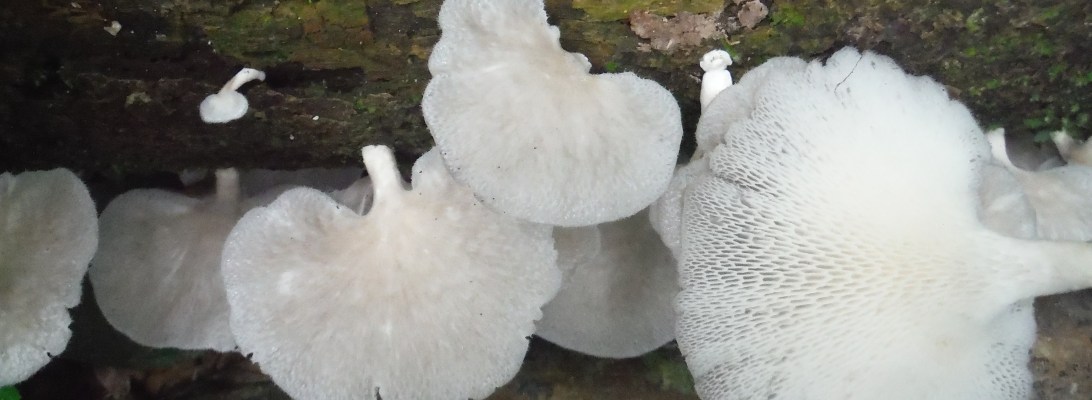
My projects, which I’m very excited about, will be Fungi Biodiversity and knowledge about ethno-medicine in indigenous communities. Fungi are a largely under-researched, under-appreciated group of organisms. They are neither a plant nor an animal, but a whole kingdom to themselves. My project will be on the different types of flowering fungi found in Payamino. It will be impossible to do an all-inclusive biodiversity survey as a lot of fungal species are microscopic and I just don’t have the equipment to find them, so the project will be limited to fungi I can see with my eyes. There has been absolutely zero research into fungi biodiversity here, so I’m in unchartered territory and hopefully my research will be valuable to the scientific community. Once I’ve collected data on each fungi I find, I will get in touch with a fungi specialist either in Quito or the UK who can help me identify each species. Hopefully I’ll develop a comprehensive list of species found in this area. My interest in fungi started to develop in first year of Uni when I came to appreciate how diverse, interesting and spectacular they can be. For example, did you know that some species of fungi create their own jets of air in order to spread their spores further; some species are carnivorous, capable of punching holes in the cell walls of passing nematode worms and insects for food; and some have even teamed up with plants they live on and kill the insects for them then feed them the corpses. I started to see them as the research underdog of the natural world, and love the idea of contributing to this hugely unfinished puzzle piece of nature.

My second research project is quite close to my heart. I’ve always been interested in alternative medicine and how they practice medicine in different parts of the world, inspired by my own battle with illness, and had the idea of looking into medicine used in the indigenous communities here before I even applied for the placement. When I arrived, I found a book on the book shelf entitled ‘Plantas de Medicinales en Payamino’. I’m sure you can crack that Spanish on your own. The book was a catalogue of all the different plants used medicinally by the Kichua community, what they’re used for and how they’re prepared. I got in touch with the author of the book, Dr Brian Doyle – a researcher in the States, asking if there was any further research he wanted to do here, and if not, whether his research bought up some interesting questions that I could research myself. He replied with 3 large bullet points, each detailing a possible research area I could pursue, and said he was planning on coming back to Payamino next year to continue his research. This was the best possible news I could have hoped for. Bullet point number 1 turned out to be not so relevant after chatting with Javier who knows the area and communities really well. Bullet point number 2 was simply monitoring all the plant species year round; collecting samples for the National Herbarium in Quito and collecting data and pictures about the life cycle of each plant. Bullet point number 3 was by far the most interesting and challenging suggestion. Brian had recently published a paper that analysed the distribution of knowledge about traditional medicine across the community near the station. His suggestion was that I do the same thing, with improvements and a few alterations, in a few other indigenous communities, and use the data to compare knowledge between communities. Imagine: travelling to various indigenous communities in the rainforest, staying for a week or so and in that time surveying a random sample of the population using images of plants and a basic questionnaire. Queue huge excitement and the stomach-dropping realisation that I’m going to have to be near fluent in Spanish to pull this off. So at the moment I am doing my best to learn Spanish, with a general plan to do this field work next Easter.

So my plan is to get a chunk of the Fungi project done by Christmas and send over the data to a specialist to see what results I get; and learn Spanish rapido. There’s only so far you can get with audio-tapes, books and Duolingo, so Heather and I spent an intense week in el Coca having Spanish lessons with an Ecuadorian-but-lived-in-Norway-for-18-years English teacher, Fernando, doing 4 hours of lessons a day. It was a pretty hard week but we learnt a lot. On the Friday, we went to a bar (Papa Dance, a salsa bar on the river) with Fernando and met some of his other students learning English and found we could actually have a simple conversation and swap basic information about our lives. It was a triumphant moment.

The pace of life is still quite slow here as we travel to and from various cities on a weekly basis to get all the relevant documentation needed for our contracts with UEA and our Ecuadorian work visa, and as we adjust to the living conditions in the Rainforest. We’ve only been here a month but it already feels like a lifetime. This little clearing on the bank of el Rio Payamino has become our home and we love it. We both have high hopes for our research here and can’t wait to see our ideas and plans come to fruition. Let’s hope that in a year’s time, Heather and I can look back at the blog post and have succeeded in meeting our aims. Buena suerte a nosotros. Good luck to us.

C-section babies 40% more likely to develop Asthma

According to a Danish study, babies born via C-section are more likely to be hospitalised more frequently and develop immune disorders such as asthma, allergies and diabetes.

The exact cause of this isn’t clear, and the operation itself is not likely to be the direct cause of these effects, so what could it be?

Recent research has shown the essential role that our gut flora play when it comes to our physiology and even behaviour. Our gut has been dubbed our ‘Second brain’ and this term could be a lot truer than we currently know. During vaginal birth, the baby picks up the bacteria present in the vaginal canal which is the first bacteria the baby comes into contact with.

The second lot of bacteria babies are exposed to are in breast milk. It’s vitally important to breast feed (if you can), and not to rely on formula (if you have the choice – I understand that breast feeding isn’t an option for a lot of women); non-breast fed babies are more likely to have frequent infections and childhood obesity. There are also increased risks for mothers who don’t breast feed like post natal depression and a higher risk of some diseases.

The combination of vaginal and breast milk bacteria sets up the foundation of the ecosystem living within our bodies and determines the bacterial species likely to take up residence within us.

This could be a possible explanation for why babies born by caesarean have decreased immune function in later life.

Our gut flora plays a role in breaking down food, modulating the immune system, protecting against pathogens and maintaining the gut mucosal lining. We have evolved with these species and rely on them for a lot of functions that our own bodies can’t perform. Research has shown that they also play a role in modulating behaviour and mood. It seems that sayings we’ve used for years: ‘gut feeling’, ‘following your gut’ etc. could be more accurate than we previously thought. The complex arrangement of signalling neurons that make up our enteric nervous system links the gut very closely to the brain, hence why we ‘feel’ emotions in our stomachs.

I understand that motherhood and birth are very personal, very sensitive issues; and the aim of my post is only to make people aware and to educate. To any expecting mothers, congratulations and I wish you all the best. And to all current mothers, you’re all amazing, you don’t get told it enough but you are.

The promiscuity gene

Whether we are likely to cheat or not is (partly) written in our genes.

The media promotes sexual promiscuity and freedom as empowering and contemporary, however it turns out that people can be either monogomous or polygamous. Alot of people will fall into one of the two categories; either you form deep attachments to people and prefer just one person, or you enjoy the freedom to be with whoever you want and get a thrill out of multiple sexual partners.

Time to shrug off the guilt and see through the misconceptions about what you should or shouldn’t be doing. This works both ways! If your monogomous but single, you may feel pressured by the media to explore your sexuality and enjoy multiple partners. Moreover if you’re polygamous, you may feel labelled or branded as someone who sleeps around or is anti-commitment. There’s no winning!

Or is there? I think the only way to truly win in situations like this is to be your self, and to be honest about how you feel with other people to decrease the likelihood of those around you getting hurt! That comes after deciding to feel proud and content with who you are, and maybe after reading this article, you’ll feel more ready to be your true self.

Oxytocin (in women) and vasopressin (in men) are the hormones which enable you to bond and to feel attached and close to people around you. Recent research has shown that there are different versions of these genes which contribute to your phenotype (observable characteristics of a gene). If you’re more monogamous, then these hormones are released in response to interactions with your partner encouraging feelings of closeness and bonding, and the receptors are more frequent and located near dopamine receptors which trigger the reward pathway making you more likely to go back for more. However if you’re more polygamous, then you get less oxytocin/vasopressin release and don’t get the same reward pathway stimulus, leaving you looking elsewhere for the hit.

A study from the University of Queensland shows that our genes are only partly to do with whether we’re more likely to cheat on a partner; there are so many environmental and emotional factors which also play a part. In this study, they tested the correlation between cheating partners and their genes, and they found that genes linked to infidelity were present in 65% of cases of men who cheated in past relationships, but only present in 40% of women; showing that men are more at mercy to their genotype than women.

I think they key is to embrace who you are; and be honest about who you are to yourself and to others in the kindest way. Actually quite a hard and courageous thing to do, I’ve found.

So the picture with this article is me at a full moon party on Koh Phangyan in Thailand a couple of years ago! I try and only use my own pictures on my blog, and this was the closest I could find that has anything to do with being promiscuous haha – even though it’s just a picture of me dancing! Below me pulling a funny face is my aussie friend Zan.

Are cocktails giving you brain damage?

Well yes, they are actually.

Do I still love them? Yes, they’re pretty and yummy.

This post is about increasing awareness rather than personally condemning everyone that drinks (myself included) and just hopefully inspiring people to ask a few more questions and take the issue a little bit more seriously.

One quick comment before I bombard you with scary facts: it can be really hard in life to get it all right and be healthy all the time, and I’m not saying you should be all at once, it’s a process. We’re all under so much pressure in this world already without feeling like we can’t enjoy simple pleasures and let loose every so often. It’s important to not feel deprived and to make fulfilling choices that feel good. I personally am working towards a mental state where I feel great about making the healthiest choice, and it’s a really exciting journey. I’m writing this post to inform you, and with some hope that the next time you face a choice about how much to drink, there will be a little voice in your head that thinks of your liver and says, ‘ooh maybe I shouldn’t have that 3rd shot of tequila’.

Alcohol is, unfortunately, one of the biggest killers in the world, sorry, but it’s true. Alcohol abuse is embedded into our society to such an extent that most people wouldn’t go to social occasions or music events etc. if they weren’t going to drink. Decreased inhibitions, questionable decisions and ‘hilarious’ displays of clumsiness (aka your brain shutting down) seem to be the only way that we can go out, enjoy ourselves and fit in.

I am by no means tee-total or have any desire to become so while I’m still at university, but it’s something I’d really like to be by the time I’m 30 – I figure/hope that most of the damage can be undone (or at least slightly repaired) while I’m still young. And yes, 30 is still young.

I’m writing a Lab Report on the ‘Effects of Ethanol on Performance’ and subsequently have done a lot of research to find out what exactly ethanol does when it enters our body. My research has included reading other lab reports, medical reviews and reports done by the World Health Organisation and Public Health England, and also stuff I learn at Uni.

The first thing that shocked me was the amount of evidence proving how bad alcohol is for you and the fact that it is a misconception that a little bit is good for you. No alcohol is good for you. Period. What’s good for you is the other nutrients in the drink e.g. antioxidants in wine, yeast in beer etc. When mainstream attitude to smoking changed around 2005/2006, the government ruled that all smoking products must have visual and written warnings of its harmful effects, but alcohol kills more people than cigarettes do! Where are the pictures showing brain damage and rotting livers on alcoholic drinks? The list of potential poor decisions and the consequences of emotional and psychological trauma. I know this has turned heavy pretty quick, but we all know someone who’s life has been ruined by alcohol.

Annually, alcohol abuse costs the total British economy £21bn and the NHS £3.5bn. If our nation was so desperate to improve the economy and save our NHS, we should have all stopped drinking, not quit one of the most successful Unions in the world. England and the USA are among the top 20 heaviest drinkers in the world and all of the top 10 countries are in Europe (Global Status Report on Alcohol and Health in 2014).

Alcohol is a Central Nervous System (CNS) depressant. Your CNS is made up of your brain and spinal cord and controls most functions in your body and mind. Ethanol (the alcoholic component of drinks) depresses the CNS; in other words, slows it down and stops it from working. Ethanol acts on various receptors in the brain in order to increase inhibitory signals and decrease excitatory signals: this results in decreased motor (movement) functions, confused thoughts, decreased awareness and poor coordination. It also interferes with your ability to lay down memories and to learn by blocking specific signalling pathways and decreasing the actions of neurotransmitters (Glutamate) in specific parts of the brain (hippocampus, amygdala and striatum). You’re all thinking, “well yes we know all that!” “I frequently wake up with no recollection of the night before.” “My friend was throwing up all night last week, it was hilarious.” Why? Why is it funny to see people poison themselves to the point where their body has to reject everything in their stomach so their organs don’t shut down?

Prolonged drinking causes irreparable damage in the brain, destroys your liver and diminishes your immune system. Short-term drinking decreases the effects of your immune system, making you much more likely to contract a virus or bacterial infection after a night out; and long-term drinking increases the immune system, causing inflammatory diseases and internal damage. Alcohol is commonly known to be bad for people with digestive disorders including IBS and interferes with a lot of medications.

Quick fact: the reason people with less body fat get drunk quicker is because alcohol is very soluble in water but not soluble in fat. So if you have more fat cells in your body, alcohol is less likely to pass out of your blood, and will head straight to the liver to get broken down. It also makes sense that if you’re a bigger/taller person, there’s more blood for alcohol to get absorbed into, thus the concentration of ethanol at any one point in your body will be less.

I understand that it is very important for people to belong in their society and to fit in with cultural norms, evolutionary speaking this was essential for our survival, and social drinking is a part of that. I’m not writing this to try and convince everybody to stop drinking and boycott all bars and nightclubs, I’m writing this just to draw your attention to it. The next time your friend chooses not to drink on a night out, respect that decision. If you see your friend about to cross the line between drunk and smashed, give them a glass of water. Value yourself sober. Your sober self is good enough, fun enough and happy enough. And if you turn to drink to escape life, have a good look at what you’re escaping from and try and fix that instead, rather than just forgetting it for a night.

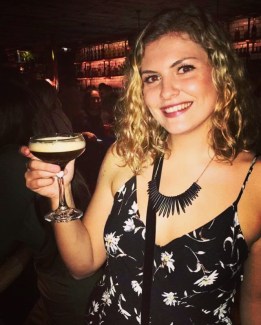
img_5118
Albert Schloss Espresso Martini

I am a big believer in moderation, balance and self-awareness. Doing what works for you is the most important thing, and it’s vital that you pay attention to yourself and your body so that you can recognise if and when drinking becomes a real problem in your life. Drink to enjoy, not to forget.

My last message will be this:

Be safe, be aware, be kind to yourself and to others.

Learning To Learn

I feel like we’re living in an oxymoron, like this world doesn’t quite make sense anymore. Words are flying about in the media such as ‘post-fact era‘ and ‘post-truth era‘, highlighting the fact that social media has become a platform where opinions have become truth. Anyone can post anything online. Everything that we think is normal and true was sold to us as an idea at some point in order to achieve something for someone else.

Opinions

Think about this, everything that we read is an opinion. Even scientific hard facts are only taught to you or introduced to you in your life because it’s someone else’s opinion that you need to know that information.  The perspective you have of the world around you is an accumulation of your experiences and only exists in your head. That means that we all live in different worlds to each other. A perspective can make two identical situations seem completely different.

Just Think

Children are growing up in a world that their parents have never had to deal with. How are parents meant to teach their children how to deal with uncomfortable and tricky situations that they don’t even know exist, have never been through and have never been taught how to cope with themselves? So much of the world around us automatically gets stored in our subconscious and we have no idea that we’ve absorbed certain influences, that our actions are the results of tiny stimuli, external and internal, that we weren’t conscious of receiving. How do we know what’s right or wrong any more when we have thousands of opinions shoved down our throats on all levels of our consciousness? How do we sort through it all and make our own decisions about what we want?

Question

The old saying ‘ignorance is bliss’ is completely redundant now; knowledge and awareness is the key to taking control of our lives. It’s more important than ever to engage in the world around us and to question our own actions and motives as well as other peoples. Through the internet, we have access to almost anything, however there are software and algorithms that exist which monitor your online presence (interests, hobbies etc.) and tailor your online experience (adverts, search suggestions. newsfeed article suggestions) to what they think you’re most likely to read, click on, buy, advertise for them. This creates the illusion that you know more than you actually know because you think you’re being exposed to a variety of articles/adverts/newsfeeds, when it’s actually highly tailored to suit your online preferences. It also makes you think that everyone else is thinking the same thing as you. Well, it’s time to start questioning. The only way to reduce the amount of influence that external stimuli have on you is to be aware that they exist then question them, then you get to decide what will benefit you and what won’t.

Ask

Most information has a bias or an angle, a concept that someone is trying to sell. So now you’ve started to question the motives of what you read on Facebook, in newspapers, watch on the news, adverts in the street etc. you can take another step and start to dissect your own opinions and work out what you actually believe in and what was just fed to you passively. Ask yourself what’s important to you.

Learn

Now you’re aware of how influence-able you are as a human being, you can start to learn in a more efficient way, take information on board in a more analytical way and form opinions in a more well-rounded way. This has the potential to open so many doors. How many things in life have you written off because you have this belief that it’s not right for you, but when you dig a little deeper you realise you don’t have any good reasons for why it’s not right, you just believe it. This is your chance to shrug off old habits and thought patterns that aren’t serving you at all, and to embrace a more wholesome and healthy way of thinking that will provide you with the best opportunities you can give yourself.

Research

This is the fun part (because I’m a massive sponge and love to learn stuff). This is where you start looking outside your box and you realise that all the amazing, crazy, hilarious, thought-provoking stuff that other people have done can make a huge difference in your life. Stop accepting what you think is normal. Learn new things, question the status quo, make changes happen, get inspired.

I joined the Green Party a few weeks ago which is a huge step for me because I’ve never really been into politics, I was never taught it at school and my parents weren’t interested in it really. I never understood how it affected my life. But I do now, and even though it took a bit of effort learning about politics and economics as a beginner, I love that it’s opened up this door for me in terms of the potential direction of my life and what I want to do when I’m older.

Same with travel. It makes you reassess everything you thought was normal about behaviour and societal constructs. It makes you more adaptable and accepting of different versions of normal that you haven’t come across yet, which can seem strange to you at first, but you come to realise that strange isn’t a bad thing, it’s a chance to learn.

How

TED talks are a fantastic way to broaden your mind and appreciate how amazing our world is and the people that are in it

Documentaries (there are loads of great ones on Netflix)

Social skills in a Digital Age is a qualification to teach people emotional intelligence with regards to the digital world, an extremely useful tool for people of all ages and a great certification to prove social, online awareness

The New Scientist which is one of my favourite websites!

The National Geographic is another of my favourite websites 🙂

People. Talk to people, be interested. Listen to learn, not to reply. Ask questions, don’t be afraid of being wrong, the only way we’ll learn is to ask and it’s admirable to admit that you want to know more.

Why

My flatmate is doing her dissertation on the impact of being obese when pregnant and it’s more damaging for the health of the baby than most people realise. It hugely increases the chance of genetic diseases and for the child to develop health problems later on in life. The only way to combat this is to educate women before they get pregnant.

Coconut oil is so far the most effective treatment for Alzheimer’s. Why isn’t this common knowledge already!? Someone is diagnosed with Dementia every 3 minutes and it affects billions of people worldwide, yet pharmaceutical companies can’t sell coconut oil therefore it’s not seen as a viable treatment. Same as cannabis in treating cancer. Just because it’s not medically accepted doesn’t mean it won’t work for you, there has never been a death from cannabis, and it’s saved many lives. The use of cannabis to treat cancer is another dissertation topic which I was extremely excited about as I know people that have had success with it.

Did you know processed sugar is just as addictive as cocaine; and sugar is way, way worse for you than fat. New studies have shook up the nutrition and medical community showing that a high-fat low-carb diet decreases your chances of getting cardiovascular disease compared to a low-fat, high-carb diet.

Remember when everyone thought smoking wasn’t damaging to your health?

How meat and dairy is full of hormones, toxins and damaging chemicals, is the largest contributor to global warming, and leaves third world countries starving because massive amounts of deforestation and land use are occurring to rear cattle and not grow crops for its own people?

That the rise of mental illness is because our brains aren’t evolving quick enough to be able to cope with the changing world around us, and we’re neglecting our mental and spiritual health in favour of immediate satisfaction.

Be inspired to learn and question.