09-01-2018 Dear diary introductions

So, I’m excited to announce that I’m going to start a ‘Dear Diary’ section in my blog. This will be for much more personal posts, and subject matter will be fairly general; just about me and my life and what I’m going through at any one time. I’m not going to publicize them as much as I do my other posts because they’re going to be more casual and also a bit more about ME, so I think I’d prefer it if my main audience is the online blogging community who tend to be a more supportive and non-judgmental bunch.

I want to do this for multiple reasons. I want to push my blog further and put a little more in / get a little more out, so blogging regularly should help gain followers and get my stats up (hopefully). Also, I want to practice writing in a hurry. Most of my blog posts take hours if not days to write, and coming up with a worthy topic only happens every couple of weeks. So this should work quite well for me. Just putting into a post what goes through my head in a day will be easy, and the pressure is a lot less to make them all perfect and valuable sources of information because a) they’re about me, b) I’m not linking them to Facebook where all my real life friends see my blog posts and c) they will sort of be sideline to the actual theme of my blog which is a holistic approach to health.

I really hope this works! If anyone reading this right now has any advice on how to make a blog more successful then please link me to blog posts you have written / thought were useful or just comment on the bottom, I promise I will follow your links / read your comments!

Thanks!

A letter to a loved one

Firstly, may I just say, I love you very much,

That love will never falter, a time-enduring touch

Of hearts entwined together, forever it will last.

Nothing could ever change that; future, present or past.


I’m sorry you’re unhappy, it breaks my fragile heart

To see you in your misery, to see you fall apart,

To see the darkness in your eyes and know that I can’t help.

You’ve got to want to live, you know, to want to help yourself.


If I could be your crutch, I would, if that is what you need

To help you walk the winding path of life, to take the lead.

If I could be your umbrella, protect you from the storm,

To keep you safe and dry, to always keep you warm.


If I could be your angel to guide you through the night,

I would give up everything to help you fight your fight.

If I could be your anchor, and hold on to you tight,

Never would I let you go for fear you would take flight.


But you know as well as I, it doesn’t work like that.

There’s a universal rule, an annoying caveat

That strength for change must only come from in your heart alone.

I will of course support you but in truth you’re on your own.


My heart is duly breaking to see you in this state,

I don’t believe for one second that this can be your fate.

I’ve had to be so strong for you, for us, for family,

The burden is too much now, it is slowly killing me.


So actually I need your help so please meet me halfway,

I need to see you better, become happy day by day.

So that is why I write to you, my heart is on my sleeve,

Let’s work this out together, there’s nothing we can’t achieve.


We’ve never lost our faith in you; the leader of our team.

It’s time to start your life again, start living out your dream.

We’re all here to support you in this time that you’re unwell,

Dear dad, I love you very much, I hope you know this well.

Sunday morning

Bleary eyed and fuzzy headed I wake up with a start

And feel the dryness of my mouth and hear the thudding of my heart

Which drowns out unfinished thoughts and the memories of last night

Flashing through my weary brain, withdrawing from the light

That streams in through my windows taunting me with midday sun

So I know I’ve missed the morning, I was out late having fun

Or so that is what the fragments of the visions I remember

Have led me to believe, I think I need to send a

Message to my friends just to check that all’s okay

So hungover paranoia doesn’t haunt me through the day

Like my painful throbbing headache will, reminding me that next week

I must drink a lot more water before I go to sleep,

Oh what I wouldn’t give for a glass of water now

In reach from my pillow, I’m not quite sure how

I can get up from my bed without it, my body mimicking

A sack of slowly hardening cement that’s sticking

To my mattress, I’ll be doomed if I don’t get up soon

Not sure I have the willpower to get up before the moon

Appears tonight, but I must find that will from deep inside me somewhere

Or I’ll slowly turn nocturnal, but I almost do not care

So long as I stay wrapped up in the warm cosy embrace

Of my duvet in my bedroom, my cave, my safe place.

Writers Block

I’m a writer, I’m a poet,
It’s a gift, they say, I know it!
Helps me fine tune all the voices
All the questions all the choices
Running through my busy brain:
Sorting crazy from the sane.
Helping me to find a way
When I’ve had a rubbish day.


But today the words won’t come.
Through my fingertips and thumb.
Tapping out a steady rhythm
Forming words into a vision
Giving shape to my emotions
When they feel as vast as oceans,
But today I’ve got to say;
I don’t know what to write. 
Okay?!

Why We’re Here – The Research

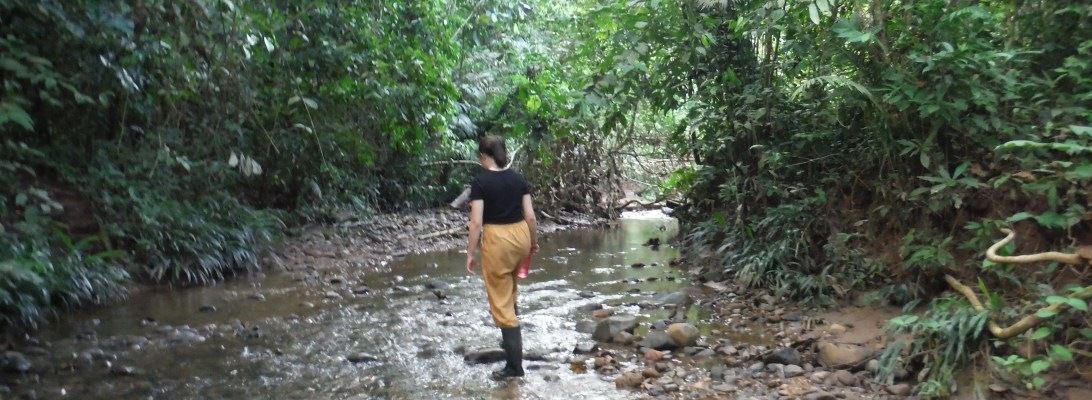
For those of you who have got the impression that so far my time in Ecuador has mostly been exploring, lying in a hammock and swimming, you’re wrong. Well, half wrong. Okay, just a little bit wrong, we have been doing a lot of that. But there’s a much more serious side to our life here: the research.

To preface the bulk of this post, I’ll just explain why I’m here: I’m 2 and a bit years into a degree in Biomedical Sciences with Industrial Placement at Manchester, and this is my placement. Heather is also on placement with me, she studies Zoology at Manchester and is a passionate animal lover, even the grizzly, scary, creepy ones… especially the grizzly, scary, creepy ones. Our aim over the course of this year in the Jungle is to complete research in an area of our choosing and produce scientifically viable results. If we work hard, then getting published could be on the cards.

We’ve both spent a long time coming up with a plan for our research proposals which mainly involved a lot of emailing, scrolling through PubMed, reading papers and chatting to Javier, the Ecuadorian station manager, about what would be possible. Javier has a degree in Forestry Engineering and has been working at the station for 6 years now. He’s affectionately nicknamed Jungle Dad and is sociable, generous, and a real joker. Even though most of his jokes are in Spanish and fly straight over our heads, he still makes us laugh with his faux-stern expressions, dad dancing and inability to say slept. “Slepech. Slepecha. Slepch?”

Heather’s main project will be investigating the Arachnid biodiversity here at Payamino. She was given a fantastic opportunity to work closely with an Arachnid specialist during her time here; they’ll complete the field work and research when he arrives at the station in January next year. ‘Arachnid Biodiversity Study’ means capturing as many spiders as possible, bringing them back to the station and identifying what species they are. Heather’s hoping to gain a greater appreciation of an animal that’s normally shunned in society and has a huge fear stigma attached to them. In her opinion, they’re actually underappreciated, beautiful creatures that aren’t nearly as scary as they seem. Already we’ve seen lots of spiders, including a baby tarantula (that we caught in a soup bowl) and many jumping spiders. Heather uses the word adorable, not something synonymous with spiders in my personal opinion, but it’s her project not mine. It’s a good thing I’m not scared of spiders (which my mother proudly attributes all credit to herself as she always made me and my sister get rid of the spiders in the house so she didn’t have to, thanks mum). Also, Heather will be continuing with the research on Heliconias, a native flowering plant, which was started by a previous placement student. The project is looking at the effects of genetic variation in Heliconia species and the associated insect communities. It will involve cutting off roots from existing plants and growing her own little, genetically-identical garden, then measuring the species diversity found between the two plants. Interesting stuff, plus Heliconias are really pretty.

My projects, which I’m very excited about, will be Fungi Biodiversity and knowledge about ethno-medicine in indigenous communities. Fungi are a largely under-researched, under-appreciated group of organisms. They are neither a plant nor an animal, but a whole kingdom to themselves. My project will be on the different types of flowering fungi found in Payamino. It will be impossible to do an all-inclusive biodiversity survey as a lot of fungal species are microscopic and I just don’t have the equipment to find them, so the project will be limited to fungi I can see with my eyes. There has been absolutely zero research into fungi biodiversity here, so I’m in unchartered territory and hopefully my research will be valuable to the scientific community. Once I’ve collected data on each fungi I find, I will get in touch with a fungi specialist either in Quito or the UK who can help me identify each species. Hopefully I’ll develop a comprehensive list of species found in this area. My interest in fungi started to develop in first year of Uni when I came to appreciate how diverse, interesting and spectacular they can be. For example, did you know that some species of fungi create their own jets of air in order to spread their spores further; some species are carnivorous, capable of punching holes in the cell walls of passing nematode worms and insects for food; and some have even teamed up with plants they live on and kill the insects for them then feed them the corpses. I started to see them as the research underdog of the natural world, and love the idea of contributing to this hugely unfinished puzzle piece of nature.

My second research project is quite close to my heart. I’ve always been interested in alternative medicine and how they practice medicine in different parts of the world, inspired by my own battle with illness, and had the idea of looking into medicine used in the indigenous communities here before I even applied for the placement. When I arrived, I found a book on the book shelf entitled ‘Plantas de Medicinales en Payamino’. I’m sure you can crack that Spanish on your own. The book was a catalogue of all the different plants used medicinally by the Kichua community, what they’re used for and how they’re prepared. I got in touch with the author of the book, Dr Brian Doyle – a researcher in the States, asking if there was any further research he wanted to do here, and if not, whether his research bought up some interesting questions that I could research myself. He replied with 3 large bullet points, each detailing a possible research area I could pursue, and said he was planning on coming back to Payamino next year to continue his research. This was the best possible news I could have hoped for. Bullet point number 1 turned out to be not so relevant after chatting with Javier who knows the area and communities really well. Bullet point number 2 was simply monitoring all the plant species year round; collecting samples for the National Herbarium in Quito and collecting data and pictures about the life cycle of each plant. Bullet point number 3 was by far the most interesting and challenging suggestion. Brian had recently published a paper that analysed the distribution of knowledge about traditional medicine across the community near the station. His suggestion was that I do the same thing, with improvements and a few alterations, in a few other indigenous communities, and use the data to compare knowledge between communities. Imagine: travelling to various indigenous communities in the rainforest, staying for a week or so and in that time surveying a random sample of the population using images of plants and a basic questionnaire. Queue huge excitement and the stomach-dropping realisation that I’m going to have to be near fluent in Spanish to pull this off. So at the moment I am doing my best to learn Spanish, with a general plan to do this field work next Easter.

So my plan is to get a chunk of the Fungi project done by Christmas and send over the data to a specialist to see what results I get; and learn Spanish rapido. There’s only so far you can get with audio-tapes, books and Duolingo, so Heather and I spent an intense week in el Coca having Spanish lessons with an Ecuadorian-but-lived-in-Norway-for-18-years English teacher, Fernando, doing 4 hours of lessons a day. It was a pretty hard week but we learnt a lot. On the Friday, we went to a bar (Papa Dance, a salsa bar on the river) with Fernando and met some of his other students learning English and found we could actually have a simple conversation and swap basic information about our lives. It was a triumphant moment.

The pace of life is still quite slow here as we travel to and from various cities on a weekly basis to get all the relevant documentation needed for our contracts with UEA and our Ecuadorian work visa, and as we adjust to the living conditions in the Rainforest. We’ve only been here a month but it already feels like a lifetime. This little clearing on the bank of el Rio Payamino has become our home and we love it. We both have high hopes for our research here and can’t wait to see our ideas and plans come to fruition. Let’s hope that in a year’s time, Heather and I can look back at the blog post and have succeeded in meeting our aims. Buena suerte a nosotros. Good luck to us.

Rainforest frustrations and jungle revelations

So it turns out that the rain forest is actually a fairly harsh environment to live in. Who would have thought?

Gone are our misguided delusions of tanning in the sun, swimming laps across the river, being fluent in Spanish within the month and keeping up our physical fitness.

These activities have been replaced with 1) doing everything we possibly can to not sweat buckets constantly and 2) limiting insect bites to just a handful a day. Sometimes we’re successful, sometimes we’re not.

My biggest complaint of life here are the bites. They are everywhere. The soles of my feet, behind my knee, the base of my neck, those too hard to reach parts of my back. There is no relief from the constant itching. No object is above being used as a scratching implement, sometimes I’m completely unaware that I’m even itching. Once, I only realised when I needed to put the lid back on my bottle and saw that I had been using it to itch the bottom of my feet. It’s become an unconscious reflex. Bite spray, tiger balm and long clothing only get you so far. Those bastards are canny. They get you when you’re distracted, unsuspecting and vulnerable.

Heather and I have insects fly straight into our faces on the regular. Sometimes they hit an eye or fly up a nostril, and they come out of nowhere. The main culprits are moths, crickets and giant flies. The sound of buzzing or a slight skin tickle is enough to set us both on edge and start flapping about at an invisible enemy, deranged and panicked.

Insects are also annoyingly good at crawling into food and drinks. It’s a rare occasion when you can get through a meal without the appearance of a boiled ant. Heather once found 3 moths in her stew, she was pretty shaken.

The weather here is almost always hot and humid. The temperature is mostly mid 30’s and the humidity above 60%. This causes a lot of sweating. Constant, all-consuming, itch-inducing, salt-producing sweating. Sometimes the only thing you can do to not go crazy is just sit still, calm down and distract yourself. Waking up in the middle of the night sticky with sweat and tangled in sheets is not very pleasant. So tanning isn’t much of an option, sitting in the sun exposing your skin to insects is the last thing you want to do. Relief from the heat only really comes with a storm; it’s the only time the dense air lifts and a cool breeze travels across the river.

Other minor complaints are that the water tastes like chlorine: we put chlorine tablets in the water to purify it. And it’s actually pretty difficult to do anything without a conversational level of Spanish. The station manager, Javier, is great and looks after us really well here, but his English is basic and so we are constantly uninformed about stuff that’s happening and have to blindly follow him around sometimes, not knowing where we’re going or what we’re doing. We are getting Spanish lessons and have downloaded DuoLingo, at least on this matter we have some control.

We are both hoping that we manage to acclimatise somewhat to the heat, and become less appealing to hungry insects, although we’re not sure when this will happen, if ever. This post will serve as a reminder of how we felt during the first couple of weeks, and be interesting to compare to how we feel in a few months time.

I think I need to mention, just at the very end, that we both love life in the jungle. We’re in awe every single day at the life that exists here and both feel so amazingly lucky to be living here; but that’s for a different blog post.


Take Off

I’ve been waiting all summer for moments of inspiration, flashes of thought that creep down into my hands, urging me to write. But they have eluded me. I think writing is an art, for which you need creativity, passion and a purpose. It’s not like maths or science where you apply logic or reason to which there is only one true solution. As with all the arts, you can develop the instinct to write and with practice it becomes easier to skilfully tap into that, however for a beginner like me who’s immersed in science, it’s been quite hard to let my creative juices flow. So now is the time to put pen to paper (metaphorically; fingertips to keyboard doesn’t have quite the same ring) and start writing again. I want to document my imminent adventure, develop my skills as a writer and communicator, and share my discoveries: personal and professional. For I am going on a journey along a path less trodden. Out into the wilderness where my basic human instincts will be fine-tuned, and my need to impress and satisfy my self-worth upon Western standards will diminish.

This is my second long trip. My first was 18 months in Australia and Asia. I’m heading to a different part of the world this time: South America for 1 year. It’s quite exciting really, I go in the pursuit of knowledge and learning, rather than on a path of fun and self-discovery as was the case when I was 18.

I was lucky enough to be offered a research placement at the Timburi Cocha research station in the Amazon Rainforest in Ecuador, in order to complete a research project of my own during the placement year of my degree. Originally I was not enrolled on a degree with a placement year, however I made the decision to intersect my 3 year BSc with a year in industry while I was in my first year.

Before I tell you how excited I am, I want to preface that with a short summary of my first two years of uni. I study Biomedical Sciences at The University of Manchester: the biggest uni in the UK and situated in the heart of the northern capital. I chose Manchester because of its good reputation, the variety of modules and specialities available to me and the allure of a busy, metropolitan city. I can say, hand on heart, that Manchester has lived up to those expectations. I have loved most of my modules and I’m so grateful for the amount of choice I’ve been offered. I’ve studied some absolutely fascinating topics, from the more mainstream such as Biochemistry, Endocrinology, Genetics etc. to topics a little off the beaten track such as Parasitology and Gut and Renal Physiology. The city of Manchester is beautiful, offers a lot of culture and night life, and I don’t think I’ll ever run out of things to do there; and true to its name, Manchester boasts some of the best researchers and academics in the country, and is home to some major scientific discoveries.

Despite this glossy exterior, my experience at Manchester hasn’t been the easiest. For the two years I was there, I couldn’t escape this sense of isolation and loneliness. Even though Manchester has the highest student population in the UK, I never felt like I fitted in, or belonged, or truly ever found my niche. I had great friends, who are great people I would love to always keep in contact with and follow their journeys through life, I was also part of a sports team and had a job at uni. The issue wasn’t the quantity of my social interactions, more the quality. Everyone has a billion and one things to do and places to be, with their own agendas and priorities, and I just didn’t seem to make the cut. That’s what it felt like anyway. Perhaps I’m studying the wrong degree, hence I’m not surrounded by like-minded people; I’ve always fancied studying philosophy. In fact, I still might. Perhaps being an old soul and older in age created a distance between me and the people around me that was intangible but still unbearable. Perhaps, I didn’t prioritise my own social life as much as I needed to, because at the time I felt like there were more important things to do, like earn money, exercise and sleep. Too responsible for my own good.

So this summer I decided to take a bit of time to rest and recuperate. I prioritised my immediate friends and family, fitness classes that I enjoyed, and making decisions based on what I wanted to do rather than what I thought I should do or what was expected of me. I actually feel a lot better now, much more centred and fulfilled. But it wasn’t until I walked through Heathrow airport this morning that I realised what’s really been missing. Adventure. My soul yearns for it. If routine and conformity make me unwell, then travel and adventure are my antidote. So here I am, sitting on a plane heading to San Francisco, at the start of my next big adventure. It’s in moments like this where I truly feel like myself.

I’m visiting my aunt, uncle, grandmother and cousins in San Jose for two weeks before heading to the jungle. Over the last couple of years I’ve learnt a lot more about the USA and its culture, and I’m so excited to go there and experience a little bit of it myself and have a good catch up with my family. My life has turned in a direction I did not at all expect, not for a second, and I’m so excited.

Then in the beginning of September, I fly to Quito, the capital of Ecuador, where I’m staying for 6 days in order to explore the city and orientate myself, as well as complete a few missions like buying wellies / a hammock / a blanket and a few jumpers. I then fly to Coca with Heather, my placement buddy, where we’ll be picked up by the station manager, Javier, and escorted to the station. The station is situated in the amazon, and I will write all about what it’s like and put pictures up as soon as I get there and figure it out for myself.

Our purpose at the station is to complete a research project which will count 10% towards our final mark. We will spend the year deciding on a hypothesis (the big question, what do we actually want to find out), gathering data, (field work, getting the answers), analysing that data and compiling it into a report which we can then present and communicate our findings. The main area of research at the station is biodiversity in the rainforest, however after reading all about the station, its location, aims and involvement in the local community, I have set my heart on doing a public health project regarding diseases, healthcare and medicines in the local, indigenous communities. I would love to learn all about their common diseases and how they cure them, then perhaps compare them with a Western Medicine alternative. Or investigate why their own medicines are so effective, what is it in their remedies that are so effective at treating their diseases? I want to tap into their knowledge of how to survive in the rainforest and learn from them. The difficult part will be constructing a hypothesis where I can actually gather binary data in order to prove or disprove a fundamental question. I don’t need all the answers right away. I’ll have a few months to settle in and do a bit of research before I start my project.

So I’ll sign off now and end this post with a few goals and a few fears. Goal no. 1: come up with a research proposal so interesting I can’t not spend every day finding out the answer; goal no. 2: learn Spanish; goal no. 3: live in the moment, in the present, take each day as it comes, go to sleep when the sun sets and wake when it rises, live with the Earth not against it, and learn as much as I can. Fear no. 1: get bitten to death, quite literally, leishmaniasis and malaria are a real danger; Fear no.2: my project doesn’t go to plan or I don’t manage to prove my hypothesis; fear no. 3: not having access to a well-rounded vegan diet. I had to think hard about those fears as I don’t really get scared or anxious about things.

Let the adventure begin.
New Years Resolutions

Achievable Resolutions

Not a ‘New Year New Me’, more of a ‘Me with some improvements’, set of resolutions. I know that if I set myself a goal which is too far away from my current lifestyle, I’ll be setting myself up for failure and disappointment. So I’ve got a couple of resolutions which, hopefully, are quite achievable; and might even inspire a couple of other people as well, hence why I’m sharing them here.

The power of Habit

Habit is a very powerful tool that people don’t take advantage of often enough. When we repeat behaviours over and over, we form neuronal connections that make it easier for us to go back to that behaviour. At first something is a conscious effort, but eventually it becomes unconscious and we do it naturally.

My new years resolutions are to develop little behaviours and repeat small affirmations to myself daily in order to keep improving who I am.

Small Talk

One thing I really want to try and do more is small talk. I often look for meaningful interactions and deeper conversations and get a little bored of preliminary questions and shallow chit-chat; however I’m starting to appreciate the value of that little bit of extra effort to start a conversation and get to know people a little better. I’m great at listening and I’m always interested in what people have to say, but I’m not very good at initiating a conversation and pushing through the uncomfortable first 5 minutes. But practice makes perfect!

Affirmations

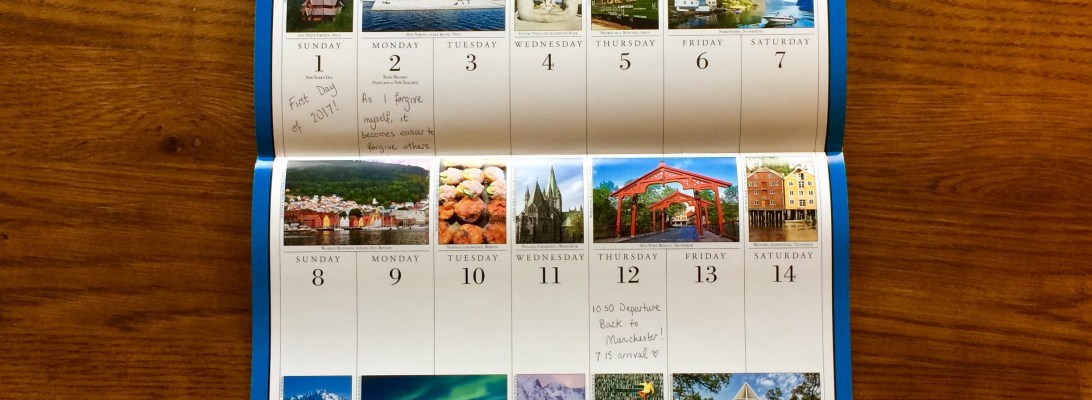
I feel like affirmations are so powerful yet undervalued. I want to set myself a mini personal goal per month, come up with an affirmation to support this, stick it up on my wall and repeat it to myself every single day in the mirror. It sounds silly but it really works! When you tell yourself something over and over again it sticks in your mind, and when you’re faced with a situation that you could potentially handle badly, the affirmation which you’ve glued into your subconscious will pop into your head and remind you to choose the enlightened decision.

My January affirmation is: “As I forgive myself, it becomes easier to forgive others. I move beyond forgiveness to understanding and I have compassion and kindness for all.

I set really high standards for myself which isn’t very productive as I’m often left feeling bad about what I’ve accomplished because I always feel like I could do/be/have more. Also I feel like I sometimes reflect my standards for myself on to other people, expecting them to also strive for the same things. So my affirmation is designed to help me let go of constantly needing perfection in my life, and just to live and let live a little more.

Good luck in 2017 🙂