A poetic foray into digestion

Her stomach gurgles, her belly quivers,

Her eyes dart round, her body shivers,

Her blood is pumping, pupils dilating,

Her brain firing signals, neurons pulsating.


“I’m hungry” she says, stomping her feet,

Her hands curled in fists, her cheeks pink with heat,

Her blood sugars low, her brain senses the threat,

Hypoglycaemic, she’s getting upset.


Let’s zoom inside to her stomach, we see

Not much actually, it’s pretty empty,

Let’s go closer still to epithelial cells,

With mechanoreceptors that detect stretch and swell.


The cells are secreting, in the absence of food,

Ghrelin, director of hunger and mood.

It travels far to the hypothalamus,

And crosses the barrier to the Arcuate Nucleus.


It exerts on the brain orexigenic effects,

Acting on all of the CNS,

As well as controlling energy homeostasis,

It activates signals in other places.


It is involved in rewards and incentives,

Activating memory to be more retentive,

In the prefrontal cortex it alters decisions

And signals that food is the brains next mission.


AGRP / NPY neurons firing,

She suddenly realises she’s desiring

Foods that will bring comfort and energy,

Turning the hunger to satiety.


She glances around, “Is there food in the kitchen?”

“Maybe there’s cake?” she finds herself wishing.

Her brain screaming out “I need sugar and fat!”

“How about this celery stick?”, “No! Not that!”.


She settles for leftovers from todays’ lunch,

She prepares the meal and begins to munch,

But before the food even enters her mouth

Her body’s preparing to break it down.


The optic nerve signals, olfactory tasting,

Oesophagus contracting, stomach bracing,

Signals firing and cells releasing,

Hormones pumping, saliva secreting.


She’s chewing her food, or masticating,

The mechanical movement of teeth activating

Brain pathways and peptides although which? We don’t know,

Undoubtedly appetite suppressing, though.


She swallows the food, it enters her gullet,

Peristaltic contractions push it, pull it?

Down to the stomach and through the sphincter,

Exciting the vagus nerve which leads to


Acetylcholine release which then acts on

M3 receptors which has an impact on

G cells and Gastrin release which exacts on

Enterochromaffin cells, in fact, on


The release of Histamine which causes secretion

Of a Hydrochloric Acid solution

From parietal cells. This breaks down proteins:

Bacterial, viral, it effectively cleans.


The stomach defensive to outside threats,

It protects the body from microbe pests,

And starts to get bigger when filling with stuff

Alerting cells that there’s food, sure enough.


This is the sign that cells into action,

Satiety hormones promote food satisfaction,

And called to arms they summon their messengers

To zoom round the body, passing on messages.


Listen real close and we’ll hear what they’re saying,

Small peptides which act on receptors relaying

Instructions for organs and tissues together,

Discreetly directing digestion, they’re clever!


Quick shout out to the second brain,

Enteric Nervous System reigns

Independent of our head,

Taking over when we’re fed.


Not consciously controlling food,

But still it can impact on mood.

Example; it can play a role in

Emotion via serotonin.


We can’t leave out our microbe friends,

They influence our gut no end,

They breakdown fibre, control immunity,

Live symbiotically with impunity.


But more than this they also create

Peptides that mimic our own, although fake

They still can cause the brain to favour

Certain foods and change behaviour.


But we’re on a tangent, I transgress,

Trying to unravel the mysteries, the mess,

Let’s turn our attention back to her digestion,

Please excuse this wild digression.


The food moves into the small intestine,

Which triggers release of the hormone secretin,

Raising pH, deacidifying the chyme,

Preparing the food for absorption time.


Now this is when hormonal magic starts,

They spring into action to play their parts,

All working towards a common goal,

With the finest precision and expert control.


Introducing our trio of polypeptides,

Meet P.P, P.P.Y and greet N.P.Y,

Their function is slowing intestinal transit,

Collecting info from gut contents to transmit.


There’s cholecystokinin released from the lining

Of epithelial cells, the intestine mining

All of the nutrients. Hormones supplying

Pancreatic enzymes emulsifying.


Let’s move to the pancreas, it’s interesting here,

There are many cell types, but you don’t need to fear,

Insulin’s important and so’s glucagon!

Blood glucose levels is what they act on.


“Cells, uptake glucose!” ordered insulin.

Encouraged by supporters called incretins,

G.I.P and G.L.P-1 unite

To make sure secretion of insulin’s right.


Back to the intestine the food flowing through,

Down to the large one it ends up as poo,

But still there’s absorption before this occurs,

Gradient crossings and nutrient transfers.


Her hormones are doing their job quite well,

Signalling enough’s enough for a spell,

We’ll find, if we’re looking, there’s one in particular,

Not quite a satiety hormone, but similar.


That is super important in stopping eating,

It acts on the brain to minimise feeding,

Signalling high nutrition, or paucity,

Signalling also body adiposity.


It’s Leptin, of course, what else could it be?

Released from adipocytes, completely key.

Directly proportional to adipose stores,

It communicates well, but not without flaws.


For when we’re obese, sometimes we’re resistant

To leptins effects, and Ghrelins persistent,

The balance is off and it’s hard to make right

But for now she is healthy, her hormones alright.


The food almost finished her plate almost empty,

She’s eaten as much as she can, it was plenty,

She’s starting to feel just a little bit full,

“Delicious! But really I can’t eat it all!”


And after a while, digestion is done,

Nutrients absorbed, the waste passed on,

Deposited fat, glucose stores filled,

The body has protein with which to rebuild.


She’s feeling much better now that she has eaten,

Happy and comfy, a bit sleepy even,

She washes her dishes and lies on the sofa,

Sinking, so sweetly, into a food coma.

Are cocktails giving you brain damage?

Well yes, they are actually.

Do I still love them? Yes, they’re pretty and yummy.

This post is about increasing awareness rather than personally condemning everyone that drinks (myself included) and just hopefully inspiring people to ask a few more questions and take the issue a little bit more seriously.

One quick comment before I bombard you with scary facts: it can be really hard in life to get it all right and be healthy all the time, and I’m not saying you should be all at once, it’s a process. We’re all under so much pressure in this world already without feeling like we can’t enjoy simple pleasures and let loose every so often. It’s important to not feel deprived and to make fulfilling choices that feel good. I personally am working towards a mental state where I feel great about making the healthiest choice, and it’s a really exciting journey. I’m writing this post to inform you, and with some hope that the next time you face a choice about how much to drink, there will be a little voice in your head that thinks of your liver and says, ‘ooh maybe I shouldn’t have that 3rd shot of tequila’.

Alcohol is, unfortunately, one of the biggest killers in the world, sorry, but it’s true. Alcohol abuse is embedded into our society to such an extent that most people wouldn’t go to social occasions or music events etc. if they weren’t going to drink. Decreased inhibitions, questionable decisions and ‘hilarious’ displays of clumsiness (aka your brain shutting down) seem to be the only way that we can go out, enjoy ourselves and fit in.

I am by no means tee-total or have any desire to become so while I’m still at university, but it’s something I’d really like to be by the time I’m 30 – I figure/hope that most of the damage can be undone (or at least slightly repaired) while I’m still young. And yes, 30 is still young.

I’m writing a Lab Report on the ‘Effects of Ethanol on Performance’ and subsequently have done a lot of research to find out what exactly ethanol does when it enters our body. My research has included reading other lab reports, medical reviews and reports done by the World Health Organisation and Public Health England, and also stuff I learn at Uni.

The first thing that shocked me was the amount of evidence proving how bad alcohol is for you and the fact that it is a misconception that a little bit is good for you. No alcohol is good for you. Period. What’s good for you is the other nutrients in the drink e.g. antioxidants in wine, yeast in beer etc. When mainstream attitude to smoking changed around 2005/2006, the government ruled that all smoking products must have visual and written warnings of its harmful effects, but alcohol kills more people than cigarettes do! Where are the pictures showing brain damage and rotting livers on alcoholic drinks? The list of potential poor decisions and the consequences of emotional and psychological trauma. I know this has turned heavy pretty quick, but we all know someone who’s life has been ruined by alcohol.

Annually, alcohol abuse costs the total British economy £21bn and the NHS £3.5bn. If our nation was so desperate to improve the economy and save our NHS, we should have all stopped drinking, not quit one of the most successful Unions in the world. England and the USA are among the top 20 heaviest drinkers in the world and all of the top 10 countries are in Europe (Global Status Report on Alcohol and Health in 2014).

Alcohol is a Central Nervous System (CNS) depressant. Your CNS is made up of your brain and spinal cord and controls most functions in your body and mind. Ethanol (the alcoholic component of drinks) depresses the CNS; in other words, slows it down and stops it from working. Ethanol acts on various receptors in the brain in order to increase inhibitory signals and decrease excitatory signals: this results in decreased motor (movement) functions, confused thoughts, decreased awareness and poor coordination. It also interferes with your ability to lay down memories and to learn by blocking specific signalling pathways and decreasing the actions of neurotransmitters (Glutamate) in specific parts of the brain (hippocampus, amygdala and striatum). You’re all thinking, “well yes we know all that!” “I frequently wake up with no recollection of the night before.” “My friend was throwing up all night last week, it was hilarious.” Why? Why is it funny to see people poison themselves to the point where their body has to reject everything in their stomach so their organs don’t shut down?

Prolonged drinking causes irreparable damage in the brain, destroys your liver and diminishes your immune system. Short-term drinking decreases the effects of your immune system, making you much more likely to contract a virus or bacterial infection after a night out; and long-term drinking increases the immune system, causing inflammatory diseases and internal damage. Alcohol is commonly known to be bad for people with digestive disorders including IBS and interferes with a lot of medications.

Quick fact: the reason people with less body fat get drunk quicker is because alcohol is very soluble in water but not soluble in fat. So if you have more fat cells in your body, alcohol is less likely to pass out of your blood, and will head straight to the liver to get broken down. It also makes sense that if you’re a bigger/taller person, there’s more blood for alcohol to get absorbed into, thus the concentration of ethanol at any one point in your body will be less.

I understand that it is very important for people to belong in their society and to fit in with cultural norms, evolutionary speaking this was essential for our survival, and social drinking is a part of that. I’m not writing this to try and convince everybody to stop drinking and boycott all bars and nightclubs, I’m writing this just to draw your attention to it. The next time your friend chooses not to drink on a night out, respect that decision. If you see your friend about to cross the line between drunk and smashed, give them a glass of water. Value yourself sober. Your sober self is good enough, fun enough and happy enough. And if you turn to drink to escape life, have a good look at what you’re escaping from and try and fix that instead, rather than just forgetting it for a night.

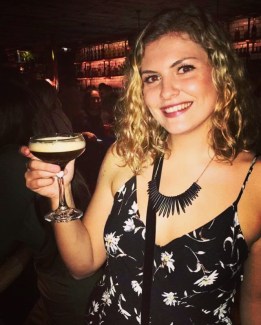
img_5118
Albert Schloss Espresso Martini

I am a big believer in moderation, balance and self-awareness. Doing what works for you is the most important thing, and it’s vital that you pay attention to yourself and your body so that you can recognise if and when drinking becomes a real problem in your life. Drink to enjoy, not to forget.

My last message will be this:

Be safe, be aware, be kind to yourself and to others.