Why We’re Here – The Research

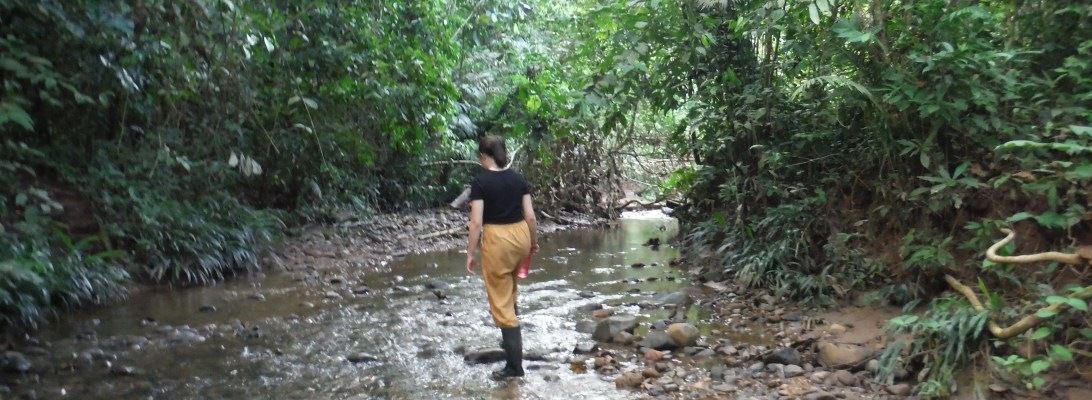
For those of you who have got the impression that so far my time in Ecuador has mostly been exploring, lying in a hammock and swimming, you’re wrong. Well, half wrong. Okay, just a little bit wrong, we have been doing a lot of that. But there’s a much more serious side to our life here: the research.

To preface the bulk of this post, I’ll just explain why I’m here: I’m 2 and a bit years into a degree in Biomedical Sciences with Industrial Placement at Manchester, and this is my placement. Heather is also on placement with me, she studies Zoology at Manchester and is a passionate animal lover, even the grizzly, scary, creepy ones… especially the grizzly, scary, creepy ones. Our aim over the course of this year in the Jungle is to complete research in an area of our choosing and produce scientifically viable results. If we work hard, then getting published could be on the cards.

We’ve both spent a long time coming up with a plan for our research proposals which mainly involved a lot of emailing, scrolling through PubMed, reading papers and chatting to Javier, the Ecuadorian station manager, about what would be possible. Javier has a degree in Forestry Engineering and has been working at the station for 6 years now. He’s affectionately nicknamed Jungle Dad and is sociable, generous, and a real joker. Even though most of his jokes are in Spanish and fly straight over our heads, he still makes us laugh with his faux-stern expressions, dad dancing and inability to say slept. “Slepech. Slepecha. Slepch?”

Heather’s main project will be investigating the Arachnid biodiversity here at Payamino. She was given a fantastic opportunity to work closely with an Arachnid specialist during her time here; they’ll complete the field work and research when he arrives at the station in January next year. ‘Arachnid Biodiversity Study’ means capturing as many spiders as possible, bringing them back to the station and identifying what species they are. Heather’s hoping to gain a greater appreciation of an animal that’s normally shunned in society and has a huge fear stigma attached to them. In her opinion, they’re actually underappreciated, beautiful creatures that aren’t nearly as scary as they seem. Already we’ve seen lots of spiders, including a baby tarantula (that we caught in a soup bowl) and many jumping spiders. Heather uses the word adorable, not something synonymous with spiders in my personal opinion, but it’s her project not mine. It’s a good thing I’m not scared of spiders (which my mother proudly attributes all credit to herself as she always made me and my sister get rid of the spiders in the house so she didn’t have to, thanks mum). Also, Heather will be continuing with the research on Heliconias, a native flowering plant, which was started by a previous placement student. The project is looking at the effects of genetic variation in Heliconia species and the associated insect communities. It will involve cutting off roots from existing plants and growing her own little, genetically-identical garden, then measuring the species diversity found between the two plants. Interesting stuff, plus Heliconias are really pretty.

My projects, which I’m very excited about, will be Fungi Biodiversity and knowledge about ethno-medicine in indigenous communities. Fungi are a largely under-researched, under-appreciated group of organisms. They are neither a plant nor an animal, but a whole kingdom to themselves. My project will be on the different types of flowering fungi found in Payamino. It will be impossible to do an all-inclusive biodiversity survey as a lot of fungal species are microscopic and I just don’t have the equipment to find them, so the project will be limited to fungi I can see with my eyes. There has been absolutely zero research into fungi biodiversity here, so I’m in unchartered territory and hopefully my research will be valuable to the scientific community. Once I’ve collected data on each fungi I find, I will get in touch with a fungi specialist either in Quito or the UK who can help me identify each species. Hopefully I’ll develop a comprehensive list of species found in this area. My interest in fungi started to develop in first year of Uni when I came to appreciate how diverse, interesting and spectacular they can be. For example, did you know that some species of fungi create their own jets of air in order to spread their spores further; some species are carnivorous, capable of punching holes in the cell walls of passing nematode worms and insects for food; and some have even teamed up with plants they live on and kill the insects for them then feed them the corpses. I started to see them as the research underdog of the natural world, and love the idea of contributing to this hugely unfinished puzzle piece of nature.

My second research project is quite close to my heart. I’ve always been interested in alternative medicine and how they practice medicine in different parts of the world, inspired by my own battle with illness, and had the idea of looking into medicine used in the indigenous communities here before I even applied for the placement. When I arrived, I found a book on the book shelf entitled ‘Plantas de Medicinales en Payamino’. I’m sure you can crack that Spanish on your own. The book was a catalogue of all the different plants used medicinally by the Kichua community, what they’re used for and how they’re prepared. I got in touch with the author of the book, Dr Brian Doyle – a researcher in the States, asking if there was any further research he wanted to do here, and if not, whether his research bought up some interesting questions that I could research myself. He replied with 3 large bullet points, each detailing a possible research area I could pursue, and said he was planning on coming back to Payamino next year to continue his research. This was the best possible news I could have hoped for. Bullet point number 1 turned out to be not so relevant after chatting with Javier who knows the area and communities really well. Bullet point number 2 was simply monitoring all the plant species year round; collecting samples for the National Herbarium in Quito and collecting data and pictures about the life cycle of each plant. Bullet point number 3 was by far the most interesting and challenging suggestion. Brian had recently published a paper that analysed the distribution of knowledge about traditional medicine across the community near the station. His suggestion was that I do the same thing, with improvements and a few alterations, in a few other indigenous communities, and use the data to compare knowledge between communities. Imagine: travelling to various indigenous communities in the rainforest, staying for a week or so and in that time surveying a random sample of the population using images of plants and a basic questionnaire. Queue huge excitement and the stomach-dropping realisation that I’m going to have to be near fluent in Spanish to pull this off. So at the moment I am doing my best to learn Spanish, with a general plan to do this field work next Easter.

So my plan is to get a chunk of the Fungi project done by Christmas and send over the data to a specialist to see what results I get; and learn Spanish rapido. There’s only so far you can get with audio-tapes, books and Duolingo, so Heather and I spent an intense week in el Coca having Spanish lessons with an Ecuadorian-but-lived-in-Norway-for-18-years English teacher, Fernando, doing 4 hours of lessons a day. It was a pretty hard week but we learnt a lot. On the Friday, we went to a bar (Papa Dance, a salsa bar on the river) with Fernando and met some of his other students learning English and found we could actually have a simple conversation and swap basic information about our lives. It was a triumphant moment.

The pace of life is still quite slow here as we travel to and from various cities on a weekly basis to get all the relevant documentation needed for our contracts with UEA and our Ecuadorian work visa, and as we adjust to the living conditions in the Rainforest. We’ve only been here a month but it already feels like a lifetime. This little clearing on the bank of el Rio Payamino has become our home and we love it. We both have high hopes for our research here and can’t wait to see our ideas and plans come to fruition. Let’s hope that in a year’s time, Heather and I can look back at the blog post and have succeeded in meeting our aims. Buena suerte a nosotros. Good luck to us.
How to kick-start your solo travels

Travelling on your own can be a daunting and even seemingly impossible prospect. Glorified blogs and epic Instagram accounts make it seem like only the most accomplished travellers dare to wander the world independently, risking their lives everyday and partying with new people every night. These travellers usually have expensive GoPro’s and movie editing software, endless streams of money and a seemingly innate ability to talk to anyone.

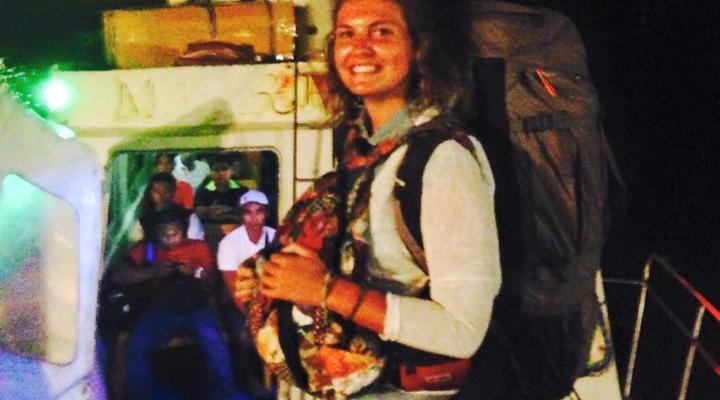
However, from my own experience, I can tell you that it’s not as glamorous and scary as it seems. Most solo travellers are people who decided to set off on a path of self-discovery, step out of their comfort zone, take a few risks and ended up accidentally on a whirlwind adventure. The trick to travelling is to keep putting one foot in front of the other. No matter where you end up, who you meet, what you loose, what you find… just keep moving forward and don’t give up. You will learn how to make the next step after you’ve taken the last. There are lots of ways to ease yourself into life on the road that will make you answer the question ‘how did you find travelling on your own?’ with a confident ‘I was never on my own’ when you get home from your adventure, full of pride and amazing memories.

Now you’re all inspired to organise your first solo journey, I’ll give you a few tips on how to get going. There are several ways to start your travels, but the main ways are working, volunteering, backpacking or couch-surfing.

WORKING. Do you want to get travelling now but just don’t have the cash saved? Work your way around the world and you’ll never have to stop. The beauty of being prepared to work is that you can keep going for as long as you like. Whenever you’re close to running out of money, put down some roots and get a job wherever you are at the time. Working holiday visa’s for 18 – 30 year old’s are pretty easy to get for Australia, New Zealand and Canada. Buy yourself a visa, book 1 week in a central, popular hostel in a city of your choice, catch a flight, and get job searching once you’re out there. Look on gumtree, pop into STA, hand out your CV, speak to people and keep your standards low. My first job in Sydney was door to door sales. I quit after a week but I ended up moving in with the people I met on the job (who also quit after a week) and we became really great friends. Alternatively, you could get a seasonal job. Popular winter seasonal jobs are Ski Seasons: getting these are as simple as googling, emailing and persevering. During summer, you could work in a bar/restaurant in a party town around Europe, to do this you’ll either need to go through an agency online, or just rock up and start handing out CV’s. If the drink all day and party all night life just isn’t for you, you could get a job as an activities leader. Camp America is great if you don’t need to save, or you could try In2Action who supply activity coordinators to Holiday Villages all around Europe (and 2 outside of Europe). I worked in Tunisia for 4 months and absolutely loved the experience! Another avenue you could go down is working on a cruise ship! Whether you’re an entertainer, singer, dancer, restaurant staff member or cleaner, you’ll be paid to tour some of the most beautiful places in the world. Another option for those of you who want to travel a bit more permanently, is to do a TEFL (Teach English as a Foreign Language) course. This enables you to teach in schools all over the world, earn a decent salary and really immerse yourself in a new culture.

VOLUNTEERING. If there’s something more specific you want to do, maybe this is the way forward. The International Citizen Service is a great place to start if you want to really make a difference in a small community by working on a project. Their website is very helpful and the great thing about ICS is that all you have to do is fund raise £800, and all other costs are paid for. Something I’m desperate to do once I’ve finished University is to volunteer at a Yoga and Surf retreat. These are found all over the world (I want to go to Sri Lanka!) and usually say if you work in a cafe/restaurant for free, then you have access to surf equipment and yoga classes at their facility. If you want to volunteer while on the move, you can work for bed and board. This includes WWOOFing, (a popular option in Australia) or working in a hostel, on reception or cleaning, in return for free accommodation.

BACKPACKING. There are so many organised tours out there, visit STA or have a google to find some of the most popular tours for solo travellers. These are great for the first couple of weeks as you usually end up meeting some people you can stick with once the tour is over, and they give you a good feel for a new country whilst keeping you totally safe. Down side is these are a little more expensive. If you don’t fancy a tour, just rock up to a new place having pre-booked a popular, suitable hostel and researched a bit about the area and what you want to do there, and start making friends! People are much friendlier in hostels than they are anywhere else in the world – I promise. If you’re more organised, then plan your journey and your accommodation in advance. If you’re more spontaneous (like me) and get a thrill from last minute decisions and not knowing where you’re going to end up, then just book the first few days and see where life takes you.

COUCH SURFING. This one is fairly self explanatory! Get signed up on the couch surfing website, build a profile, and plan your journey. The benefits of this mode of travel is that you get to hang out with locals who can point you in the direction of some hidden gems as well as the obvious tourist attractions. The downside is that you may feel a little bit vulnerable if you don’t feel comfortable staying in other peoples homes.

So hopefully you now feel equipped with a wealth of knowledge about how to plan and implement your solo travels. Good luck! Find yourself, loose yourself, take lots of selfies – and don’t be scared to ask strangers to take your picture!! – and take care.

C-section babies 40% more likely to develop Asthma

According to a Danish study, babies born via C-section are more likely to be hospitalised more frequently and develop immune disorders such as asthma, allergies and diabetes.

The exact cause of this isn’t clear, and the operation itself is not likely to be the direct cause of these effects, so what could it be?

Recent research has shown the essential role that our gut flora play when it comes to our physiology and even behaviour. Our gut has been dubbed our ‘Second brain’ and this term could be a lot truer than we currently know. During vaginal birth, the baby picks up the bacteria present in the vaginal canal which is the first bacteria the baby comes into contact with.

The second lot of bacteria babies are exposed to are in breast milk. It’s vitally important to breast feed (if you can), and not to rely on formula (if you have the choice – I understand that breast feeding isn’t an option for a lot of women); non-breast fed babies are more likely to have frequent infections and childhood obesity. There are also increased risks for mothers who don’t breast feed like post natal depression and a higher risk of some diseases.

The combination of vaginal and breast milk bacteria sets up the foundation of the ecosystem living within our bodies and determines the bacterial species likely to take up residence within us.

This could be a possible explanation for why babies born by caesarean have decreased immune function in later life.

Our gut flora plays a role in breaking down food, modulating the immune system, protecting against pathogens and maintaining the gut mucosal lining. We have evolved with these species and rely on them for a lot of functions that our own bodies can’t perform. Research has shown that they also play a role in modulating behaviour and mood. It seems that sayings we’ve used for years: ‘gut feeling’, ‘following your gut’ etc. could be more accurate than we previously thought. The complex arrangement of signalling neurons that make up our enteric nervous system links the gut very closely to the brain, hence why we ‘feel’ emotions in our stomachs.

I understand that motherhood and birth are very personal, very sensitive issues; and the aim of my post is only to make people aware and to educate. To any expecting mothers, congratulations and I wish you all the best. And to all current mothers, you’re all amazing, you don’t get told it enough but you are.