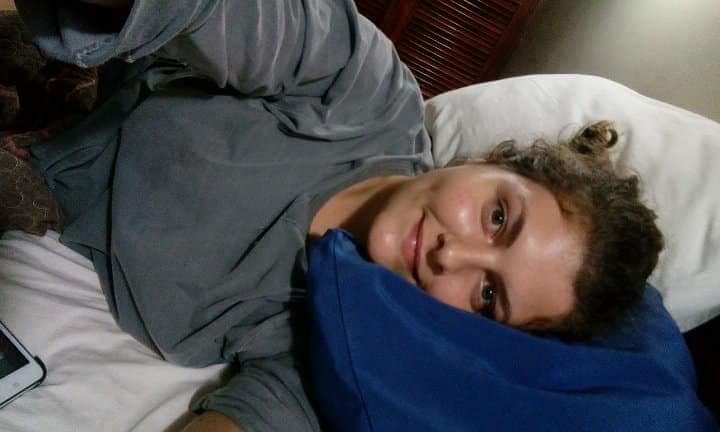
Three outcomes of Coronavirus

Everyone’s talking about what they’re learning through Coronavirus, about themselves, about their families, about the world. How priorities and values are changing, the worth of people in societies are changing. Like postmen and shelf-stackers weren’t valuable before?

Like people didn’t know that downtime was necessary, sleep was glorious and that it’s okay to stop for a while, to not have to keep pushing, achieving, doing, progressing. That it’s okay to just be.

I have an unusual position in all this. I’m currently living in Spain but grew up mostly British, instilled with British values. These British values include ambition, diligence, passivity, and the need to constantly be progressing. I retain my ambition but it has morphed and changed in recent years from being career-focused to being happiness-focused. During university, I suffered with depression, exhaustion, burn-out, and I decided that I didn’t like that feeling. I decided that I didn’t want to set limits for myself, job straight out of university, married by 30, kids by 35, that I had my entire life to do whatever the hell I wanted and after university, I wanted a break, and to be somewhere sunny.

So I moved to Spain.

Spain, especially Andalusia, the hot South, is relaxed, passionate, hot and hot-headed, creative, artistic, unambitious, funny, care-free, shouty. I found it hard to adjust to the pace of life here. I came here because I wanted to slow-down, but it was slower than I’d anticipated.

I managed, I slowed, I breathed and went for walks and settled and found a normal, steady job. At first I had meltdowns, why wasn’t I signing up to the gym!? Joining a sports team!? Joining a meet and greet group for expats!? Going out clubbing more!? Joining a choir!? Doing a dance class!?

After a while I realised that the reason I wasn’t doing those things is because I didn’t want to. Away from England, the pressure, the social norms, the questions, the suggestions, I was free to choose exactly what I wanted to do and it turns out that I didn’t want to do any of those things in that moment, and hey, I was still happy. Happier. Less stressed.

Give me a book and carrot cake over Legs, Bums, and Tums every day of the week.

Then Coronavirus comes along and confines us all to our houses. The world enters quarantine and Spain and England are particularly badly hit. Job security vanishes, activities shut down, people work from home, socialising stops. And suddenly, people are realising that this break is actually good for them, they’re sleeping more, arguing less, laughing more, crying less.

As if stepping off the treadmill of pushy, goal-driven, Western culture might actually feel nice… who’d have thought?

That money and fancy jobs and five trips to the gym a week don’t actually make you happy?

That people are now free to experiment with what truly makes them happy, instead of what makes them money. Which brings me to my first outcome.

A massive boom in creativity

People are at home, reading, painting, creating music, puzzling, playing, writing, drawing, dancing, making, baking, cooking. We suddenly have the freedom to do things we enjoy that don’t directly contribute to our physical health or bank accounts, the two things western society prioritises.

Funnily enough, all these things improve mental health which is becoming more of a priority, but still not enough.

I think that over the next year, couple of years, there’s going to be a massive increase in artists of all varieties producing and releasing creations of all kinds. There will be new music, new books, new paintings, new clothes, new recipes, new games.

And perhaps we will now prioritise more time to read, cook and play, and our artists of the world might be able to make a living off their crafts.

Hairdressers will loose a lot of business

Is it just me, or are we all cutting our own hair now and realising that it’s not that hard to do a straightforward trim? Especially on short hair.

I’m sorry about this, but neither me or my girlfriend will be going to a hairdressers from now on unless we want something truly special.

Introverts and Extroverts are more obvious

I’ve always tilted between introvert and extrovert, not quite knowing where I fit, but this quarantine has taught me that I am most definitely an introvert.

I have LOVED being in my flat all the time. I’m actually kind of worried for the world to start up again, I’m not ready to re-enter life. I don’t need many friends (just the few I do have I who I love to pieces, more so because they’re my only ones), I don’t need much social interaction, I don’t need attention.

If you asked me if I’d rather spend ten days on my own or ten days with ten people, I wouldn’t even need to think before immediately replying, on my own, definitely, on my own.

The extroverts of the world are the ones organising family gatherings on zoom, group calls with friends, game nights over apps. They’re suddenly contacting all the people in their past they’ve lost touch with, sending pictures of what they baked, what they wore, their garden to all the group chats they’re a part of. They’re on the phone constantly. Cycling through their frequent calls list every day.

The extroverts are frustrated, the introverts are in heaven, but I think the one thing we can all agree on is that, despite all the shit going on, it’s nice to take a break.


Disclaimer: I, OF COURSE, don’t think Coronavirus is a good thing and I constantly cry when reading the news, my heart goes out to absolutely everyone affected, infected, grieving and worrying, but this article is not about that. It’s okay to talk about the silver linings.

12-01-2018 NLP and a personal journey

It’s a Friday afternoon, 6pm, pitch black outside, and I’m cosying up on my sofa with a couple of candles lit and gentle music in the background. I’m feeling quite sorry for myself today because a light cold that started just before New Years has recently turned into a horrible cough after a couple of nights drinking and subsequent poor sleep, and I’m on my period. So taking it pretty easy today. Drinking herbal tea and trying to eat healthily while craving nothing but sugar (in the form of chocolate and ice cream).

Despite all that, I’ve actually had a pretty good day. In the morning me and mum went to a fitness class (the first proper exercise I’ve done in about 4 months) and then I went for a coffee with a group of people I met last night at a Neuro-Linguistic-Programming seminar. It was led by a man named Paul Cosen (who is based in Canary Wharf) and was an introduction to NLP, organised by Sarah Brown, who is a holistic therapist (based on the Isle of Wight). I am, of course, really interested in all types of therapies and my dad is an NLP practitioner although he doesn’t actually run sessions, he completed a course more for his own emotional journey and to use the therapeutic tools in his own life.

I arrived at the seminar not knowing what to expect, and also not knowing much about what NLP is or has to offer and I’ve come away from it with a vaguely solid idea, and with the intention to book a session for myself at some point over the next couple of years. My impression is that it is a holistic amalgamation of many different (mainly) non-verbal, sensory therapies that aim to assist the mind in processing traumatic events in the past in order to move forward in a healthier, happier way. More of a mind map or toolkit with lots of techniques and exercises at a practitioners disposal, rather than a structured one-fits-all method.

The seminar started interactively with Paul getting a feel for what we wanted out of it. The general consensus was that we wanted tools for personal use, to help overcome obstacles in our lives. I didn’t speak too much as I’m not that comfortable speaking in a big group. I actually prefer one-on-one chat. Any more than a small group and I tend to sit back and stay quiet. It’s not a lack of confidence, it’s more about the fact that I do enjoy listening and learning, I don’t feel the need to share what I think with everyone (unless I have a burning question) and I really don’t like fighting to make myself heard, working to be the first and loudest when the conversation pauses in order to make my point. So consequently I don’t say much. If I had, I would have said that I wanted tools in order to get over some traumatic events in my past because I’m not over them and they affect my life on an almost daily basis. I think that a lot of issues that people have boil down to fear: fear of failure, lack of confidence, a phobia, fear of humiliation, fear of judgement etc. and I think that my main fears are of my own emotions and of people/vulnerability. I’m a very empathetic person and my emotions run strong and deep; and because I had quite a tough time growing up they just became absolutely unbearable. So for the last 3 or 4 years I’ve been slowly repressing as much angst and pain as I possibly can. I’m now so adept at it that I barely feel sad and depressed any more at all which is great, but it’s also made me slightly apathetic and unemotional, and it’s taken away my happiness too. I didn’t really notice this until I was asked by someone, when is the last time you felt real happiness? and I couldn’t remember. Not for years, I thought. I’ve just been numbly ticking along, getting shit done, sure, but not really enjoying my life. And I’m now at a point where I’m ready to move on, and have the strength to do that. For the first time in my life I have a network of people close to me that I can truly trust and rely on, and I feel safe and healthy. But that’s not something you can put into a couple of words in an interactive group session, so I mostly stayed quiet.

At the end of the seminar however I was selected to take part in an exercise called The Orgasmic Chair. Me and this other lady sat back to back and were asked to give three words that described what we wanted more of in life. My words were: happiness, love and self-acceptance. I thought they seemed pretty cliche but they were genuine and things that I’ve wanted more of for a long time now. The lady behind me said: confidence, self-belief and fun. Then we were told to close our eyes and the rest of the group walked around us in a circle saying really positive, beautiful messages using the words we had given them. Some of the women stroked our arms and our heads, and some just spoke, but the whole experience was uplifting, freeing and really quite soothing. Having been single for a long time and away from home, I don’t have much affection or intimacy in my life, so it was actually really nice to experience this brief but powerful deluge of warmth and tenderness. So rather than sexual pleasure, The Orgasmic Chair filled me with a sense of love and of being loved, which I really needed.

Then today during our coffee we had the chance to have more of an open conversation. I was able to share some of my story and receive some answers to the questions that I had which was really nice. Also Paul did a few exercises with me in order to work through particular traumatic memories: I hope it’s worked. So a really positive experience overall and I’m so glad I went! It takes a little to put yourself out there and go with an open mind, but I felt a real connection with the group and definitely plan on going to more events like these on the island, and off, in the future! I also met a women who’s going to put me in touch with her son who has studied indigenous communities in Ecuador, and is now studying fungi in Spain… very very strange coincidence! (To learn more about what I’m doing in Ecuador, read this post: Why We’re Here – The Research).

So in conclusion! Very successful day for my emotional journey. Feel like I’m actually getting somewhere I want to be and know how to keep going.


Writers Block

I’m a writer, I’m a poet,
It’s a gift, they say, I know it!
Helps me fine tune all the voices
All the questions all the choices
Running through my busy brain:
Sorting crazy from the sane.
Helping me to find a way
When I’ve had a rubbish day.


But today the words won’t come.
Through my fingertips and thumb.
Tapping out a steady rhythm
Forming words into a vision
Giving shape to my emotions
When they feel as vast as oceans,
But today I’ve got to say;
I don’t know what to write. 
Okay?!

#VEGCURIOUS ?

(A post written for the Mancunion – The Manchester Uni student newspaper).

Definition: someone who is interested in exploring veganism and experimenting with vegetables in new ways, but not quite ready to commit.

Been having some affectionate thoughts about vegetables lately? Perhaps you’ve been wondering about alternative sources of protein but you’re not quite ready to talk about it with your mates? You might be what experts are calling ‘vegcurious’.

In the UK, over half a million people are completely vegan, almost 2 million are vegetarian and new figures are showing that many more people are vegcurious and want to know more about this plant-based lifestyle. In the US, the figures are even higher, and a staggering 40% of the population in India follow a vegan or vegetarian lifestyle. Veganism is drifting into the mainstream as research is showing that going vegan is a win, win, win situation. Good for the animals, good for the planet, and good for us.

Animal welfare and ethicality is of course still a really important issue, however it’s no longer the most popular reason for going vegan. Veganism is becoming as much an environmental cause as it is an animal welfare cause. Agricultural studies show that rearing cattle for food is the main effector of deforestation and has the biggest impact on global warming. A common misconception is that soy bean plants are causing deforestation, however 85% of these plants are used as feed for cattle and not human consumption, and therefore are also a part of the animal-product industry. Many of you will have heard the devastating news about the Great Barrier Reef last year caused by overfishing and global warming; moreover, the planets rapidly decreasing biodiversity is being dubbed by experts as the 6th extinction crisis. I think it’s time humans took responsibility for the harm we’ve caused, take a long hard look at the evidence and realise that it is the production of animal products for food which is exerting the greatest damage in our environmental crises.

If you’re not much of an environmental activist, that’s fine. But surely you care about yourself? Your health? With the popularity of veganism growing, so has the demand for scientific studies identifying the effect of this diet on your body, and whether or not a plant-based diet is able to provide adequate nutrient acquisition. The results are astounding, and show that not only is a vegan diet adequate, but it also decreases your risks of getting various diseases including different forms of cancer, obesity, cardiovascular disease and even osteoporosis. However, the risk of certain deficiency’s are higher in vegans because most people were never taught how to eat a well-balanced, vegan diet and therefore miss out key macro and micronutrients, and it’s important to transition your body safely into this new lifestyle as it is quite a drastic change in diet if you’ve always been a meat eater.

So if you’re a transitioning vegan or a conscientious meat-eater, make sure you’re filling your plate with balanced, nutritious foods that are going to supply you with the complete repertoire of nutrients your body needs. And try and be a little friendlier to vegetables.

The strength in optimism


Optimism,

to have hope,

to believe that the good will overcome the bad in some way, shape or form.

Sometimes optimists can get a bad rep for wearing rose-tinted glasses,

and believing the best in a person or situation,

even though you get let down time and time again.

It may be seen as weakness, or ignorance, or immaturity.

But I’m proud to be an optimist.

And I believe that it’s the hope and the ability to see the silver lining that gives us strength.

We are strong enough to be hurt,

and to be sad,

and to grieve and mourn for people that we don’t even know,

animals we have never met,

battles we will never face,

wounds we will never feel,

and STILL pick ourselves up every day and see the wonder in this world.

Despite all the sadness in front of us,

we still get up in the morning and keep looking towards the future.

We still have hope for future generations and for the future of this Earth.

Being an optimist doesn’t make you weak,

for fighting fair and refusing to sink to a more hurtful level.

We don’t need to put someone else down to make ourselves feel good.

We make others feel better in order to make ourselves feel good.

Optimists are strong enough for 2 people,

we don’t suck the happiness out of someone else to fuel our own,

we give happiness and we give love and it’s in that generosity and genuine care that we feel fulfilled.

Strength lies in your ability to forgive,

to understand,

to be compassionate,

to still try and be good,

even though it’s really really hard not to feel hate, or be selfish, or be lazy.

That is strength.

That continued commitment.

Strength isn’t being nastier than someone,

being bigger and stronger,

being the one more willing to push someone until they break.

Strength isn’t who can shout the loudest,

who can win a popularity contest,

who can list more achievements.

Strength is being able to put one foot in front of the other every day,

to keep going,

to keep smiling,

to keep seeing the beauty in your life despite all the misery.

Strong people are the people who value happiness and love.

Strong people value other people.

They value other life.

They can see that all life is created equal.

And they can see that although we were all born equal,

we weren’t all bought up equal,

 and that some people have a lot of hate,

a lot of resentment and a lot of insecurities

that they need to put onto other people because it’s the only way they can take it off of themselves.

Strong people don’t have hate, so they don’t need to hate others to take a break from hating themselves.

If you’ve gained your strength from putting people down,

you have the strength of one person,

and it’s a fickle, shallow, transient strength you’ve stolen.

If you’ve gained strength from helping the people around you,

being kind, being considerate, making other people feel special and appreciated,

then you have the strength of a network of good people.

Whatever kind of person you are,

just remember that the way you feel about the people around you is more a reflection of yourself than a reflection of them.

And remember that only you are in control of your emotions,

and I for one would much rather be happy,

than seem strong.


Learning To Learn

I feel like we’re living in an oxymoron, like this world doesn’t quite make sense anymore. Words are flying about in the media such as ‘post-fact era‘ and ‘post-truth era‘, highlighting the fact that social media has become a platform where opinions have become truth. Anyone can post anything online. Everything that we think is normal and true was sold to us as an idea at some point in order to achieve something for someone else.

Opinions

Think about this, everything that we read is an opinion. Even scientific hard facts are only taught to you or introduced to you in your life because it’s someone else’s opinion that you need to know that information.  The perspective you have of the world around you is an accumulation of your experiences and only exists in your head. That means that we all live in different worlds to each other. A perspective can make two identical situations seem completely different.

Just Think

Children are growing up in a world that their parents have never had to deal with. How are parents meant to teach their children how to deal with uncomfortable and tricky situations that they don’t even know exist, have never been through and have never been taught how to cope with themselves? So much of the world around us automatically gets stored in our subconscious and we have no idea that we’ve absorbed certain influences, that our actions are the results of tiny stimuli, external and internal, that we weren’t conscious of receiving. How do we know what’s right or wrong any more when we have thousands of opinions shoved down our throats on all levels of our consciousness? How do we sort through it all and make our own decisions about what we want?

Question

The old saying ‘ignorance is bliss’ is completely redundant now; knowledge and awareness is the key to taking control of our lives. It’s more important than ever to engage in the world around us and to question our own actions and motives as well as other peoples. Through the internet, we have access to almost anything, however there are software and algorithms that exist which monitor your online presence (interests, hobbies etc.) and tailor your online experience (adverts, search suggestions. newsfeed article suggestions) to what they think you’re most likely to read, click on, buy, advertise for them. This creates the illusion that you know more than you actually know because you think you’re being exposed to a variety of articles/adverts/newsfeeds, when it’s actually highly tailored to suit your online preferences. It also makes you think that everyone else is thinking the same thing as you. Well, it’s time to start questioning. The only way to reduce the amount of influence that external stimuli have on you is to be aware that they exist then question them, then you get to decide what will benefit you and what won’t.

Ask

Most information has a bias or an angle, a concept that someone is trying to sell. So now you’ve started to question the motives of what you read on Facebook, in newspapers, watch on the news, adverts in the street etc. you can take another step and start to dissect your own opinions and work out what you actually believe in and what was just fed to you passively. Ask yourself what’s important to you.

Learn

Now you’re aware of how influence-able you are as a human being, you can start to learn in a more efficient way, take information on board in a more analytical way and form opinions in a more well-rounded way. This has the potential to open so many doors. How many things in life have you written off because you have this belief that it’s not right for you, but when you dig a little deeper you realise you don’t have any good reasons for why it’s not right, you just believe it. This is your chance to shrug off old habits and thought patterns that aren’t serving you at all, and to embrace a more wholesome and healthy way of thinking that will provide you with the best opportunities you can give yourself.

Research

This is the fun part (because I’m a massive sponge and love to learn stuff). This is where you start looking outside your box and you realise that all the amazing, crazy, hilarious, thought-provoking stuff that other people have done can make a huge difference in your life. Stop accepting what you think is normal. Learn new things, question the status quo, make changes happen, get inspired.

I joined the Green Party a few weeks ago which is a huge step for me because I’ve never really been into politics, I was never taught it at school and my parents weren’t interested in it really. I never understood how it affected my life. But I do now, and even though it took a bit of effort learning about politics and economics as a beginner, I love that it’s opened up this door for me in terms of the potential direction of my life and what I want to do when I’m older.

Same with travel. It makes you reassess everything you thought was normal about behaviour and societal constructs. It makes you more adaptable and accepting of different versions of normal that you haven’t come across yet, which can seem strange to you at first, but you come to realise that strange isn’t a bad thing, it’s a chance to learn.

How

TED talks are a fantastic way to broaden your mind and appreciate how amazing our world is and the people that are in it

Documentaries (there are loads of great ones on Netflix)

Social skills in a Digital Age is a qualification to teach people emotional intelligence with regards to the digital world, an extremely useful tool for people of all ages and a great certification to prove social, online awareness

The New Scientist which is one of my favourite websites!

The National Geographic is another of my favourite websites 🙂

People. Talk to people, be interested. Listen to learn, not to reply. Ask questions, don’t be afraid of being wrong, the only way we’ll learn is to ask and it’s admirable to admit that you want to know more.

Why

My flatmate is doing her dissertation on the impact of being obese when pregnant and it’s more damaging for the health of the baby than most people realise. It hugely increases the chance of genetic diseases and for the child to develop health problems later on in life. The only way to combat this is to educate women before they get pregnant.

Coconut oil is so far the most effective treatment for Alzheimer’s. Why isn’t this common knowledge already!? Someone is diagnosed with Dementia every 3 minutes and it affects billions of people worldwide, yet pharmaceutical companies can’t sell coconut oil therefore it’s not seen as a viable treatment. Same as cannabis in treating cancer. Just because it’s not medically accepted doesn’t mean it won’t work for you, there has never been a death from cannabis, and it’s saved many lives. The use of cannabis to treat cancer is another dissertation topic which I was extremely excited about as I know people that have had success with it.

Did you know processed sugar is just as addictive as cocaine; and sugar is way, way worse for you than fat. New studies have shook up the nutrition and medical community showing that a high-fat low-carb diet decreases your chances of getting cardiovascular disease compared to a low-fat, high-carb diet.

Remember when everyone thought smoking wasn’t damaging to your health?

How meat and dairy is full of hormones, toxins and damaging chemicals, is the largest contributor to global warming, and leaves third world countries starving because massive amounts of deforestation and land use are occurring to rear cattle and not grow crops for its own people?

That the rise of mental illness is because our brains aren’t evolving quick enough to be able to cope with the changing world around us, and we’re neglecting our mental and spiritual health in favour of immediate satisfaction.

Be inspired to learn and question.